
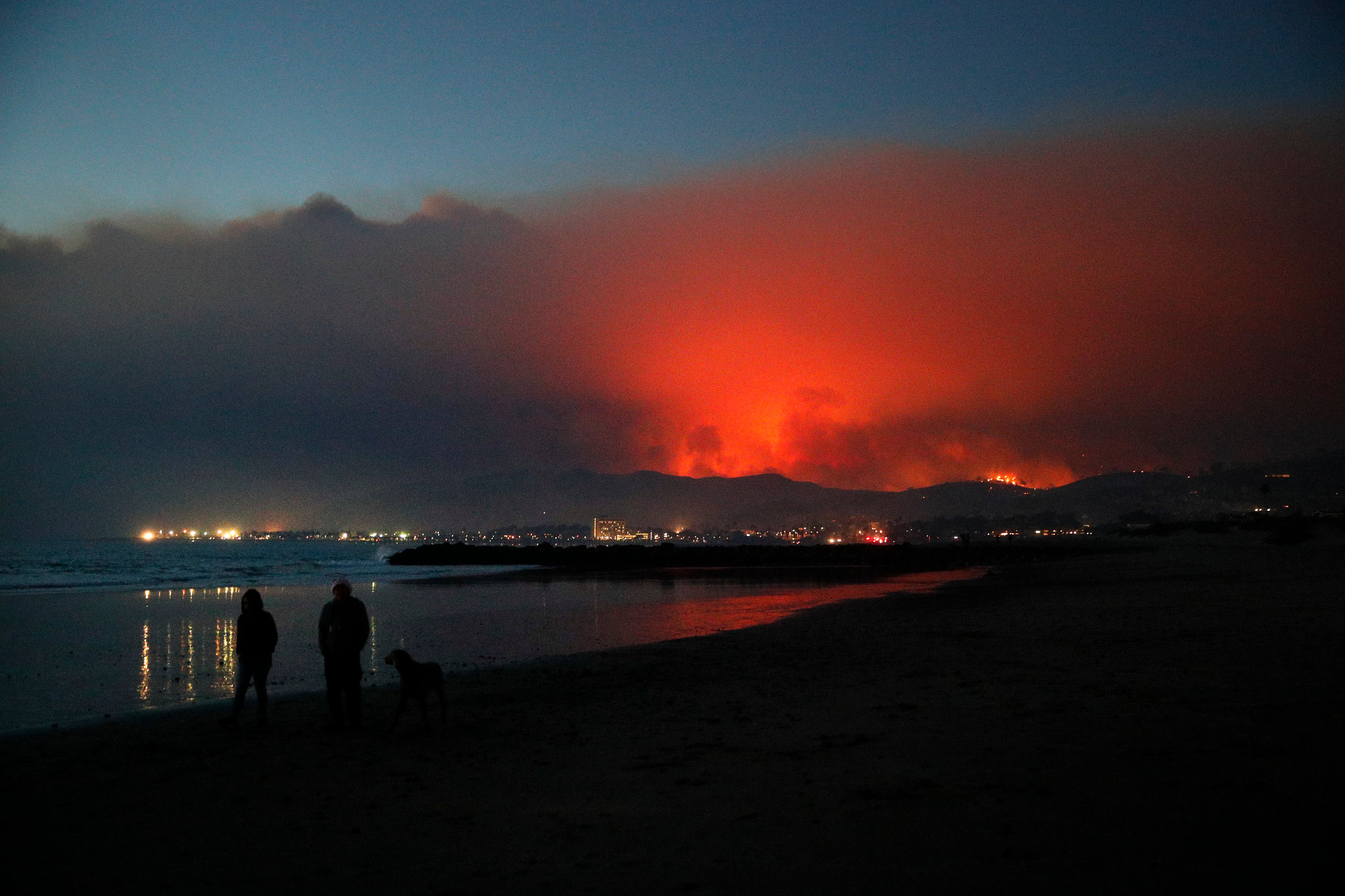
We have witnessed many devastating scenes during the past few years whether they be ‘man-made’ such as the wars between Russia and Ukraine, or the Middle East – or ‘natural’ such as the typhoons that recently swept across the Philippines, floods in Europe or extreme snow in the United States of America. But currently we are memorised by the devasting Californian fires of Los Angeles. The size of these swiftly spreading fires and their terrible destruction has been heightened in our mind’s eye by just how difficult it has been for firefighters to contain them and put them out. At one point it seemed as if there was nothing that fire crews could do other than simply watch properties burn due to the lack of sufficient water. Subsequently, we have heard some amazing stories of firefighters battling the flames alongside civilians and even convicts – and both the best and the worse of humanity has been on display, from those who have demonstrated great courage, care and generosity in support of their neighbours, to those despicable individuals who have looted their properties. With at least 26 people killed, 12,000 properties damaged, and the cost estimated at being well over £200 billion, it’s clear that a long period of reflection will be needed to determine what happened and consider how it was managed. Was climate change a factor? Was there a problem with water distribution and how does one temporarily house so many displaced people?
Without diminishing the huge loss, heartache and suffering people have experienced, thoughts will inevitably turn to rebuilding and reconstruction. The process may take years, but it’s clear that a new community will one day rise from the ashes – but what sort of community will it be?
Well hopefully it will be a pleasant, prosperous and caring community suitable for everyone and not just the most affluent, with homes, buildings and workplaces built with materials less susceptible to fire.
The Christian will remember how the Apostle Paul encouraged the building up not just of strong physical communities, but also spiritual ones too. Using the Temple in Israel as an analogy (1 Corinthians 3.12-17), he reminded his congregations how the Temple had throughout its history been frequently damaged by fire, and yet it was evident that certain materials (like gold, silver and precious stones) could all withstand the flames, whereas others (like wood, grass and straw ) did not. Bearing in mind that material possessions don’t last for ever and that we can never be sure about what trials or tribulations life might bring, he encouraged his hearers to value enduring eternal qualities (like faith, love, hope, strength and courage) that would not only sustain them during hard times but also enhance their relationships and community life when times were good – qualities that were epitomised in Jesus who was dead but through the power of the resurrection is now very much alive.
May these qualities not only strengthen and sustain the people of Los Angeles but all of us, in good times and bad.
3 “we know that suffering produces perseverance; 4 perseverance, character; and character, hope. 5 And hope does not disappoint us, because God has poured out his love into our hearts by the Holy Spirit, whom he has given us.” Romans 5.3-5

 Stephen Thorp