
Science and theology – mutual companions on the journey to truth!

Many of us will remember the New Atheism that was greatly prevalent in the media twenty years ago, largely promoted by the group known as the ‘Four Horsemen’ being Richard Dawkins, Christopher Hitchens, Sam Harris and Daniel Dennett who sought to promote a strongly secular, scientifically rational worldview which was quite independent of religious faith. Ironically, their strident tone often had qualities of ‘religious zeal’ about it which was off-putting to some and conveniently overlooked the fact that many exemplary scientists were Christians who saw absolutely no conflict between their religious faith and the science they pursued. However, in recent times, it’s become quite clear that life requires more than just science to guide it – as so eloquently and poignantly expressed by the American environmental lawyer, James Gustave Speth who said:

“I used to think the top global environmental problems were biodiversity loss, ecosystem collapse and climate change. I thought that with 30 years of good science we could address these problems. But I was wrong. The top environmental problems are selfishness, greed and apathy, and to deal with these we need a spiritual and cultural transformation, and we scientists don’t know how to do that.” 

— James Gustave Speth, Shared Planet: Religion and Nature, BBC Radio 4 (1 October 2013)

Indeed, just recently our own Bishop of Norwich, The Rt Revd Graham Usher, who is the Archbishop of Canterbury’s lead ‘Bishop for the Environment’, reminded clergy that “science and theology nurture one another- they should not be seen as combatants!” – Norwich Cathedral (8th July 2025). John Polkinghorne, the former Physicist turned Anglican Priest also said that “Science tells us how things work; theology tells us why things matter” – and in a deeply uncertain world we need both; science seeking understanding – while faith offers meaning.

So why do so many of us still struggle to hold these two things together? Is it because past historical moments, such as the New Atheism period, have left us feeling that we can’t express our Christian faith without people doubting our intelligence? Fortunately, the tide is turning, and people are appreciating that many Christians, including scientists, are thoughtful rational people whose faith is deeply enhanced by their logical approach to life. Indeed, one such person is Prof. YoungHoon Kim from South Korea who with a staggeringly high score of 276 is recognised as having the highest recorded IQ in the world, which is higher than other notable minds such as Albert Einstein and Stephen Hawking. Prof. Kim, who studies Quantum Physics, is also a devout Christian and sees theology not as blind faith but as a rigorous discipline and the ‘ultimate field of study’.

But of course, the beautiful thing about the Bible  and the Gospel story of Jesus Christ is that on one level it can be explained so simply that even a little child can understand it, but on another level, it can also be so profound that it satisfies the deepest of intellectual minds. Perhaps the problem with the New Atheists was not that they weren’t brilliant men – but that they underestimated the intelligence and vision of faithful believers.

With best wishes. Stephen Thorp

The fear of the Lord is the beginning of wisdom; all who follow his precepts have good understanding.

Psalm 111.10


This article first appeared in the August edition of Parish Magazines associated with the Necton Benefice – Parish Link; Moonraker; The Pickenhams’

If you would like to support the ministry of the Necton Benefice or make a one-off donation this QR code will take you to the appropriate website – Thank you and God bless
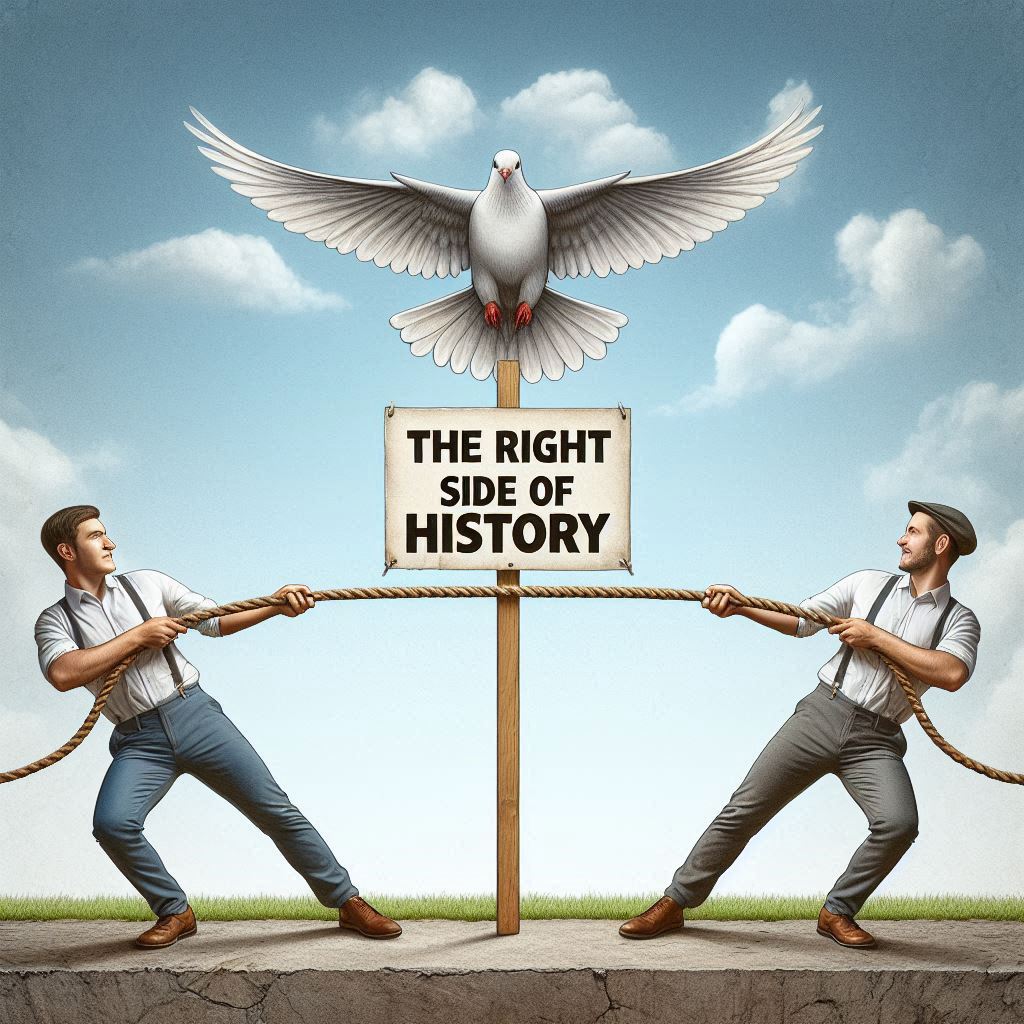
The struggle for peace – and being on the ‘right side of history’

History, they say is “written by the victors”, meaning that those who win conflicts have the power to shape historical narratives, which often overshadow the perspective of those who are defeated. It’s a quote which is often associated with Winston Churchhill but its origins are unclear. However, it’s a phrase which is often picked up by those striving for their own particular goals, aims and objectives and has recently been used by pro-Palestine student groups, and others in support of Ukraine. Naturally, when we see such heartbreaking suffering and conflict on our television screens we may certainly wish that somebody would do something to end the pain, promote peace and be on ‘the right side of history’. But how do you do that when both sides consider themselves to be ‘in the right’? For instance, President Trump has recently called for a ceasefire between Russia and Ukraine, and President Zelenskyy has immediately agreed to go to Turkey for peace talks and has challenged his political opponent to do the same, pointing out that it’s Vladimir Putin who is the real obstacle to peace. Inevitably, the lack of trust between the two sides combined with the fear of covert military manoeuvring makes finding a genuine solution extremely difficult. The same can be said for the terrible conflict that exists between Israel and Gaza.

In the light of all this, it was very encouraging to see the new Pope, Leo XIV, use his very first Sunday address from St Peter’s Square, Rome to call upon global leaders to stop waging war. “I turn to the powerful of the world repeating the always timely appeal: never again a war” calling for a just, authentic and lasting peace, for the liberation of prisoners of war and the return of deported Ukrainian children to their families. Turning to the conflict in Gaza, he said he supported an “immediate ceasefire, humanitarian support to the exhausted civilian population and the freeing of hostages”. Following talks with America, Hamas released Israeli-American hostage Edan Alexander as a good will gesture in the hope that it would promote humanitarian aid to Gaza, and the world waits to see how Israel and America will respond.

The Christian will be aware that the Psalmist wrote, “Turn from evil and do good, seek peace and pursue it” (Psalm 34.14) and that Jesus, in his famous sermon on the mount said, “Blessed are the merciful for they will be shown mercy … blessed are the peacemakers for they will be called sons of God” (Matthew 5.7,9). This is neatly summed up in the great command which is, “love God with all your heart and your neighbour as yourself” (Matthew 22.34). When it comes to international conflicts we may have limited scope or influence, but I appreciated this quote from US Republican John Lewis who gave a passionate speech on the floor of the House of Representatives before his colleagues voted on whether or not to impeach Donald Trump, reminding them that what they did was not just a political duty but a moral obligation:

“When you see something that is not right, not just, not fair, you have a moral obligation to say something. To do something. Our children and their children will ask us, ‘What did you do? What did you say?’ … We have a mission and a mandate to be on the right side of history.”


If you would like to support the ministry of the Necton Benefice or make a one-off donation this QR code will take you to the appropriate website – Thank you and God bless

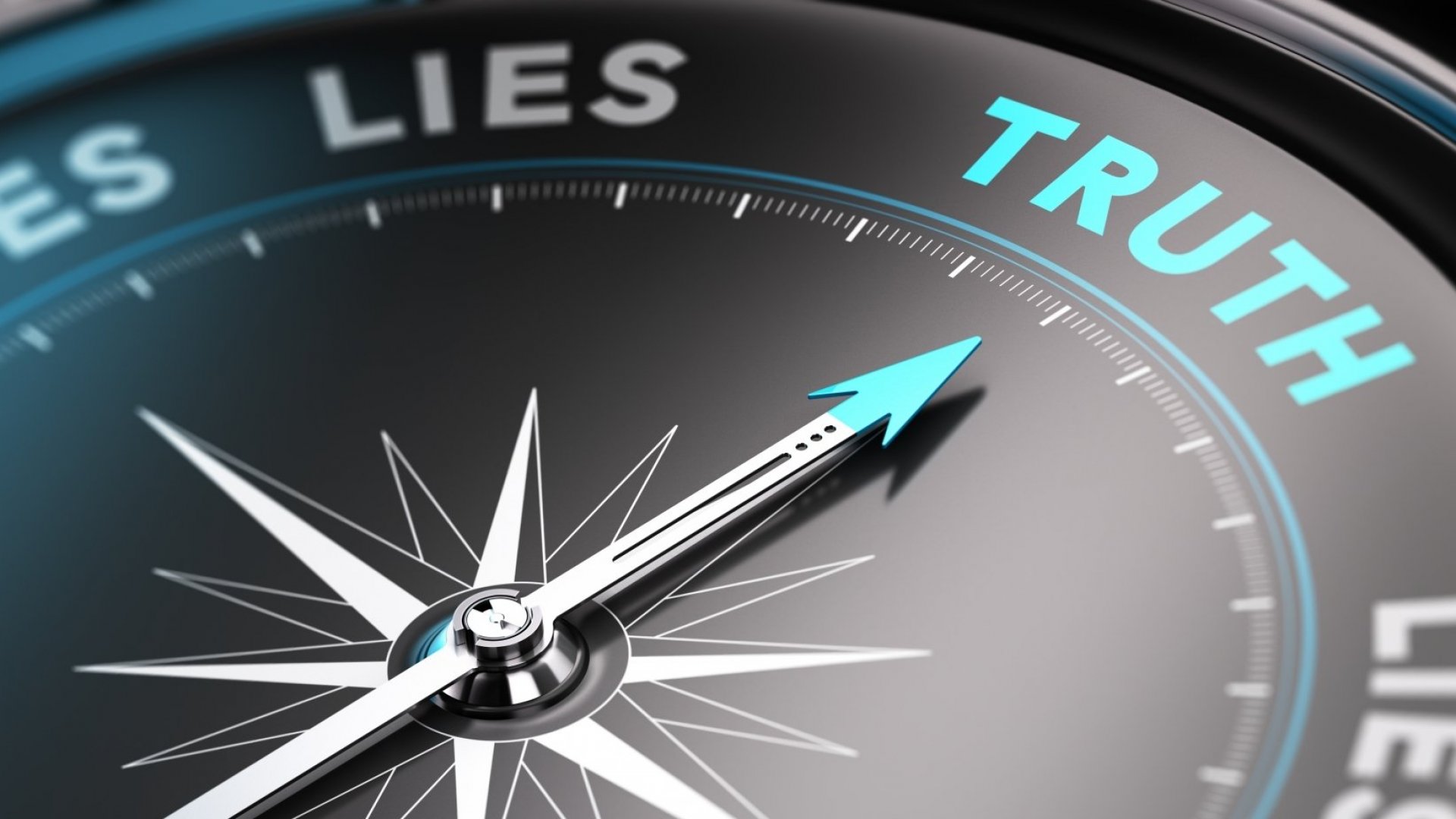
In a world of fake news, propaganda and spin – how do we recognise the truth?  

‘What is truth?’

A day after a massive Russian attack killed 35 people as they headed to church on Palm Sunday, and injured 117 others in Sumy, Ukraine, President Donald Trump, the most powerful man in America, once again blamed President Volodymyr Zelensky for starting the war with Russia. “You don’t start a war against someone 20 times your size and then hope that people give you missiles…. When you start a war, you got to know you can win.”  The historical context is complex but these statements are at odds with the recorded invasion of Ukraine by Russia in February 2022 and the earlier annexation of Crimea by Russia in 2014, in violation of international law.

A similar spinning of reality can be seen with the bombing of the al-Ahli hospital in Gaza City which coincidentally was also on Palm Sunday. This private hospital run by the Anglican Church, was the last functioning hospital in Gaza. The Israeli military said it had hit a ‘command and control centre’ used by Hamas to plan attacks, but so far they haven’t given any evidence to justify their claim.

The problem is that we live in a world of ‘relative truth’ where it has become fashionable to spin the truth to make it suit our own particular position or point of view. Regardless of the rights and wrongs of these situations, it then becomes hard (if not impossible) to tell what really happened when people constantly tell us a story spun to suit their own particular needs and agendas. Absolute truth can be inconvenient when it doesn’t suit us. It is therefore no wonder that we have seen a rise in fact checking organisations such as BBC Verify, in modern day journalism, to try and help us see through the fake news and establish the facts.

The problem is that bias and spin erodes confidence, faith and trust. How do you know who or what to believe?  

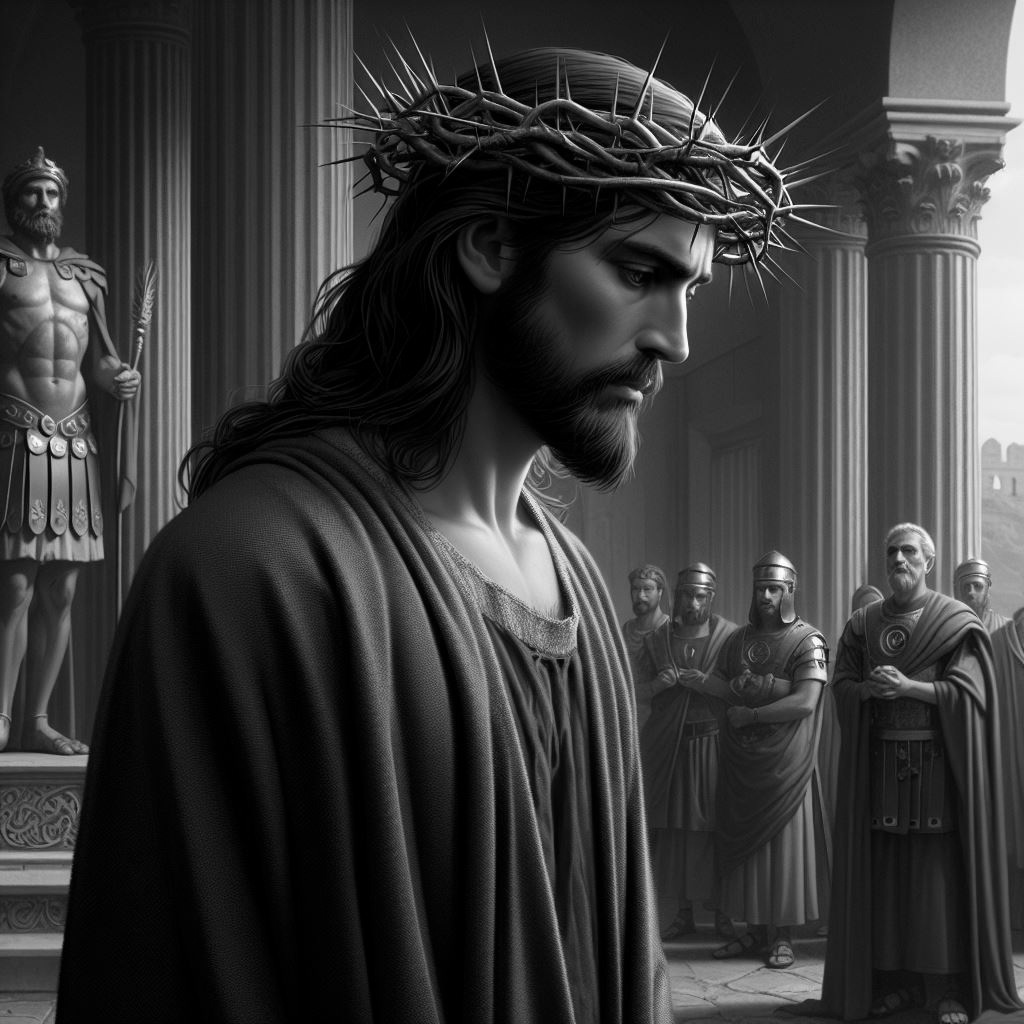
“What is truth?”, Pontius Pilate had replied when Jesus had said, “Everyone on the side of truth listens to me” (John 18.37-38). How was Pontius Pilate to know? How could he glean the facts? Who could he trust? In response to his question to Jesus, “Are you the king of the Jews?”, Jesus had replied, “Is that your own idea … or did others talk to you about me?” and now Pontius Pilate was floundering! Pontius Pilate was a powerful individual, but he was at the mercy of the religious leaders and authorities of his day who had lied and spun him a story to suit their own agendas. He didn’t know the facts and he didn’t know Jesus – all he could do was judge Jesus by his actions and his character. Those who are familiar with the story will know the intricacies of this encounter, but it soon became clear to Pilate that Jesus was not a mad man, nor a revolutionary nor a coward pleading for his life – he was a man with a great sense of special divine purpose. “You would have no power over me if it were not given to you from above”, meaning God (John 19.11), Jesus had said.

Today, like Pontius Pilate, we are so often left floundering as we try to discern the truth, but like him we need to try our best to establish the facts and (prayerfully I suggest) discern motive, character and purpose, asking ourselves who gains what and at what cost? Are they purely self-seeking or genuinely seeking the best for others? Are they trustworthy?

With regard to Jesus, Pontius Pilate actually concluded, “I find no basis for a charge against him” (John 19.6). But the political tide led him on a course that was contrary to his instincts. He was so caught up in the political spin of his day that ultimately, he didn’t have the courage of his convictions – and in that there is surely a lesson for us all!


If you would like to support the ministry of the Necton Benefice or make a one-off donation this QR code will take you to the appropriate website – Thank you and God bless
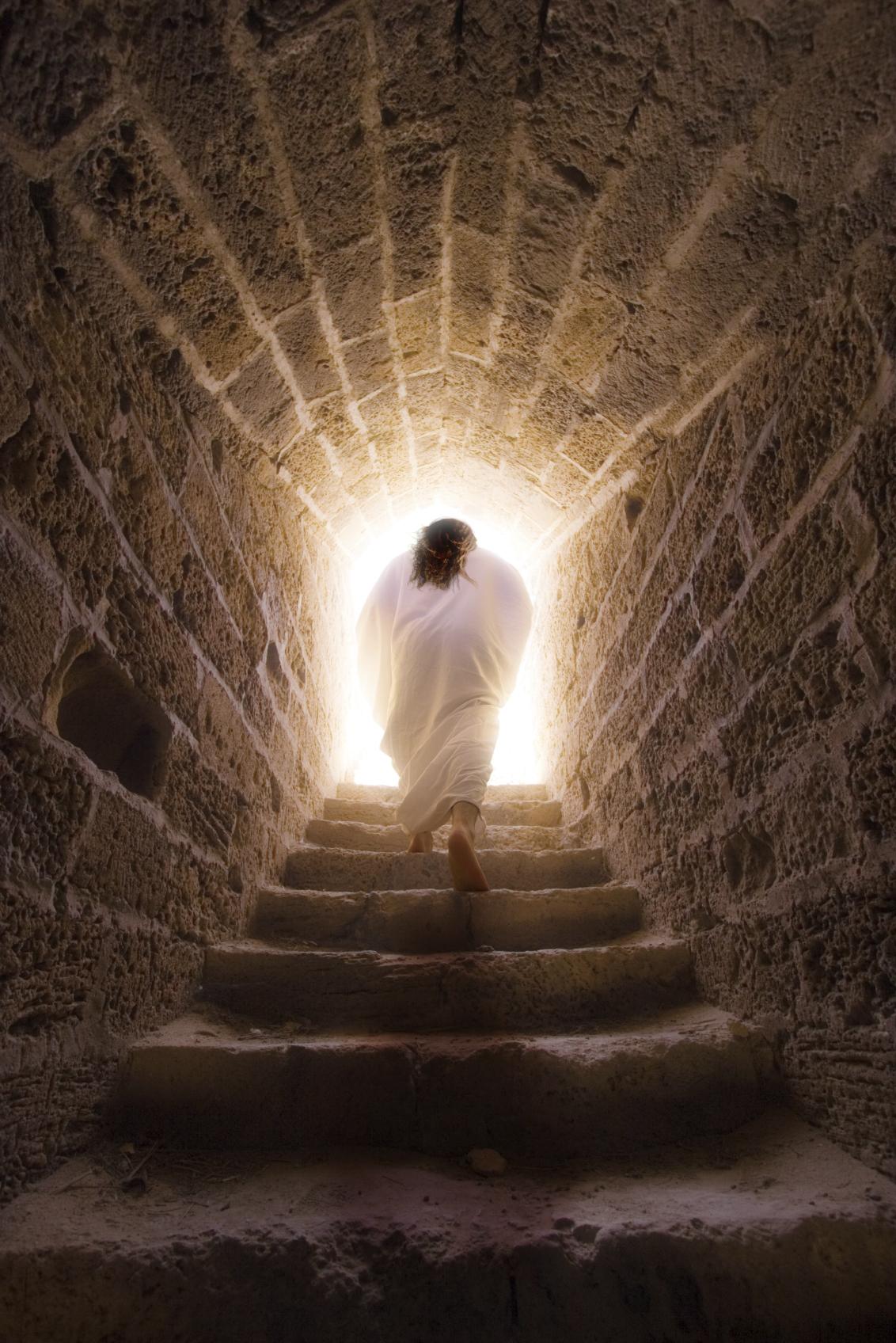
The difference between optimism and hope is – Easter!

With best wishes for Easter. Stephen Thorp


Mary Magdalene and other women: (Matthew 28.1-10, John 20.11-18). The disciples on the road to Emmaus: (Luke 24.13-35). Simon Peter (Cephas (Luke 24.34, 1 Corinthians 15.5). The apostles (without Thomas): (John 20.19-24). The apostles (including Thomas): (John 20.26-29). Over 500 believers at once: 1 Corinthians 15.6. James, the brother of Jesus: 1 Corinthians 15.7. The disciples at the Sea of Galilee: (John 21). The group at His ascension: (Acts 1.3-9).


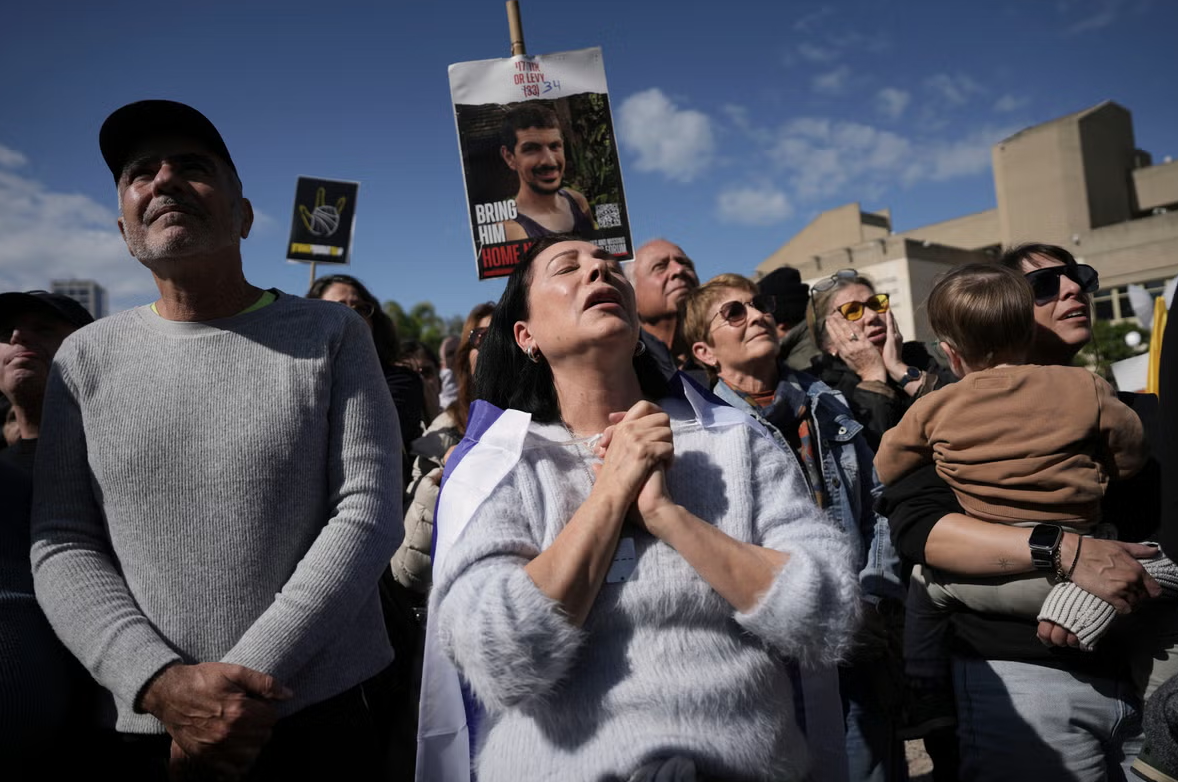
In light of the release of Israeli & Palestian captives – a reflection


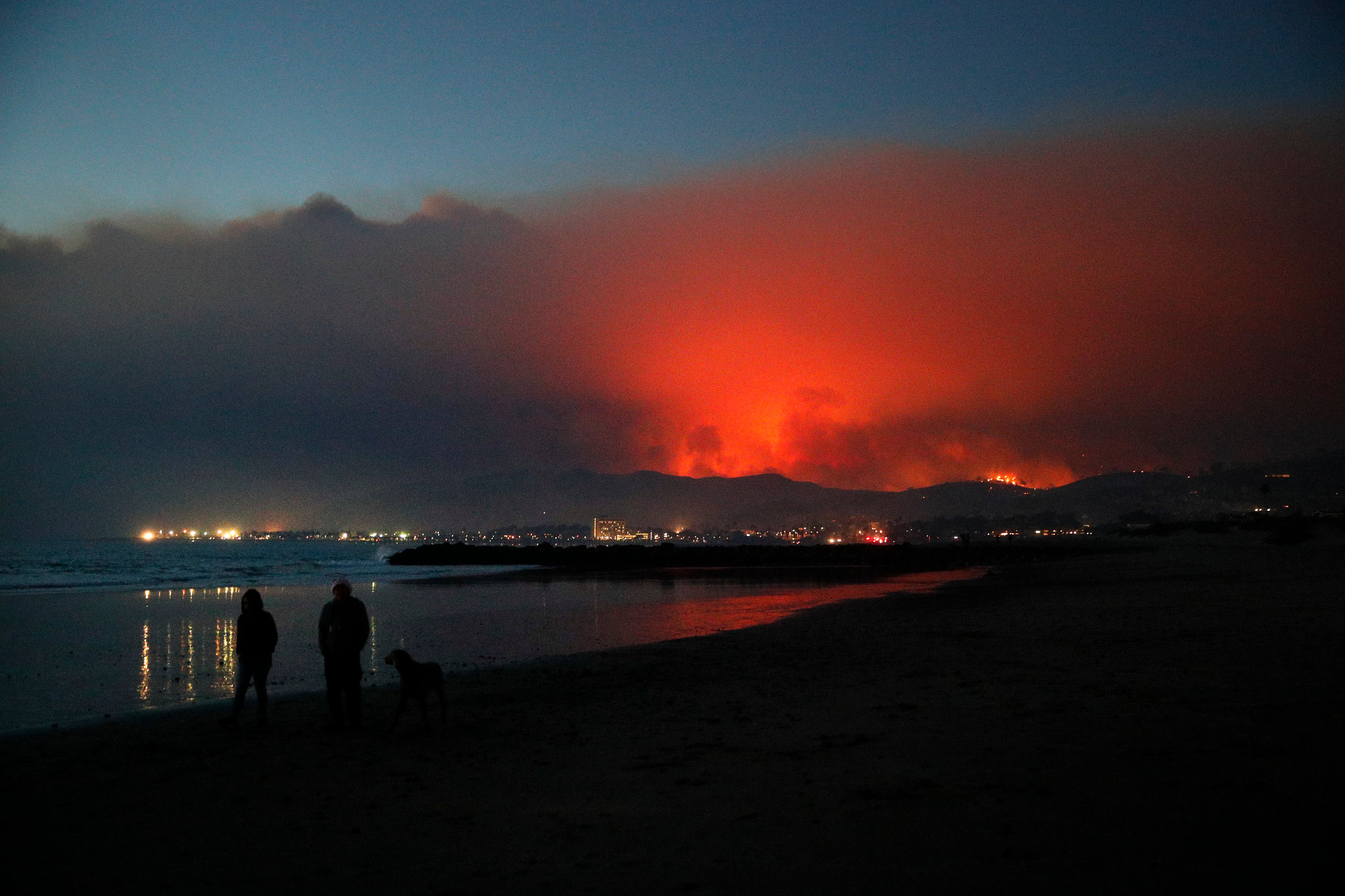
Los Angeles – how do we go about ‘fire proofing’ our lives?


Knowing Christmas joy and peace in a world of uncertainty


What does Crowdstrike’s ‘blue screen of death’ mean for you?


Trust me, I’m a Doctor!

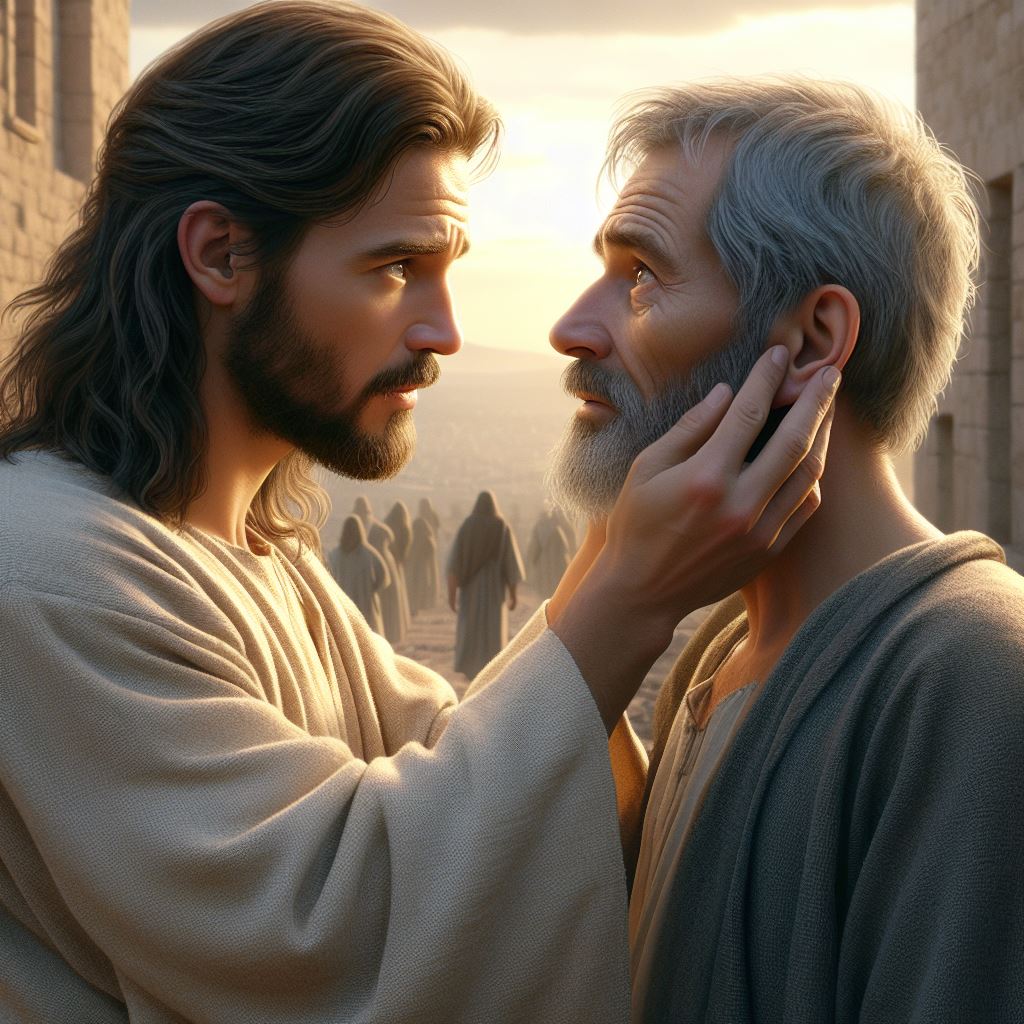
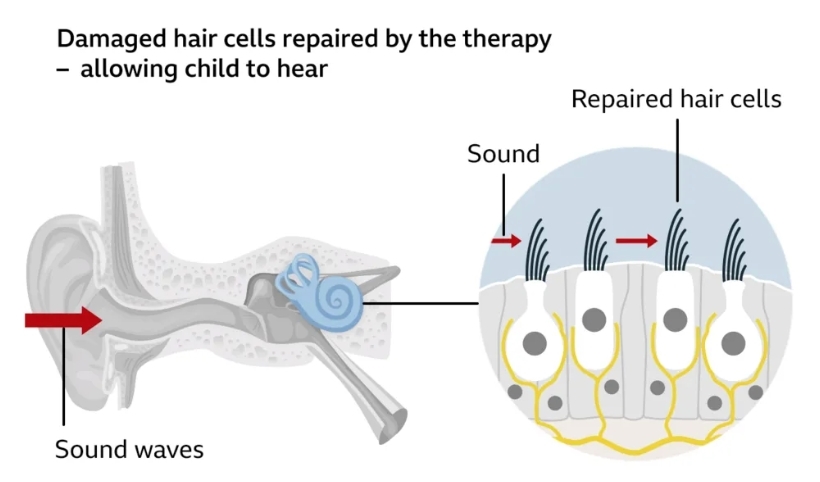
The miraculous joy of hearing!