Faith, Hope And The Flames Of Notre-Dame

Image 1

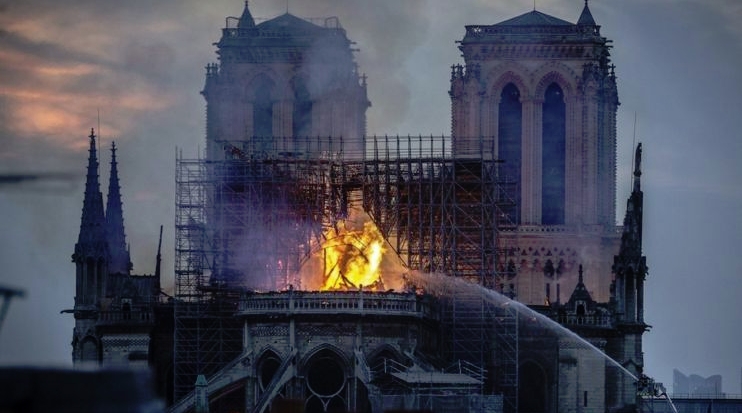
It was with a great deal of sadness that millions watched the iconic Gothic Cathedral of Notre-Dame go up in flames on Monday 15th April 2019 via their televisions, computers and smartphones. It seemed incredible to think that this wonderful cathedral that had taken over 200 years to build was essentially destroyed in a mere 30 minutes. It felt like something out of a movie or a bad dream. Many French citizens were in tears and disbelief as they witnessed this terrible event unfold but huge credit should be paid to the firefighters and others who were trying against the odds to save as many of the priceless art and religious antiquities as they could whilst others were trying to save and preserve the actual building. Yes, France may pride itself on it’s secular education but this tends to hide the fact that over 2/3rds of the population still identify themselves as Christian predominantly Roman Catholic – but equally it has to be said that to the French, the Cathedral of Notre-Dame represents so much more than being simply a place of religious devotion. It represents their nation, their heritage, their architecture, their culture and their wonderful way of life – and so it comes as no surprise that almost immediately President Macron committed himself and the whole of France to rebuilding and restoring the Cathedral.

“So I say this very solemnly to you tonight, we will rebuild this cathedral all together – and it is undoubtedly part of the French destiny …. we will rebuild Notre-Dame.”

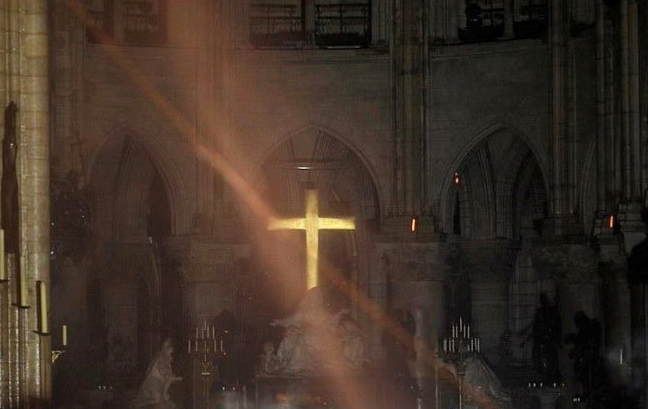
Thankfully, in the cold light of day it appeared that despite great damage, the structure was basically sound and donations large and small were coming in from across France and indeed the world for its repair.
D4P_Nv6XsAMGnKb

But what is it that drives the human spirit to want to commit itself to such projects? For even in our own country, we have historically seen the rebuilding of Coventry and York Cathedrals damaged by fire, as well as Windsor Castle. It seems for all sorts of reasons we have an innate, inbuilt desire to rebuild, capture and preserve these majestic and ‘glorious’ buildings because they represent the triumph of victory over adversity and they speak to our heart and soul – and so we naturally wish the French every success in their efforts to overcome the disaster that has befallen them. There is of course a parallel to be found in the Christian faith, for just as President Macron said, ‘we will rebuild this cathedral all together, the Christian will be aware that this is precisely the task given to every believer – to help collectively and together to build a Kingdom, a temple, a church, not with actual bricks and stones (because these are transitory and prone to damage and decay) but with ourselves as human ‘living stones’ (1 Peter 2.5), joyfully working together in hope and celebrating the victory that Christ has won over sin by his death upon the cross. For the Christian appreciates that it is what is built in Christ’s name for the common good which is the most successful, eternally praiseworthy and enduring.


In him the whole building is joined together and rises to become a holy temple in the Lord.
Ephesians 2.21


 

Have You Really Got To Grips With – The Resurrection?

resurrection

‘A lot cleverer people than us embrace religion so I can be as dismissive of it as I like but we have to acknowledge that’. Paul Whitehouse.

These were the words that comedian Paul Whitehouse shared with his good friend Bob Mortimer in the BBC Television Series Mortimer & Whitehouse: Gone Fishing (Series 1: Episode 2), where having recovered from heart problems, they each mused about the future and chatted to a local Vicar about death, and their own funerals. Because neither were religious, they captured quite nicely the views and perspective of so many in our largely secular society. In some ways, each wistfully wished that there was more to life than this but couldn’t quite embrace the apparent foolishness of a religion they had no real experience or sensible knowledge of. Their musings echoed the apparent disconnect that exists between believing individuals and the rest of society – a disconnect which is made worse by opinion polls that suggest that Christianity in the UK is in a rapid state of decline. Although there is a decline, it has now been recognised that many of these polls don’t make sufficient distinction between active Christians who attend church regularly, and those ‘non-active’ Christians who are people who simply view themselves as Christian because they happen to live in a ‘Christian country’. If there was a clearer distinction between the former and the latter, then statistics about matters of faith and belief wouldn’t be quite so stark as are sometimes portrayed.

Last month my sister-in-law died, and I attended her funeral not as a clergyman but simply as my brother’s brother. Of course, the whole thing was immensely sad and hugely painful, and seeing my brother (who is still a relatively young man) who I love, without his wife, and his daughters without their mother – greatly hurt. But it didn’t hurt as much as I’m sure it would have done, had I had no hope! As Christians, a very real comfort and consolation can be found in the fact that we believe not just in life and death – but in life, death and resurrection. For as Bishop Tom Wright puts it, we have a sense of saying ‘Good night and see you in the morning’, for Heaven isn’t simply ‘pie in the sky when you die’ – a land of make believe, somewhere over the rainbow. It’s the promise of a new real existence as demonstrated in the person of Jesus himself, whose life, death and resurrection were witnessed by so many; people who saw him, touched him and ate with him. These are events which are not simply made up but recorded by many faithful men and women in the Scriptures and other historical documents, many of whom were prepared to die themselves on the basis of what they had seen and heard. So why are we so blind, ignorant and unwilling to believe their testimony in this modern age?

Bishop Tom Wright (a greatly respected Christian theologian and commentator) explains it like this.

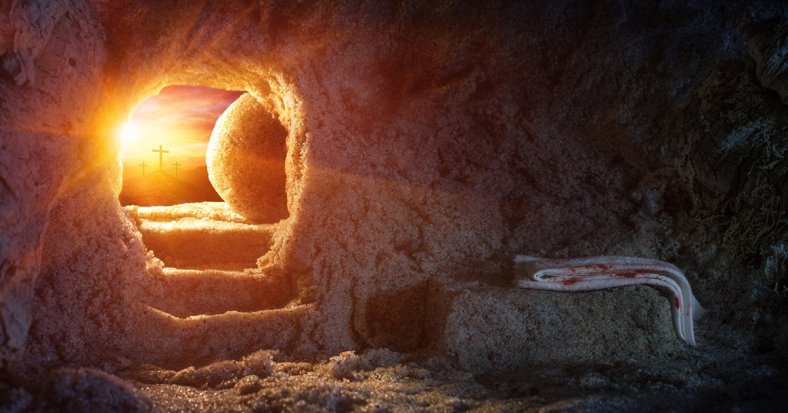
‘The great turning point in human history, the moment when everything changed was when Jesus came out of the tomb on Easter morning. We live in a world which fools itself that the great turning point in history came in Europe and America in the 18th Century, when we had what was called ‘The Enlightenment’ and with our new ideas, and our new science and our new democracies etc we were actually going to solve the problems of the world. If you look back at the last couple of hundred years, you say, ‘Well give me a break! If that’s called solving the problems of the world then we are going to have to think a bit better in the future.’ But actually, that’s because ‘The Enlightenment’ has offered a parody of Christianity. The Enlightenment therefore wants to rubbish the resurrection because if the resurrection happened it means that THAT was the great turning point in history and not Europe in the 18th Century and so the agenda for Christians today … is to go back and re-inhabit the truth that God’s new world was born, not when certain European thinkers had some bright ideas 200 years ago, but when Jesus came out of the tomb on Easter morning, and as we learn to live ‘out’ of that belief, ‘out’ of that event, then that is the way that God’s kingdom is going to come on earth as in heaven.’

If each of us can get a small glimpse of this, and hold it thoughtfully, intelligently and respectfully in our hearts, we can properly celebrate and wish each other a very Happy Easter.


Then go quickly and tell his disciples: “He has risen from the dead and is going ahead of you into Galilee. There you will see him.” Matthew 28.7

The Nations Morals Are Like Its Teeth …

196648316

THE NATIONS MORALS ARE LIKE ITS TEETH, THE MORE DECAYED THEY ARE THE MORE IT HURTS TO TOUCH THEM” – George Bernard Shaw

At the start of the year many of us made New Year’s resolutions and will do our best to keep them as the year progresses (lose weight; give up smoking; pass a driving test or embark on a new career etc, etc). Sometimes our thoughts are more reflective as we consider our place in the world and the lives of those around us, often culminating is a silent prayer for the world to be more peaceful, kinder and charitable than it was the year before. Sadly it doesn’t seem long before the very next calamity or personal tragedy pops up on our television screens or appears in our newspapers to dampen our New Year optimism. ‘What has the world come to?’ we say; ‘Doesn’t the world have any standards?’; ‘Things weren’t like this when we were young!’

What we are doing is lamenting the passing of standards or a moral code by which people commonly live; a moral backdrop, climate or culture which protects us from the negative excesses of society. And yet to speak about morals makes us feel uneasy. We don’t like it! We don’t like people interfering with the way that we live our lives or questioning our standards, or the way we behave – we just simply don’t like being preached at!

The problem is made all the worse because we don’t know or perhaps can’t agree on what standards are acceptable. This is because we have made relativity a virtue in its own right! There is no such thing as absolute right or wrong, just what is right or wrong for me. We are all like Humpty Dumpty in Lewis Carroll’s “Through the Looking Glass” who said “When I use a word …. it means just what I choose it to mean – neither more nor less”. The problem with each person choosing their own set of values as if ‘no one else matters’ is, that ultimately they don’t – each person does their own thing and can’t be held responsible for going their ‘own way’ even if the effect is to hurt or grieve another.

You don’t have to be necessarily rigid or religious to appreciate the need for a common set of values, and yet as a Christian minister I can’t think of any better guide to live by than those found in Scripture, based upon the message of a loving creator who nurtured the understanding that each person ‘made in his image’ was therefore special. So special that through the life, death and ministry of Jesus, God demonstrated his love for the world and encouraged his followers to do the same. Perhaps the answer to the world’s moral malaise (at least in our own small corner) lies not just in what we do but in what we believe. It always, always starts with us.


“ Love the Lord your God with all your heart and with all your soul and with all your mind and with all your strength’ and ‘Love your neighbour as yourself.’ Mark 12.30-31

Brexit – If At First You Don’t Succeed ….

eu referendum shutterstock_392967421

IF AT FIRST YOU DON’T SUCCEED TRY, TRY AGAIN seems to be the Prime Minister’s mantra as she tries to get her Brexit deal through Parliament – which seems to be a herculian task given the fact that Parliament had already voted against it by 432 votes to 202 – the biggest government defeat ever known. This immediately led to the leader of the opposition tabling a ‘Vote of No Confidence’ which was also roundly defeated. So, the Prime Minister has the ‘confidence of the house’ but not the power to proceed with her proposed deal which had taken her and her government two years to negotiate. Confusion reigns as politicians and the public alike ponder ‘where do we go from here?’

Typically, most people in such a situation would seek a compromise, but unfortunately the problem fundamentally doesn’t really lend itself to one. Like the Brexit referendum of two years ago, we are still left really with the binary choice of ‘do we stay or do we leave?’ Perhaps in reality, the slogan used by Boris Johnson of ‘having one’s cake and eating it’ whilst Foreign Secretary highlights the Achilles heel of our negotiations; one immediately spotted by the EU’s negotiator Michel Barnier who was unequivocally opposed to the UK ‘cherry picking’ what it did and didn’t want. Our politicians should have not only recognised the result of the referendum but embraced wholeheartedly the intrinsic nature and logic of it as spelt out by the simple Leave means Leave campaign slogan. Then our negotiators might have made more positive headway in the discussions, but instead the constant desire to keep ‘as close a tie as possible’ with the EU, and find a middle way, has spectacularly backfired and come back to haunt it. Unfortunately, there is now no potential solution (Norway, Canada, rescinding article 50, or a second referendum) which doesn’t severely undercut somebody’s redline or in my personal opinion fundamentally undermine the democratic process.

The King James Version of the Bible rather poignantly states that ‘where there is no vision the people perish’ (Proverbs 29.18) and we are in danger of seeing this in reality. The sharing of thoughts views and opinions is of course fundamentally important, but without a clear sense of direction, leadership and vision, we will always struggle. Instead of constantly grand-standing on an issue of such national significance, our politicians should humbly come and work together. Those who aren’t in positions of power and authority shouldn’t act as if they were, but positively try to encourage those who do have the power to make the best decision possible – and those with the power and authority should humbly listen to all sides and respect the fact that they are required to act on behalf of the nation. And we who are members of the general public should recognise the referendum result and prayerfully encourage them to do so. That’s democracy!


If my people …. humble themselves and pray and seek my face and turn from their wicked ways, then I will hear from heaven … forgive their sin and will heal their land.    2 Chronicles 7.14


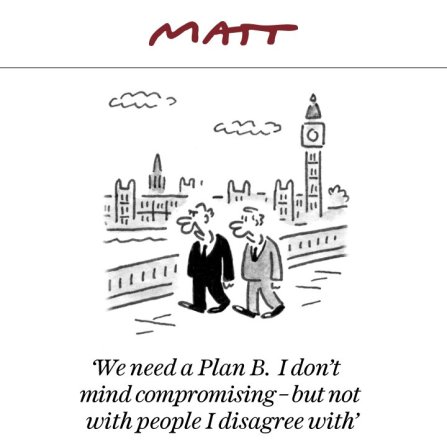
matt cartoon

And the baby’s name is ….

Immanuel God with Us

HOW DO YOU CHOOSE A NAME FOR A BABY? Do you name your child after a grandparent, parent or family member? Or do you name it after a famous celebrity, such as a pop star, film star or footballer? You might want to be creative and invent something unusual that will attract attention and make a statement, while others prefer to stick to something more traditional. Some people might want to make a popular choice, and for others it really doesn’t matter! Choosing a name is really difficult isn’t it! Made all the more so if you are the sort of person who’s as interested in the meaning of a name, just as much as the sound of it!

In many ways, Mary and Joseph didn’t have this problem, for when Mary was told by the angel that she was going to have a baby, she was also told what he was to be called – he was to be called Jesus (Luke 2.31). Now Jesus wasn’t an uncommon name at the time, in fact, it was exceedingly popular, because it had a wonderful connotation and a meaning loved by all the people, for ‘Jesus’ was simply the more ‘modern’ Greek form of the much more traditional name, translated in Hebrew as ‘Joshua’ which means ‘God saves’ or possibly ‘the Lord is salvation’. So imagine what it would mean to a poor people who had known hardship all their lives, fearfully living in the shadow and military might of Imperial Rome, to be reminded of the fact that ‘God saves’. It’s a wonderful hope to cling on to and this child would be a reminder and symbol of it, every time his name was spoken. But Christians are aware that there is so much more to this story than this, for Jesus has ‘another name’ – a name which is celebrated in song every Christmas in carols around the world, for his birth is also seen as the fulfilment of an ancient prophecy that was first uttered many centuries before in the time of Isaiah. ‘All this took place to fulfil what the Lord had said through the prophet. “The virgin will be with child and will give birth to a son, and they will call him Immanuel – which means, God with us’ (Matthew 1.22-23). So, God is no longer aloof, abstract, or ‘out there’, for one brief moment in time, he is made wonderfully ‘real’ in the person of Jesus. It’s this coming of Jesus, God literally stepping into the world that Christians celebrate at Christmas. Knowing that God can understand us in every way because he has become like us in the person of Jesus, is an incredible thought. Especially when one considers how prone we are to make silly mistakes and get things wrong! It would be so simple for this holy God to simply blot us out of his copy book, but he doesn’t because he loves us and cares for us, and wants us to know and understand him. This is a great joy and when we understand that he has come not only to know us, but save us, by taking upon himself at the cross all the punishment for our misdeeds. We recognise Christmas for what it truly is – the celebration of the greatest piece of news that this world has ever known or will know. It is my hope that over the coming weeks, you will find yourself not only enjoying the festive spirit, but grasping the opportunity to embrace the true meaning of Christmas and possibly celebrating it with us. It would be great to see you!

May I on behalf of my family and all the parishes I represent wish you all a very happy Christmas and a very peaceful new year.


‘The virgin will be with child and will give birth to a son, and will call him Immanuel’ Isaiah 7.14


Silence … We Will Remember Them

Silence

‘Silence is golden’ or so we are told, but at 4.20am on the 11th November 1918, the last soldiers went ‘over the top’ and the world was far from silent or golden; in fact, it was dirty, dark, noisy and red. Although the Armistice was signed at 5.00am in a railway carriage in the Forest of Compiegne, France, it wouldn’t be until the 11th hour on the 11th day of the 11th month that the guns of Europe finally fell silent. The Great War would be over, but not until there had been another 2,738 men killed and 10,944 casualties on that single morning alone. In fact the numbers of those who died during the First World War are staggering. In the UK around six million men were mobilised, and of those just over 700,000 were killed. That’s around 11.5% of all men that went to fight ‘for King and Country’. The Hall of Memory at the famous Menin Gate Memorial in Belgium contains the names of 54,896 unidentified Commonwealth soldiers. On completion it was discovered to be too small to contain all the names, so another 34,984 were inscribed elsewhere… and that’s just the unidentified soldiers. An estimated 16.5 million people (military and civilian) are believed to have died in total. With so many people killed and so many families torn apart as they bore the consequences of the conflict, it’s easy to see why this was considered to be the Great War, for the numbers are huge. Although these make fearsome statistics, we should never forget that these are all individuals, people who were known and loved by their families and friends; a point which remains true even for those whose names were eventually classified as ‘known only to God’.

This year on November 11th we will be holding our usual Remembrance Day Services across the benefice and I would like to invite you to strongly consider coming to one if you can as we remember with gratitude and grateful respect all those who have died in two world wars and other major conflicts. However, at All Saints Necton at 6.00pm we are going to be holding a special service to commemorate not only those who died in the conflict, but also to give thanks for the end of the First World War, as this year marks the centenary of its end. The service will finish with the bells in our church tower joining the nation in ringing a short celebratory salute to mark the end of the war. Please join us as we mark this special and significant occasion.


Greater love has no-one than this, that he lay down his life for his friends. John 15.13


Who Says Politics And Religion Don’t Mix?

004

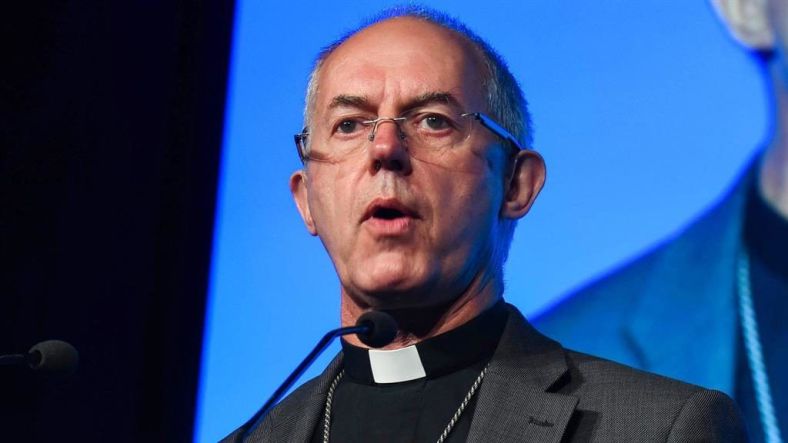
The Archbishop of Canterbury’s recent speech to the TUC (Trade Unions Congress) to mark their 150th anniversary was well received by many who saw it as a wonderful example of the Church ‘speaking truth to power’ and standing up for the marginalised and the oppressed – and particularly workers’ rights. It was also heavily criticised by the Tories as being party political and not the sort of behaviour expected from an Archbishop. Indeed, Phillip Davies MP said “Mr Welby should quit his position as the head of the church and join the Labour Party properly if he wishes to comment on issues of government”, suggesting that the Archbishop “ought to consider removing his dog collar and replacing it with a Labour Party rosette”.

It always amazes me the number of times that we hear people (usually politicians) trot out the old adage that ‘Politics and Religion shouldn’t mix’ as if they have absolutely nothing to do with each other, and of course in reality this statement couldn’t be further from the truth. People of all descriptions have every right to challenge the authorities on political matters whenever necessary and Christians are no different. It’s just that their particular understanding of the world is inevitably coloured by their religious faith and perspective – a perspective which sees all people as equally important ‘made in the image of God’ and loved by him. Although nobody would suggest that Christians have a monopoly on moral goodness or social fairness, matters of mutual love and respect, service and justice are biblical themes repeatedly seen in the lives of the prophets, Jesus and the apostles as they sought to transform a broken and sinful world into ‘the Kingdom of God’. It was Archbishop Desmond Tutu who once exclaimed that “I don’t know what Bible people are referring to when they say that politics and religion shouldn’t mix”, because the Bible is full of politics.

The simple fact is that Christians are not motivated to be a thorn in the side of any one political party, but all political parties if their programmes and policies undermine and speak in the face of Christian values and principles, and in truth this is what being a prophet is all about. It’s about bravely speaking God’s truth into the world wherever necessary without fear or favour, appropriately challenging and encouraging it in due portion. Indeed, the Apostle Paul always felt that his task was to preach on ‘the whole counsel of God’ (Acts 20.27) and he wouldn’t allow any ‘political’ party or those in authority to prevent him from doing so, for usually the people who make the loudest protest about the mixing of religion and politics are those who fundamentally misunderstand the nature of Christian witness and would rather avoid the glare of its inspection.


And what does the Lord require of you? To act justly and to love mercy and to walk humbly with your God. Micah 6.8


To Print Or Not To Print – That Is The Question!

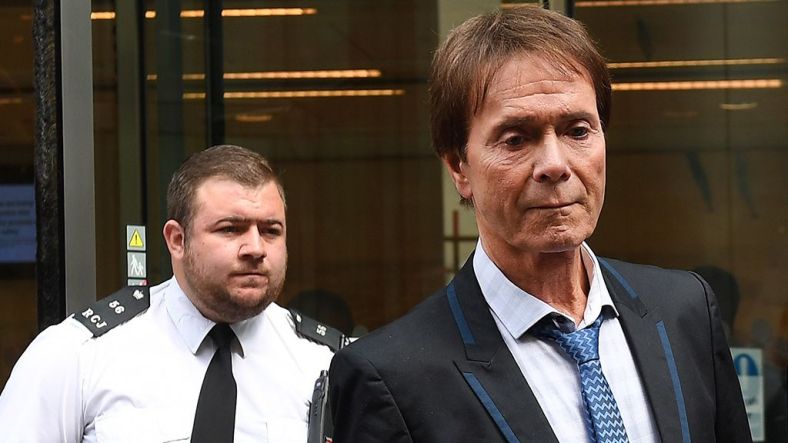
Sir Cliff Richard awarded damage sum in BBC trial

Let’s ‘print and be damned’ has often been the unsaid mantra used by journalists, newspapers and media outlets for many years, and is ironically said to have arisen from a statement uttered by the Duke of Wellington, when confronted with a letter threatening to reveal salacious details about an affair. The Duke would not give in to blackmail and so suggested that the publisher should print as he wished and therefore reap the consequences.

The consequences can be profound as we have seen from the recent case between Sir Cliff Richard and the BBC, when the High Court judge Mr Justice Mann ruled in favour of the singer and awarded him £210,000 in damages, agreeing that promoting unsubstantiated accusations against Sir Cliff and publishing sensational video footage of the singer’s home being searched when he was never arrested or charged, was a ‘serious invasion of his privacy’. In response, the BBC were considering an appeal, suggesting that not being able to publish the name of a suspect prior to a formal charge was a serious restriction of the ‘freedom of the press’ and would not be in the public interest. This overlooks the terrible hurt personally caused to Sir Cliff and the irreparable damage done to his reputation, coupled with the judge’s own conclusion that ‘no matter of public interest’ was served in this case. Although emotionally unable to comment on the steps of the High Court, Sir Cliff made it clear in his interview with ITV that he had no desire to curtail the ‘freedom of the press’ but to ensure that the privacy of the individual was respected until the point that a formal charge is made. After all, it is a fundamental principle of our society that all people are innocent until proven guilty and as Sir Cliff himself observed ‘freedom without responsibility is anarchy’.

It seems to me that although it’s right to promote openness and transparency, we all need to accept that this doesn’t give us an automatic right to know everything about every individual or institution. The problem is that we are all nosy, and gossip sells newspapers, and we simply can’t bear not knowing and this is where the dilemma lies – we expect to have everything laid out on a plate and become frustrated and disgruntled when it isn’t so. The BBC may have hoped that its reputation for rigorous journalism would be enhanced, but they forgot (or perhaps didn’t care) that it’s prize scoop came at the expenses of trashing the reputation of an innocent person.

Perhaps we should all remember that only God knows everything and that one day our lives will be judged by him as if it were an ‘open book’, but until then we need to live, love and respect each other with as much grace and dignity as we can muster. Doing ‘to others as you would have them do to you’ (Luke 6.31), otherwise we will all have to suffer the consequences.


 “And what does the LORD require of you? To act justly and to love mercy and to walk humbly with your God.” Micah 6.8


‘In God We Trust’ – Or Is It The American President?

trump

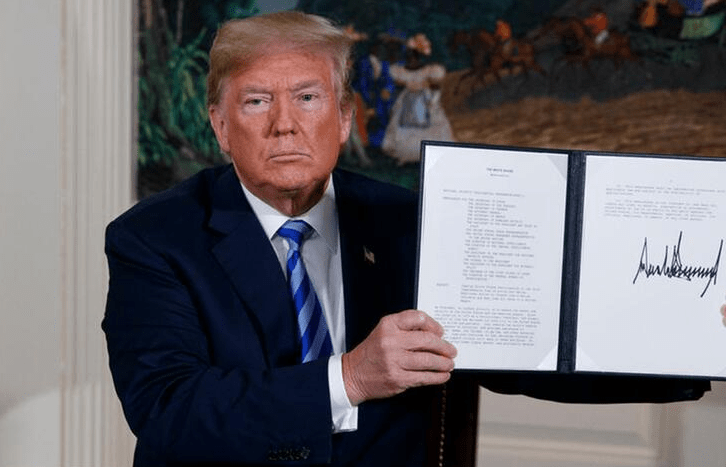
In the light of Brexit, one of Prime Minister Theresa May’s most notable remarks was that ‘No deal is better than a bad deal’, but now that President Trump has pulled the United States out of the Iranian nuclear deal, we are all left wondering whether a bad deal is actually better than a broken one? Naturally, the complexities of the issue are immense and the implications of pulling out of the deal with the Iranians very serious indeed, especially as it was generally believed that the Iranians were in fact ‘keeping their end of the bargain’. This was underscored by the vain attempt of several national leaders to keep Donald Trump ‘onside’ prior to his announcement.

Now of course, it’s very difficult for the common man to get any sense of what’s really going on behind the scenes or the ‘inside track’, but boldened by his recent success in North Korea, it appears that President Trump is playing a tremendous game of brinkmanship in an attempt to force the Iranians once again to the negotiating table in order to generate a new, better, more wonderful deal than the one previously negotiated under President Obama. Of course, if he succeeds then he will deserve the world’s plaudits, but if he doesn’t, then we will all have to girder our resolve as we come to terms with the consequences.

However, on a simple level one is left wondering ‘what do these events say about trust?’ How can we expect Iran (or any other nation state for that matter) to trust America if it can tear up its agreements at a moment’s notice? It’s slightly ironic that one of Donald Trump’s campaign slogans was Trust me! I’m going to make America great again!’. No doubt the President believes that this is precisely what he’s doing in keeping with his ‘America first’ approach but surely it will become much harder for other signatories or nation states to be so confident about US policy or the trustworthiness of its President!

Perhaps the US, which takes such pride in it’s Christian heritage, should pause and reflect upon its national motto which is stamped on the back of every two-cent coin, the simple slogan which reads ‘In God we trust’! The Spiderman movies may have brought to the public consciousness the thought that ‘with great power comes great responsibility’, but the Bible also has a lot to say about the folly of those who look purely to their own strength, wealth and resources to get things done (see Psalm 52.6-7), whereas the godly man humbly appreciates that he can’t do everything in his own strength, but only with the wise and prayerful backing and support of others, trusting God as he does so. For trust needs to be cultivated and encouraged – it can’t be demanded. If you want people to trust you, you need to give them reason to do so. Christians will recall how Jesus encouraged his disciples to ‘Trust God and to trust also in me’ (John 14.1), but this wasn’t a blind sort of trust, ‘a stab in the dark’, it was a reasoned trust based on what they knew God had done for them in the past and what they could see Jesus doing for them now. His deeds gave his words authenticity. His whole life was one of integrity. People may break their word, but God never does and now, through the person of Jesus, God was keeping his Word, and fulfilling every promise, agreement and covenant that had ever been made. Let’s hope that in the fulness of time the American President will win a fulsome victory, but will it also earn him praise, respect – and fulsome trust?


“He who was seated on throne said, ‘behold I am making everything new!” Then he said, “Write this down, for these words are trustworthy and true” Revelation 21.5


1865_Two_Cent_Obverse

The Incredible Art Of Forgiveness

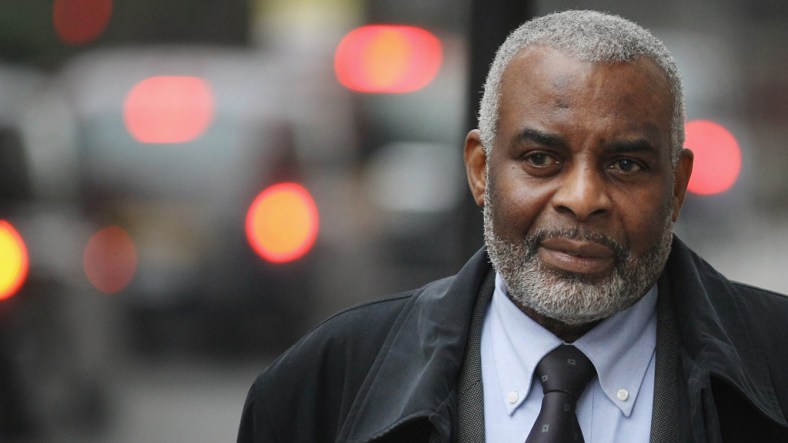
The Trial Begins Of Two Men Accused Of Murdering Stephen Lawrence

In the light of the recent chemical weapons attack upon the Syrian citizens of Douma, alongside March’s assault upon Sergei and Yulia Skripal when a Novichok nerve agent was used in Salisbury, one could be forgiven for thinking that the world has sunk to a new low and that the world had become a much darker and dangerous place. What has become of our moral values, common decency and respect for human life?

In recent weeks, we have seen the American, French and British authorities take military action against those who use chemical weapons, but there have also been two incredibly moving stories which perhaps given the circumstance have not been given the prominence that they rightly deserve. The first was the comedian Patrick Kielty’s BBC documentary entitled “My Dad, the Peace Deal and Me”, exploring the legacy of the Good Friday Agreement as it reached its 20th anniversary. Patrick’s story is poignant as his own father was murdered by paramilitary gunmen during ‘The Troubles’ – men who were subsequent released from prison as part of the agreement. Patrick’s view was nuanced, because although he admitted that he couldn’t forgive the gunmen, he accepted that their release was necessary if there was ever to be reconciliation. He was stunned by an interview with Richard Moore, who as a child had been totally blinded by a rubber bullet fired at him by a British soldier – and yet Richard had forgiven his assailant and had made great strides to find him in order to say so, resulting in a lasting friendship. How could Richard forgive the soldier so?

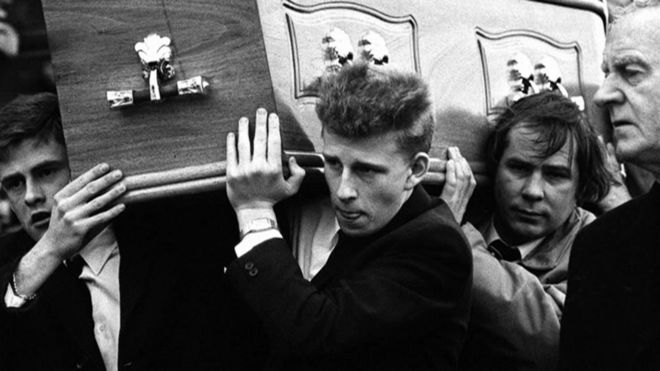
_100688594_kieltyfuneral

[Patrick Keilty carrying his father’s coffin in 1988]

This was followed by an amazing interview given by Neville Lawrence, the father of the murdered teenager Stephen Lawrence, whose story has regularly been in the headlines for 25 years. Two men had been convicted of Stephen’s death and yet it’s understood that five were involved. Neville revealed how he had forgiven them all for the murder of his son. Like Patrick, Neville’s story was incredibly hard and painful, and described as a ‘life sentence’ that would never go away, and yet he had forgiven his son’s murderers. How could this be possible?

It seems that both Neville and Richard had discovered an ancient Christian truth which is that forgiveness is not dependent upon the perpetrator saying sorry or even being met with. It’s an act of the heart and mind which allows the victim to find peace, ‘to let go’, and won’t allow any anger, hurt or pain they feel to fester and become a well of bitter malice within them, which probably does nothing to bring about reconciliation, and may not even be known by the perpetrator, but simply mars and cripples their own life henceforth. It comes from a deep-seated understanding that you are not going to hold a grudge or allow hurt to define you. Naturally, this isn’t easy – and shouldn’t be remotely confused with ‘letting other people get away with it’ or not wanting justice. Neville Lawrence wants justice as keenly as ever he did – it’s just that he won’t allow his anger and hurt to corrupt and corrode his heart and soul.

True forgiveness isn’t ‘a trick of the mind’; it isn’t secretly hoping for revenge or holding on to resentment. It has to be genuine and is therefore both a true art and an act of grace. Whether forgiveness is or isn’t asked for, it certainly isn’t deserved – it can only be given. It’s therefore a beautiful thing – a gift, which allows the victim to find peace, and can wonderfully, occasionally lead to repentance and reconciliation by all parties.

The Christian will see clear parallels between this and the Gospel story – how our sin naturally makes us all perpetrators, leading to the death of Jesus upon the cross where he graciously and lovingly takes upon himself the punishment for our sins (justice demands it) so that we might be reconciled and freely forgiven by God when we turn to him in sincerity, faith and repentance.

The stories of Richard, Neville (and perhaps even Patrick, who began to wonder if he had actually forgiven his father’s murderers after all) demonstrate that by God’s good grace and mercy there is still a lot of love and light in the world – and the world isn’t quite as dark as it might be.


“Forgive us our sins as we forgive those who sin against us” Luke 11.4