
The miraculous joy of hearing!


Cultivating a friendship which inspires

You don’t need to be a fan of Rugby League to appreciate and be inspired by the tremendous friendship between Kevin Sinfield and his former Leeds Rhinos team-mate Rob Burrow. When Rob Burrow was diagnosed with Motor Neurone Disease in late 2019, Kevin stuck by his friend and was inspired to do whatever he could to raise money for MND charities. In 2020 he ran seven marathons in seven days and in 2021 he completed a run of 101 miles in 24 hours. Last year he completed an Ultra 7 in 7 Challenge when he ran seven back to back ultra-marathons (an ultra marathon being a run longer than the standard marathon length). His latest triumph was on Sunday 14th May 2023 when he completed the first inaugural Rob Burrow’s Leeds Marathon when he actually pushed Rob the 26.2 miles in a specially adapted wheelchair, lifting him out of the chair as they finally crossed the finish line together. So far Kevin Sinfield has raised well over £8 million for charity, which is not only a remarkable story about good coming out of adversity, but a wonderful celebration of their friendship.

The Bible has a lot to say about ‘running the race’ and ‘going the extra mile’, just as it does about friendship, with such examples as those of David and Jonathan, and Ruth and Naomi whose love, compassion and loyalty bound them together through ‘thick and thin’ as good friends regardless of what life and dire circumstances had brought them. The Christian will be aware that this was modelled in Jesus’ own life and taught by him when he told his disciples that they and all who put their faith in him could be his friends if they did what he commanded – and what was it that he commanded? It was that they should ‘love one another as I have loved you’ (John 15.12) in other words selflessly, sacrificially and completely, often putting the needs of the other person first, and before themselves. This was ultimately demonstrated by Jesus himself when he died upon the cross.

There is so much sadness and suffering in the world that it often weighs us down and depresses us but let us also lift up our heads and be inspired by the good examples of love and friendship that we see and be inspired to cultivate such qualities and friendships in our own life and the people we meet.  


A friend loves at all times, and a brother is born for adversity. Proverbs 17.17

“Are We Nearly There Yet?”

I’m sure we are all familiar with the concept of the plaintive cry of a small child on a long car journey who cries out – “are we nearly there yet?”, usually when going on holiday or travelling a great distance across the country. Well, this week we heard plenty of other distressed ‘holiday cries’ as people discovered that the government was imposing a 14 day quarantine period upon all travellers and holiday makers returning from Spain who it feared might be harbouring the coronavirus. Not only did the suddenness of the announcement take holiday makers by surprise, but holiday companies, travel firms and airlines were all equally caught out and swiftly started to complain that the government was being too heavy handed and extreme in its response which they thought unreasonable. Naturally, the Spanish authorities were indignant that they had been singled out in this way, and upset about the effect that this restriction would have upon their tourist industry and economy, arguing that many of their choice tourist locations were better protected and managed than their equivalents in the UK. But within a few days and with the number of Covid-19 infections rising in Germany, France and Belgium, it became clear that the government’s concern was far wider, fearing that a ‘second wave’ of the pandemic might be looming and swiftly sweep across Europe towards the UK.      

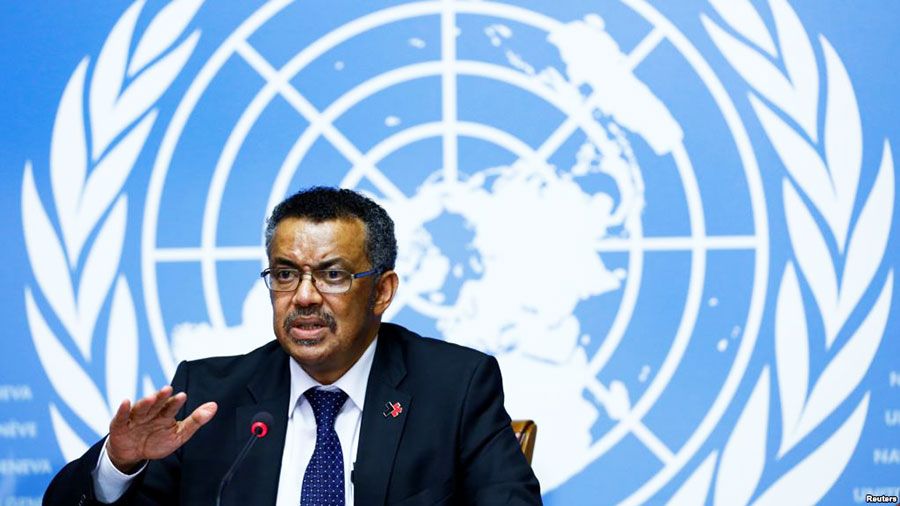
Apart from the obvious imperative of the government to protect its citizens, this episode demonstrated the sombre truth that despite the relaxing of lockdown restrictions and greater public freedoms, the virus had not gone away, and these latest measures politically symbolised the government’s resolve and willingness to act. Indeed, despite huge progress being made in terms of testing and the development of a vaccine, it was abundantly clear that as far as this particular journey was concerned, we weren’t ‘nearly there yet’; in fact we would still have to keep travelling and working together for some considerable time if we were ever going to reach our final goal and long held desire and ambition of a virus free future. This was a point made by Tedros Adhanom Ghebreyesus, the Director General of the World Health Organisation who despite telling the World’s media that the pandemic was accelerating (16 million cases of coronavirus had been reported to the WHO), still insisted that “We are not prisoners of the pandemic. Every single one of us can make a difference. The future is in our hands.”  If we are going to achieve our goal then we need to work together.

St Paul reminded the early church at Philippi that if they wanted to successfully overcome the trials and tribulations that came their way, then they needed to become more like Christ in both their attitude and outlook, for Christ had not avoided suffering but pushed his way through it in order to win the greater prize of eternal life and the forgiveness of sins for all those who put their faith and trust in him. It was Paul’s ambition to become more like him, thinking about and loving and caring for the world in the same way that Christ did. Now of course, nobody wants to suffer or likes it, but it is the manner in which we face it and lovingly support one another through it that makes all the difference and will ultimately help us overcome the trial before us and reach our destination.       

Forgetting what is behind and straining towards what is ahead, I press on towards the goal to win the prize for which God has called me heavenward in Christ Jesus. Philippians 4.13-14


Patience Is A Virtue – Even In ‘Lockdown’

200501-coronavirus-research

Every Thursday evening my family and I, like many others, have stood outside our house clapping our hands, applauding the sterling work of the NHS whose doctors and nurses have been battling on the ‘front line’, looking after and caring for sick coronavirus patients. But over the weeks our appreciation has grown as we have become more aware (and thoughtful) of all those who are playing such a massive part at this difficult time, not just the doctors and nurses but all employees of the NHS; alongside care workers in care homes (the new and perhaps previously forgotten front line?); ‘key workers’ in so many various and different fields (supermarkets, schools, and utilities) and not forgetting the increasingly significant part played by funeral directors, whose own personal ‘risk’ is not inconsequential.

The panic buying of the first few weeks has been largely forgotten by the many acts of kindness that we have seen by members of the public as they look after and support one another, especially the vulnerable, at this difficult time. We have seen real acts of courage, bravery and sacrifice undertaken by those whose professionalism and dedication to public duty and care has put themselves at risk in the service of others. We remember especially all those doctors, nurses and care workers who have died, largely and inexplicably from the BAME community. All this has been coupled with massive acts of generosity as people have rallied to support one another and the NHS behind such inspirational figure heads as Captain Tom Moore.

Coronavirus stats

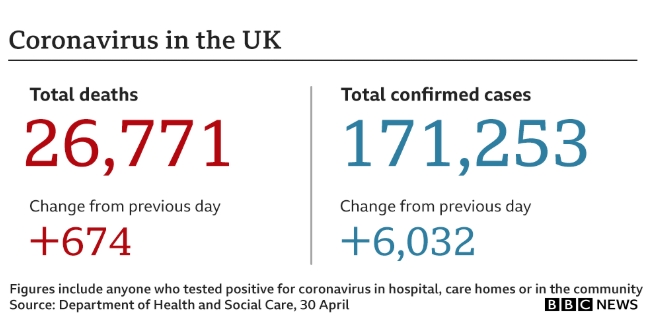
But of all the virtues we have witnessed there is one that seems to be in increasingly short supply (particularly in the media) and that is – patience! Despite being told from the outset that this crisis would be more like a marathon than a sprint, we were barely ‘locked down’ for a fortnight before the media started to ask as to when the lockdown might be lifted. This question gained momentum from business and opposition parties as the cost to business and the economy started to bite. In one sense these are natural questions to ask and no one underestimates the very real pain and uncertainty that people are feeling and experiencing. The costs and pain to peoples’ lives and livelihoods at this time is immense, and yet I would suggest that it is nothing compared to the pain of losing a loved one. For many life will go on, even if it is different, but once you have lost someone you can never get that life back! That’s why it is crucial that we all pay attention to the rate of infection (the ‘R’ number) and follow the government guidelines. Until we have ‘flattened the curve’ and this number becomes ‘1’ or ‘less than 1’ it would be irresponsible to lift the restrictions. The cost to the economy and people’s lives would be much, much worse if we allowed this rate to increase again – which it could easily and very rapidly do. At the time of writing 26,771 people have died of the coronavirus in the UK alone, a rise of 674 from the previous day. These are unprecedented numbers which is why we must hold on to our nerve and our courage! We must bravely hold on to our resolve and our dedication. We must continue to have faith, courage and patience! As tempting as it may be to return to work, to enjoy the sunshine and pick up our normal lives once again, we can’t until it is safe to do so. Neither can we allow the sacrifice of others to be wasted, nor destroy our hope for a better future.

BB13uBmy

The Christian will be aware that Jesus also undertook a very long, arduous and painful journey towards the cross. The shadow of his looming death must have been a constant and fearful presence, and yet he bravely continued on, knowing that it would be the only way by which others might be saved. So, at this time of national crisis, let’s continue to embrace the path which is set out before us, doing so with the same love, resolve, determination and kind generosity of spirit – and let us be patient!  


4 Love is patient, love is kind. It does not envy, it does not boast, it is not proud…. 6 Love does not delight in evil but rejoices with the truth. 7 It always protects, always trusts, always hopes, always perseveres.

            1 Corinthians 13.4,6-7


Necton Benefice Logo

Easter, the Coronavirus and ‘Doing Whatever it Takes’

Easter Day 3

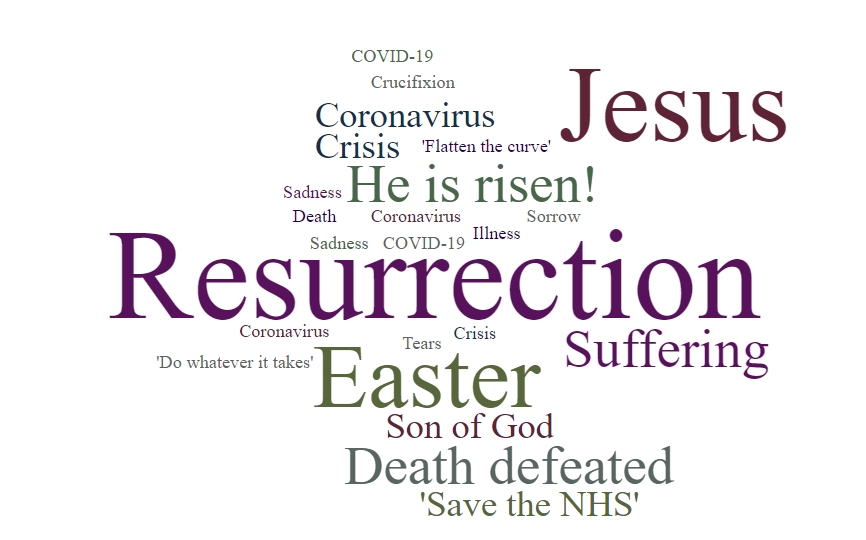
“Every single person in the country is affected by this” I was told and so we are. Who would have thought that our lives could be so dramatically transformed by a disease that nobody had ever heard off until a few months ago? All social gatherings have been banned and people have been encouraged to work from home. Schools have closed and Churches have had to cease all acts of public worship. Prime-ministerial news briefings have spoken about ‘flattening the curve’ to give the NHS the time and space to cope with the rising number of infections and those who are over 70, pregnant women and those with underlying health conditions have been encouraged to go into self-isolation. Social distancing has become the new social responsibility and the nation has been put on a ‘war’ footing. The health crisis has also become an economic crisis with the Chancellor of the Exchequer pumping £330 billion pounds (15% of GDP) into the economy to help businesses pay their rent, salaries and suppliers – the largest ever injection of aid in ‘peace time’ Britain. The Chancellor is clearly committed to ‘doing whatever it takes’ to overcome this crisis and yet the Prime Minister’s frankness has been clear from the start ‘many more families will lose loved ones before their time’. It’s a truly nerve-racking and terrible situation, a situation outside of our experience, and which has brought out both the best and the worst in us. Many people are kindly looking after their neighbours whilst others are sadly and selfishly panic buying in the supermarkets and shops.

If we ever needed a reminder of the imperfection of our world, then surely this is it! For many of us, calamities and disasters usually happen to other people, somewhere on the other side of the world. We are not used to the fact that in a global situation and in a truly global pandemic this one might actually affect us.

And yet for the Christian this all rings strangely true, for the Christian will be aware that in many ways, theologically speaking, we have never lived in a perfect world; for Genesis reminds us that when we think we are ‘masters of all that we survey’ and are in charge of our own destiny perhaps knowing better than even God himself, then something always happens to trip us up and we are destined for a fall. Now God has graciously gifted us with many wonderful qualities and characteristics, such as knowledge, skill and intellect and we are constantly amazed at what human endeavour and intuition can achieve, but fundamentally the heart of the problem is always the same – it’s the problem of the human heart, which wants to do things our own way and keep God out of the picture. This bias to self (which affects us all) the Bible calls sin and spoils our relationships with God, with one another and even with creation. It’s the worst of all social distancing! What we need is a new start and a new hope!

Fortunately, the Christian is aware that despite the fact that many of us may have forgotten God, he doesn’t forget us, for in the person of Jesus, God steps into this broken and fallen world of ours and bears the brunt of our pain and our sin in his own body upon the cross. He’s the one who truly does ‘whatever it takes’! He dies the death that we all deserve precisely so we don’t have to when we put our faith and trust in him – and he does this because he loves us. Christ’s death is awful and frightening, and if he were just an ordinary man then it would be the end of the story, but it’s not – because Christians recognise that Jesus isn’t simply human, he’s divine, he’s the Son of God, God made flesh, God incarnate and his resurrection proves it as witnessed by so many of his day.

resurrection

He is therefore as the risen Lord, , a man of the ‘new creation’ (2 Corinthians 5.17 / Revelation 21.1), a man of the new life and  perfectly restored order, which is promised eternally to all who believe. This is the joyful essence of Easter Day and it provides us not just with the courage and strength to meet the challenges of this moment (however dark it may be) but hope for the future, for as the Bible reminds us ‘God so loved the world that he gave his one and only Son that whoever believes in him should not perish but have eternal life’ (John 3.16).

So, yes, despite the difficulties of the present moment, may I take this opportunity for myself and the parishes I represent to wish you all a very happy and joyful Easter.


May the grace of the Lord Jesus Christ, and the love of God, and the fellowship of the Holy Spirit be with you all … this day and always. 2 Corinthians 13.14


Necton Benefice Logo

What Can The Coronavirus Teach Us About Human Kindness?

14-page-14-photo-1_7

Today, we learnt that Sally and David Abel who were among 74 British nationals quarantined on board the Diamond Princess cruise ship off Yokohama, Japan had tested positive for the Coronavirus. Their frustration with the British Foreign Office for not being able to get them off the cruise ship and home was obvious, particularly in the light of the fact that American passengers had been repatriated only the day before. The sudden appearance of this hitherto unknown virus remains something of a mystery, but its ability to spread quickly from person to person before symptoms became obvious was alarming – hence the need for a recommended 14 day quarantine period. The problem is that while the vast majority of people will only experience a mild illness, a few (currently 3%) can become critically ill, usually those who are already elderly and frail with respiratory problems, or health workers who have been exposed to the virus over a lengthy and sustained period. Despite the draconian measures, the Chinese have been largely praised for their handling of the situation and even here in the UK, Parliament has passed measures allowing the Police to force those at risk of coronavirus into quarantine, with the Health Secretary warning that the spread of the virus is a ‘serious and imminent threat’ to the British public. So should we be alarmed?

Well yes and no! We shouldn’t be alarmed i.e. panic, but we should be concerned – and our response should be kind, careful and considerate. Should it become evident that we have the coronavirus within our community, we shouldn’t be alarmist, but we should take care not to cough, splutter and sneeze over one another. We should be disciplined when it comes to our personal hygiene, washing hands etc and sufferers should be willing to self-isolate themselves and contact their GP by telephone as soon as they feel poorly.

In many ways these simple but profound measures may be viewed as wise and prudent acts of kindness which demonstrate a natural and loving concern for one another as well as for one’s self. Whereas the situation could be so easily exasperated if we mistakenly think that we are somehow immune to the illness or that it’s someone else’s problem. Christians will immediately see the significance of the Biblical command to not only love God but to love one’s neighbour as one’s self (Luke 10.27) in such circumstances, because it’s only by paying due regard to each aspect of this command (neighbour and self) that we can truly look after each other and protect our communities.


Blessed are those who have regard for the weak; the Lord delivers them in times of trouble. Psalm 41.1