

‘In God We Trust’ – Or Is It The American President?

trump

In the light of Brexit, one of Prime Minister Theresa May’s most notable remarks was that ‘No deal is better than a bad deal’, but now that President Trump has pulled the United States out of the Iranian nuclear deal, we are all left wondering whether a bad deal is actually better than a broken one? Naturally, the complexities of the issue are immense and the implications of pulling out of the deal with the Iranians very serious indeed, especially as it was generally believed that the Iranians were in fact ‘keeping their end of the bargain’. This was underscored by the vain attempt of several national leaders to keep Donald Trump ‘onside’ prior to his announcement.

Now of course, it’s very difficult for the common man to get any sense of what’s really going on behind the scenes or the ‘inside track’, but boldened by his recent success in North Korea, it appears that President Trump is playing a tremendous game of brinkmanship in an attempt to force the Iranians once again to the negotiating table in order to generate a new, better, more wonderful deal than the one previously negotiated under President Obama. Of course, if he succeeds then he will deserve the world’s plaudits, but if he doesn’t, then we will all have to girder our resolve as we come to terms with the consequences.

However, on a simple level one is left wondering ‘what do these events say about trust?’ How can we expect Iran (or any other nation state for that matter) to trust America if it can tear up its agreements at a moment’s notice? It’s slightly ironic that one of Donald Trump’s campaign slogans was Trust me! I’m going to make America great again!’. No doubt the President believes that this is precisely what he’s doing in keeping with his ‘America first’ approach but surely it will become much harder for other signatories or nation states to be so confident about US policy or the trustworthiness of its President!

Perhaps the US, which takes such pride in it’s Christian heritage, should pause and reflect upon its national motto which is stamped on the back of every two-cent coin, the simple slogan which reads ‘In God we trust’! The Spiderman movies may have brought to the public consciousness the thought that ‘with great power comes great responsibility’, but the Bible also has a lot to say about the folly of those who look purely to their own strength, wealth and resources to get things done (see Psalm 52.6-7), whereas the godly man humbly appreciates that he can’t do everything in his own strength, but only with the wise and prayerful backing and support of others, trusting God as he does so. For trust needs to be cultivated and encouraged – it can’t be demanded. If you want people to trust you, you need to give them reason to do so. Christians will recall how Jesus encouraged his disciples to ‘Trust God and to trust also in me’ (John 14.1), but this wasn’t a blind sort of trust, ‘a stab in the dark’, it was a reasoned trust based on what they knew God had done for them in the past and what they could see Jesus doing for them now. His deeds gave his words authenticity. His whole life was one of integrity. People may break their word, but God never does and now, through the person of Jesus, God was keeping his Word, and fulfilling every promise, agreement and covenant that had ever been made. Let’s hope that in the fulness of time the American President will win a fulsome victory, but will it also earn him praise, respect – and fulsome trust?


“He who was seated on throne said, ‘behold I am making everything new!” Then he said, “Write this down, for these words are trustworthy and true” Revelation 21.5


 

1865_Two_Cent_Obverse

The Incredible Art Of Forgiveness

The Trial Begins Of Two Men Accused Of Murdering Stephen Lawrence

In the light of the recent chemical weapons attack upon the Syrian citizens of Douma, alongside March’s assault upon Sergei and Yulia Skripal when a Novichok nerve agent was used in Salisbury, one could be forgiven for thinking that the world has sunk to a new low and that the world had become a much darker and dangerous place. What has become of our moral values, common decency and respect for human life?

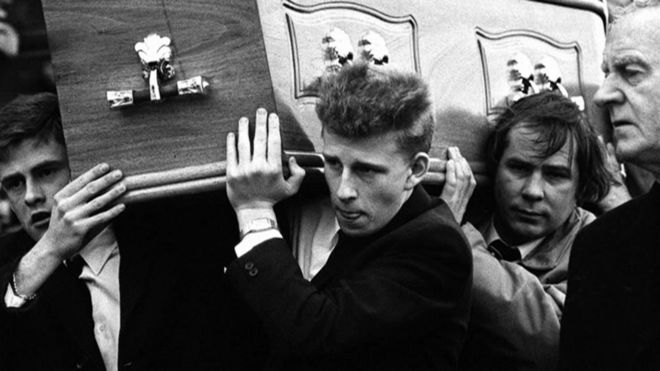
In recent weeks, we have seen the American, French and British authorities take military action against those who use chemical weapons, but there have also been two incredibly moving stories which perhaps given the circumstance have not been given the prominence that they rightly deserve. The first was the comedian Patrick Kielty’s BBC documentary entitled “My Dad, the Peace Deal and Me”, exploring the legacy of the Good Friday Agreement as it reached its 20th anniversary. Patrick’s story is poignant as his own father was murdered by paramilitary gunmen during ‘The Troubles’ – men who were subsequent released from prison as part of the agreement. Patrick’s view was nuanced, because although he admitted that he couldn’t forgive the gunmen, he accepted that their release was necessary if there was ever to be reconciliation. He was stunned by an interview with Richard Moore, who as a child had been totally blinded by a rubber bullet fired at him by a British soldier – and yet Richard had forgiven his assailant and had made great strides to find him in order to say so, resulting in a lasting friendship. How could Richard forgive the soldier so?

_100688594_kieltyfuneral

[Patrick Keilty carrying his father’s coffin in 1988]

This was followed by an amazing interview given by Neville Lawrence, the father of the murdered teenager Stephen Lawrence, whose story has regularly been in the headlines for 25 years. Two men had been convicted of Stephen’s death and yet it’s understood that five were involved. Neville revealed how he had forgiven them all for the murder of his son. Like Patrick, Neville’s story was incredibly hard and painful, and described as a ‘life sentence’ that would never go away, and yet he had forgiven his son’s murderers. How could this be possible?

It seems that both Neville and Richard had discovered an ancient Christian truth which is that forgiveness is not dependent upon the perpetrator saying sorry or even being met with. It’s an act of the heart and mind which allows the victim to find peace, ‘to let go’, and won’t allow any anger, hurt or pain they feel to fester and become a well of bitter malice within them, which probably does nothing to bring about reconciliation, and may not even be known by the perpetrator, but simply mars and cripples their own life henceforth. It comes from a deep-seated understanding that you are not going to hold a grudge or allow hurt to define you. Naturally, this isn’t easy – and shouldn’t be remotely confused with ‘letting other people get away with it’ or not wanting justice. Neville Lawrence wants justice as keenly as ever he did – it’s just that he won’t allow his anger and hurt to corrupt and corrode his heart and soul.

True forgiveness isn’t ‘a trick of the mind’; it isn’t secretly hoping for revenge or holding on to resentment. It has to be genuine and is therefore both a true art and an act of grace. Whether forgiveness is or isn’t asked for, it certainly isn’t deserved – it can only be given. It’s therefore a beautiful thing – a gift, which allows the victim to find peace, and can wonderfully, occasionally lead to repentance and reconciliation by all parties.

The Christian will see clear parallels between this and the Gospel story – how our sin naturally makes us all perpetrators, leading to the death of Jesus upon the cross where he graciously and lovingly takes upon himself the punishment for our sins (justice demands it) so that we might be reconciled and freely forgiven by God when we turn to him in sincerity, faith and repentance.

The stories of Richard, Neville (and perhaps even Patrick, who began to wonder if he had actually forgiven his father’s murderers after all) demonstrate that by God’s good grace and mercy there is still a lot of love and light in the world – and the world isn’t quite as dark as it might be.


“Forgive us our sins as we forgive those who sin against us” Luke 11.4


Who Are You Missing This Christmas?

gods final word_christ_t_nt

There’s a quiet and wonderful hush as Mary and Joseph, holding hands, slowly walk to the front of the school hall, he with a large staff in his right hand and she clutching a small bag to her chest. The music to ‘O little town of Bethlehem’ gently fades into the background as Joseph knocks upon the door standing in front of him – and as the innkeeper appears Joseph calls out in a loud voice ‘please sir, do you have any room where we can stay? For we have travelled a long way and my wife is about to have a baby!’ The innkeeper lets out a loud sigh and sadly shakes his head, but then after a momentary pause his face brightens up with a big grin as he politely and kindly directs them to a stable.

This wonderful and captivating scene has been played out by many generations of school children over the years watched by their proud parents, but it is also a scene that leaves a lot to the imagination and makes a lot of assumptions, for the Bible account never actually mentions the innkeeper, but simply says that after the birth of the baby Jesus ‘she wrapped him in cloths and placed him in a manger, because there was no room for them in the inn’ (Luke 2.7). The kindly innkeeper never actually features, but is strangely absent – missing!

Christmas is often said to be a time for children having fun and families getting together, but perhaps for some this biblical story actually reflects a present reality in their lives – perhaps because someone special, someone significant is missing and Christmas just isn’t the same without them. This could be because circumstances dictate that they can’t be present (such as serving in the armed forces or emigrated or away on business); or it could be because they have started a new chapter in their lives (such as young people leaving home or getting married leaving parents feeling isolated and alone); or it could be because of some sad circumstance (such as a divorce, a broken relationship or the death of a loved one). It’s at times like these when the love and support of family, friends and the community is so crucial, mutually encouraging people to appreciate that they are not alone, but cared for by the people around them – kind words and deeds which can mean so much and mirror the love that God has for us.

But perhaps for some the most significant missing person this Christmas, is Christ himself – which is such a shame because in the person of Jesus we meet with a God who loves and cares for us so deeply that he actually steps into this world of ours, and takes upon himself our humanity when he was born as a baby at Bethlehem. So no-one can say therefore that ‘God does not understand me’ because in Christ he has been there, done it and ‘got the T-shirt’. Our lives aren’t perfect and neither is the world in which we live, but in Christ we meet with someone who not only wants us to feel better but actually makes it possible for us to be better; loved, forgiven and at peace when we put our faith and trust in him. So, don’t miss out this Christmas because in Christ we have a friend who has promised to be with us, not just for today, or for tomorrow, but for always. Christmas just isn’t the same without him!


“The virgin will be with child and will give birth to a son, and they will call him Immanuel”—which means, “God with us.” Matthew 1.23