
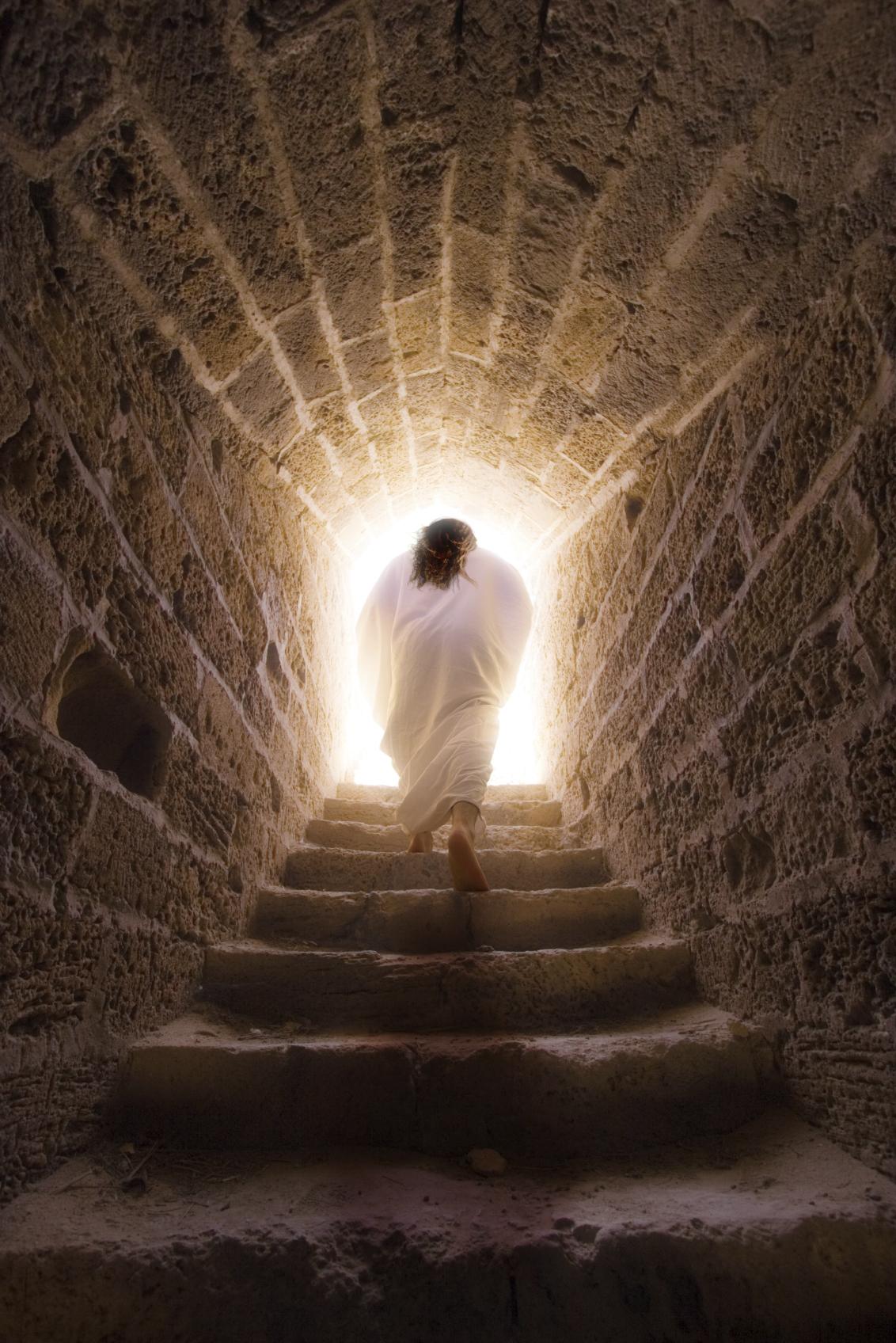
DYING IS A VERY PERSONAL EXPERIENCE and yet despite the fact that we have the ‘assisted dying bill’ going through parliament, read about wars going on around the world and see so much death and destruction on our television screens, we are very bad about actually talking about it and especially what death might mean for us. Instead, we like to push it to the back of our minds or treat it as a ‘rainy day’ subject as if it doesn’t really matter or is of no real consequence. We’d much rather stand for a ‘minute’s applause’ than a ‘minute’s silence’ and speak in terms of a ‘celebration of life’ rather than speak of our ‘unspeakable sadness’. All these things are understandable, but they perhaps highlight the fact that we are just not very good at speaking about death or the prospect of a life thereafter – if we believe in an afterlife at all!
Yet nearly three-quarters of the world’s population do believe in an afterlife and according to a YouGov poll (2021) one third of all British adults agree. Many people say that they are optimistic about life after death and consider themselves spiritual, even if they can’t fully articulate it.
However, optimism cannot deal with death, which is why the apostle Paul based his whole life upon the conviction that God had raised Jesus from the dead to new life, saying “‘I am convinced that neither death, nor life, neither angels nor demons, neither the present nor the future, nor any powers, neither height nor depth, nor anything else in all creation, will be able to separate us from the love of God that is in Christ Jesus our Lord” (Romans 8.38). This conviction was for him much more than optimistic wishful thinking, it was none other than a certain hope based upon his own personal experience of meeting with the risen Lord, and the amazing testimony of so many other disciples and followers of Jesus who had actually met with, spoken to, and touched the risen Lord (see list below). These were incredibly significant encounters which changed their lives and the lives of those around them forever more. It was not just their lives that were changed, but their perspective on life (and death) and what it meant for each of them personally. Of course, this is all very difficult to explain to a person who has ‘pushed things away’, closed their mind and not desired to take the time to consider these things before. This is why I would like to encourage you in the coming days to pause, reflect and think about the amazing story of Easter – and let God turn your natural optimism about life after death into a certain hope.
You are all warmly invited to join us as we celebrate Easter together.
With best wishes for Easter. Stephen Thorp
Why do you look for the living among the dead? He is not here; he has risen.” Luke 24.5-6
Mary Magdalene and other women: (Matthew 28.1-10, John 20.11-18). The disciples on the road to Emmaus: (Luke 24.13-35). Simon Peter (Cephas (Luke 24.34, 1 Corinthians 15.5). The apostles (without Thomas): (John 20.19-24). The apostles (including Thomas): (John 20.26-29). Over 500 believers at once: 1 Corinthians 15.6. James, the brother of Jesus: 1 Corinthians 15.7. The disciples at the Sea of Galilee: (John 21). The group at His ascension: (Acts 1.3-9).









 Stephen Thorp