
What Can The Coronavirus Teach Us About Human Kindness?

14-page-14-photo-1_7

Today, we learnt that Sally and David Abel who were among 74 British nationals quarantined on board the Diamond Princess cruise ship off Yokohama, Japan had tested positive for the Coronavirus. Their frustration with the British Foreign Office for not being able to get them off the cruise ship and home was obvious, particularly in the light of the fact that American passengers had been repatriated only the day before. The sudden appearance of this hitherto unknown virus remains something of a mystery, but its ability to spread quickly from person to person before symptoms became obvious was alarming – hence the need for a recommended 14 day quarantine period. The problem is that while the vast majority of people will only experience a mild illness, a few (currently 3%) can become critically ill, usually those who are already elderly and frail with respiratory problems, or health workers who have been exposed to the virus over a lengthy and sustained period. Despite the draconian measures, the Chinese have been largely praised for their handling of the situation and even here in the UK, Parliament has passed measures allowing the Police to force those at risk of coronavirus into quarantine, with the Health Secretary warning that the spread of the virus is a ‘serious and imminent threat’ to the British public. So should we be alarmed?

Well yes and no! We shouldn’t be alarmed i.e. panic, but we should be concerned – and our response should be kind, careful and considerate. Should it become evident that we have the coronavirus within our community, we shouldn’t be alarmist, but we should take care not to cough, splutter and sneeze over one another. We should be disciplined when it comes to our personal hygiene, washing hands etc and sufferers should be willing to self-isolate themselves and contact their GP by telephone as soon as they feel poorly.

In many ways these simple but profound measures may be viewed as wise and prudent acts of kindness which demonstrate a natural and loving concern for one another as well as for one’s self. Whereas the situation could be so easily exasperated if we mistakenly think that we are somehow immune to the illness or that it’s someone else’s problem. Christians will immediately see the significance of the Biblical command to not only love God but to love one’s neighbour as one’s self (Luke 10.27) in such circumstances, because it’s only by paying due regard to each aspect of this command (neighbour and self) that we can truly look after each other and protect our communities.


Blessed are those who have regard for the weak; the Lord delivers them in times of trouble. Psalm 41.1

Duty, Service And The Monarchy – A Right Royal Muddle?

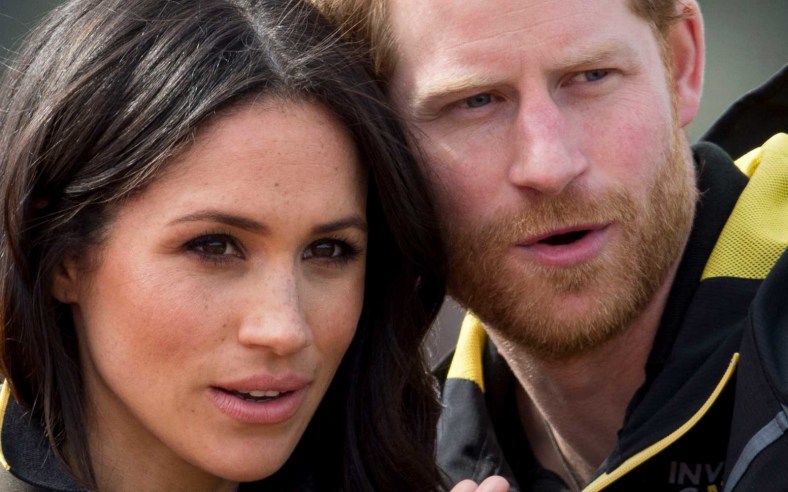
Prince Harry And Meghan Markle Attend UK Team Trials For The Invictus Games Sydney 2018

Meghan and Harry’s decision to step back from royal duties and spend more of their time in Canada ‘away from media intrusion’ has sparked another mad frenzy in the newspapers and media outlets, dividing public opinion and knocking other major stories into the shadows (the reconvening of the Irish assembly at Stormont after three years was almost completely over-looked!). Inevitably public opinion is divided. Some take a sympathetic view accepting that the progressive young royals have a right to live their lives as they choose, believing that the biased tabloid newspapers forced them into making this decision having treated them, and Meghan in particular, abysmally. Others see this as nothing other than a snub to the Nation, the Crown and the Queen, depicting Meghan and Harry as selfish individuals who want all the fame, fortune and advantages of their royal status with none of the duties or responsibilities, and blame Meghan as the catalyst for it – the Duchess of Sussex described as becoming ‘the Duchess of Anywhere’ by one leading political commentator. The truth of the situation is probably none of this. It’s very hard for those of us who are on the outside to truly understand the pressures that face this particular couple and royal family on the inside. Despite her personal preferences, The Queen’s loving and gracious acceptance of the situation wanting to support her ‘grandchildren’ as best she can I think is a good example and lesson to us all.

However, the Christian will be well aware of another royal personage who not only held his royal status lightly but was prepared to set aside his majesty in order to serve the world. We love The Queen because we recognise that she has dedicated her whole life to duty and service on behalf of the nation which is much applauded, but Jesus speaks of himself not only as being in service – but as a servant, one who ‘made himself nothing’ (Philippians 2.7) in order to reach out, rescue and in love serve the world. Jesus frequently turned the values of the world upside down and once, when his disciples were arguing between themselves as to who was the greatest, he taught them that if they wanted to be truly great, they had to be prepared to come last and be the servant of all (Matthew 9.35), an act he modelled himself not only by washing his disciples feet but later by dying upon the cross – the ultimate act of self-giving, humility and sacrifice.

There’s absolutely nothing wrong with the Duke and Duchess of Sussex using their privilege and status to highlight and generate good will for various charities, good causes and those less fortunate than themselves, and we wish them well in their family life, but we also pray and trust that given their royal status and privilege they will use their position wisely and hold their prestige with some humility.


“The kings of the Gentiles lord it over them; and those who exercise authority over them call themselves Benefactors. 26 But you are not to be like that. Instead, the greatest among you should be like the youngest, and the one who rules like the one who serves. Luke 22.24-26


Finding Common Ground After The Election!

It’s 12th December and I’m writing this letter on the day of the General Election! Although it may have been interesting to write after the Election and once the result is known, I thought that perhaps it might be fairer and more helpful to write a comment before we do so! Because it seems to me that one of the things that the election has drawn out and made clear is just how divided we are as a nation! It’s not just simply a case as to whether one voted Labour or Conservative, Liberal Democrat, Brexit or Green – the divisions in our society are much broader and deeper than that; whether one voted for ‘Leave’ or ‘Remain’; whether you be rich or poor; privileged or disadvantaged; old or young; male or female; employed or unemployed; from the north or the south; socially conservative or liberal; married or not – and all these things challenge and shape our perspective. Not only this but despite the fact that our parliamentary system isn’t supposed to be presidential, the focus was very much on personalities rather than policy – with some of the language used being vile and abusive. So where can we find unity and how can we develop trust?

It’s interesting to note that the BBC wrote an article entitled Crossing Divides – What unites us: 10 reasons why we’re not a divided nation, in an attempt to find and construct a new sense of unity, being:

1. Being faithful to our partners
2. The principle of equal pay
3. Viewing a woman’s role as no longer in the home
4. Seeing gay relationships as “not wrong at all”
5. Supporting a woman’s right to have an abortion
6. Trusting science and scientists
7. Believing in the NHS
8. Believing the Royal Family is important
9. Thinking climate change is at least partly caused by humans
10. Loving David Attenborough, health charities, Heinz, Lego, Google Maps and Malteasers

Whilst the majority of Britain’s may agree with some of these attitudes, it only takes a moment to appreciate that not everyone will agree with all of them, particularly those of a more traditional, socially conservative or religious persuasion. Perhaps in truth this list reflects more of a ‘wish list’ held by those who run the BBC.

For as John Stevens an online commentator observes ‘unity cannot be established or maintained on the basis of values and attitudes that do not in fact capture the hearts and minds of the vast majority of the people’ and I would like to add that it cannot be imposed upon us either.

The Christian will immediately recognise that what we need is a higher narrative, something that looks beyond our immediate, narrow and somewhat self-absorbed (and perhaps selfish) perspective and gives us a new standard and guide to live by, something that transforms our hearts and minds for the better. No one is saying that the Church is perfect or that it can’t ever make mistakes or disagree, but it does have a larger vision than that presented by party politics and a common framework by which it can promote reconciliation and encourage unity and trust within itself and the wider community. A kinder, gentler politics always has to begin with us as we try to serve one another in the loving manner that Christ served us, and I’d like to encourage you all to give it a try.

May I wish you all a very happy and peaceful new year.


“Trust in the LORD with all your heart and lean not on your own understanding; in all your ways acknowledge him, and he will make your paths straight.” Proverbs 3.5-6


Follow That Star!

1

We used to talk about the ‘stars of stage and screen’ but in today’s celebrity culture the definition of who is ‘a star’ and what makes ‘a star’ has broadened to cover almost every type of entertainment and eventuality – because the traditional categories of Pop Star, Rock Star and Film Star have been joined by Social Media and Reality TV stars (and more besides), all trying to capture our attention and their fleeting five minutes of fame and fortune – especially around Christmas. In fact, it could be argued that we have so many celebrity ‘stars’ that the term has somewhat lost its impact. But Christmas provides us with an opportunity to step outside of the noisy razzmatazz of the entertainment industry and focus once again upon the true meaning of Christmas and upon someone whose significance and stardom never fades – and that is of course Jesus of Nazareth whose birth we celebrate and who Christians believe is the incarnate ‘Son of God’; ‘the eternal word made flesh’; ‘the Saviour of the World’.

At first glance, the casual observer wouldn’t have thought that his birth was anything remarkable, a simple child born into poverty with two loving but very humble parents, but for those with the eyes to see, his birth was not only remarkable, but completely astonishing and highly significant as demonstrated by the train of visitors who came to see him; first shepherds and then ‘kings’ or more accurately Magi, ‘wise men from the East’ who had been drawn to his birth place by the appearance of a STAR!

Now perhaps we are so familiar with the nativity story that we tend to think we know it, and so it is only too easy to overlook the significance of these special visitors. Ever since the time of King David, Israel’s Kings thought of themselves to be like ‘shepherds’ as he was and so the appearance of the Shepherds at the manger was highly symbolic of his royal pedigree. Likewise the appearance of a star was deemed to be the fulfilment of ancient prophecy heralding God’s anointed; ‘a star will come out of Jacob; a sceptre will rise out of Israel’ (Numbers 24.17). Strangely, even in Roman Culture a star signified divine status as demonstrated by the fact that when a ‘wandering star’ appeared after the death of Julius Caesar it was believed to signify his deification – a star symbol thus being engraved upon imperial coins. So what with the anointing of Jewish thought and the divine ruler from Roman thought, there is a double significance here!

But this is not the end of the story because later Jesus would describe himself as ‘the bright Morning Star’ of Revelation 22.16. His Kingdom and his stardom never ends!

So this Christmas, may I encourage you to reflect once again upon the Christmas story and to ‘follow the star’ as you consider just who Jesus is and embrace the eternal nature of God’s love and peace for you and your family this Christmas.

May I wish you all a very Happy Christmas.

#followthestar


“I, Jesus, have sent my angel to give you this testimony …. I am the Root and the Offspring of David, and the bright Morning Star.” Revelation 22.16


H4002HBF

Operation Market Garden – A Bridge Too Far!

operation-market-garden

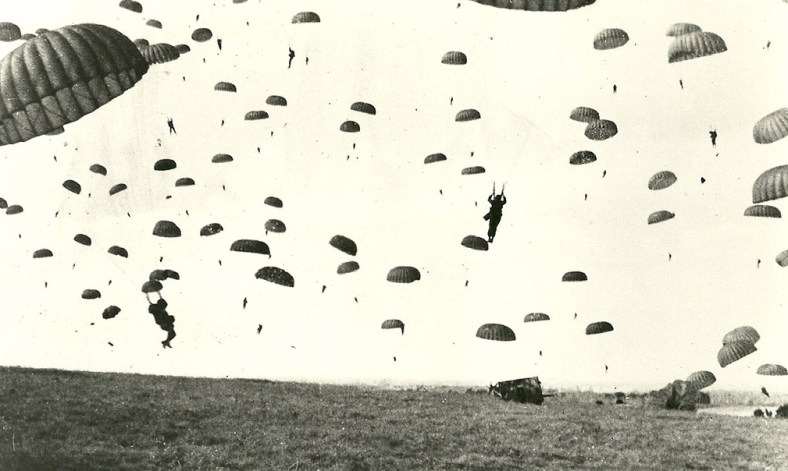
This year marks the 75th anniversary of the Battle of Arnhem otherwise known as Operation Market Garden. The successful D-Day landings in France had become bogged down in the slow and costly progress through the Normandy fields and hedgerows which the Germans defended tenaciously. Despite this, the Allies had made progress across France and Belgium, liberating both Paris and Brussels. Surely victory couldn’t be far away! Unfortunately, as the Allies pushed closer to Germany’s borders, the enemy forces were regrouping and resistance became stiff. General Montgomery believed that a powerful, narrow thrust deep into German lines would be more effective that a slow advance on a broad front and so on 17th September 1944, 30,000 British and American airborne troops (backed up by British & Polish forces on the ground) were flown and parachuted behind enemy lines to capture the eight bridges that spanned the network of canals and rivers on the Dutch/German border. Initially, things went well but British Paratroopers were soon under attack and, hampered by radios that didn’t work, they found that they couldn’t co-ordinate things properly. Ground forces found the narrow route treacherous as most of the bridges had been blown up before they could be captured. On the third day they reached the Nijmegen bridge where the Americans were still fighting but they couldn’t get across to join the British Paratroopers at Arnhem just three miles away on the far side. To tremendous cost, General Horrocks ordered American troops to attack across the River Waal. Half of the company were killed. Finally, they managed to storm the bridge but it was too late for the British Paratroopers because the Germans had moved their tanks into the town and were systematically destroying all the houses in which they were fighting. Eventually the Allied troops were forced to abandon their positions and fight their way out – their last radio message only heard by German intercepts was “Out of ammo, God save the King”. The desire to finish the war early by Christmas 1944 had failed. It had proved to be a bridge too far.

Perhaps, if we are honest with ourselves, in the light of our own personal battles, there are times when we too feel that things have got too much for us and that we have gone as far as we can go, with failure the only possible outcome. It’s at times like these when we need to remember those who gave so much for us in service of the nation and be encouraged and inspired by their example. It was always thought that the 10,000 men of the 1st Airborne Division would only be able to hold the Arnhem bridge for two days, but in reality, 740 men held it for almost twice as long against much heavier opposition than expected. Theologically speaking, the Christian is aware that we are not always called to be successful (as nice as that may be), but we are called to be faithful. We may not always win the battle because sadly some things may prove to be outside of our control to our disappointment, but how we fight the battle and conduct ourselves is a sign of God at work in us and can make a real difference!

Please may I warmly invite and encourage you to join us for one of the many Remembrance Day Services taking place across our benefice on 10th November as we remember with gratitude and grateful respect all those who have died in two world wars and other major conflicts. Not only will you be warmly welcomed but your presence will significantly enhance this special occasion.


Greater love has no-one than this, that he lay down his life for his friends. John 15.13


“Loving You To The Moon And Back” – And So Much More!

0_Apollo-11-astronaut-Buzz-Aldrin-standing-on-moon-with-astronaut-Neil-Armstrong

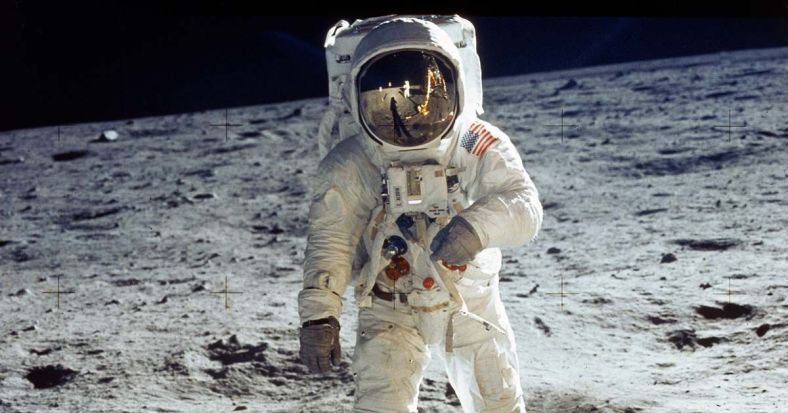
Although I can’t honestly say that I actually remember Neil Armstrong’s famous moon landing of the 20th July 1969 (I was 7!) I do remember seeing some of the Apollo missions by the time that they finished in 1972 and being aware of the profound effect that they had upon me. When I looked out at the night sky it was incredible to think that men had actually stood on the moon. It was so exciting! What would they do next and where would they go? I still think it’s absolutely incredible and exciting – and I’m in utter awe of the men who undertook such a brave and perilous journey. It took Apollo 11 four days, six hours and 45 minutes to get to the moon (8 days including the return journey) and cost NASA around $25 billion (£20 billion). It may have been ‘one small step’ for Neil Armstrong, Buzz Aldrin and Michael Collins but it was a huge accomplishment for the 400,000 people who had worked upon the mission. The Earth, the Moon and space would never be seen in quite the same way again. However, during the recent 50th anniversary celebrations, it’s been the reflections of Alan Bean, who was part of the Apollo 12 mission and the 4th man on the moon that struck me most. Gazing back to the beautiful but profound sight of the Earth hanging in the darkness of space (later referred to as ‘the blue marble’ by the crew of Apollo 17) Alan Bean was powerfully struck by the recognition that all the people I have ever loved are over there! A thought he would frequently share with his family upon his return.

I suppose the truth is that of course the human spirit has an immense desire to explore and discover, to look beyond the horizon and around the corner in search of new things – and incredibly through our brave ingenuity, determination and skilled use of finite resources we often have the capacity to achieve more than is usually thought humanly possible – but at the same time it is love which unites us and binds us together and gives us not only the motivation to succeed, but a sense of place, belonging and home. Used wisely, intellect and love are powerful gifts with which we can pursue not only our goals, dreams and ambitions but also serve our nations and further the common good.

The accomplishments of Apollo 11 and all those missions that followed it combined with the fragility of the Earth have fostered our modern desire to go further and reach for the stars, the Moon, Mars and beyond – and yet however amazing those thoughts might be, the Christian is struck by another amazing theological concept, which is not only did God create the world that we see hanging so beautifully in space, but that he actually stepped into it, and not because it was pristine and perfect but precisely because it wasn’t. For the beautiful world that God had originally created had been spoilt by the often selfish, unkind and greedy actions of its inhabitants which the Bible calls sin. Yet, the mission that God embarks upon is not one of running away, starting again and abandonment, but one of new beginnings, new starts and digging deep as people recognise the grace, peace and restoration that is made possible through Jesus and his death upon the cross. It’s an amazing act of love that reaches out to us across the depths of time and space and calls us – home!


Praise him from the heavens … praise him, you sun and moon and shining stars. Psalm 148.1,3


Posted on the 50th Anniversary of Neil Armstrong’s Moon Landing with Apollo 11 

Fake News, Brexit And ‘The Prophets Of Doom’

Brexit_cartoon_06.23.2016

Long before Donald Trump coined the phrase ‘Fake News’ (dismissing whatever is inconvenient), British politicians were juggling with ‘spin’ and ‘spin doctors’, as certain individuals or political parties tried to get their own political message across in the most favourable way possible, whilst portraying competing projects, events and points of view negatively. ‘Project Fear’ is perhaps one of the most recent and prominent examples of this where politicians favouring a ‘no deal’ Brexit consider the arguments presented by Remainers as scaremongering, whereas those in favour of remaining portray Leavers as chasing after unicorns and duping the public (arguing therefore that many of those who voted to leave didn’t really understand the implications of what was put before them). Naturally, this is seen as patronising twaddle by those who voted ‘leave’. All of this has been magnified by television, social media and the internet to fever pitch. However, the stakes have been significantly raised by Conservative politicians each vying to be the next Prime Minister with many leaning towards a harder or no-deal Brexit in the light of the recent European elections. But this has caused many on the opposition benches and those wanting to remain in the EU to highlight all the more fervently the perils of a no deal Brexit and falling off the so-called ‘cliff edge’.

The problem is of course that we are not homogeneous human beings – we all come to life with our own particular values and perceptions, but in the game of politics, many of our politicians are deliberately selective, trying to promote their own particular viewpoint or party-line to gain some sort of party or personal advantage. It’s therefore very difficult for members of the general public to ‘see the wood for the trees’ and discern the impartial truth. The BBC may try to give us its own ‘reality check’ but many people are still wary of fake news and ‘media spin’ and therefore find it hard to discern fact from fiction. Surveys repeatedly demonstrate that people want honest politicians but discerning the truth, the whole truth and nothing but the truth is very hard.

With so much at stake it’s becoming increasing important that we should trust the politicians who represent us – and honesty is paramount, because it’s honest and transparent politicians who garner the greatest trust and respect. As someone who the Bible describes as being ‘full of grace and truth’ (John 1.14) it’s not surprising that Jesus encouraged his disciples to be equally open and honest, advising them not to make promises that they can’t keep but urging them to simply, “let your ‘Yes’ be ‘Yes’ and your ‘No’ be ‘No’; anything beyond this comes from the evil one” (Matthew 5.37). Biblically speaking it’s not just cleanliness which is close to godliness but truthfulness, whereas lies and deceit generate confusion and are much more likely to be destructive. So let us do our best to discern the fact from the fiction, the fake news from reality and when it comes to determining our future, let us call for less political spin and more honesty and truth from our politicians and then vote for those who do so.


He whose walk is blameless … speaks the truth from his heart. Psalm 15.2


project fear

The Depths Of Love, Despair – And The Marina Trench

08-sub-return-mariana-trench-c2a9reevejolliffe

On the 13th May the world woke up to discover that Victor Vescovo, a retired naval officer, had broken the world record for the deepest dive ever made by a human being inside a submarine by descending nearly 6.8 miles (35,853 feet/10,928 meters) in the Pacific Ocean’s Mariana Trench. Naturally Vescovo was very excited and pleased with his achievement, “This submarine and it’s mother ship, along with the extraordinarily talented expedition team, took marine technology to a ridiculously higher new level by diving – rapidly and repeatedly – into the deepest, harshest, area of the ocean.” he says. The extreme pressure at such a depth would be the equivalent of 50 Jumbo Jets standing on top of one another said the BBC. Along with the new technological achievement, Victor Vescovo and his team were delighted to discover previously undiscovered sea life at the bottom of the ocean ranging from shrimp-like anthropods with long legs and antennae to translucent “sea pigs” similar to sea cucumbers. However, one disappointing feature alongside the discovery of new sea creatures was the discovering of plastic and other human contamination at the bottom of the ocean. Finding plastic at such depths highlighted and confirmed the fears of scientists across the world that plastic waste had reached epidemic proportions in the world’s oceans with the United Nations estimating that 100 millions tonnes had been dumped there to date. The consequences and repercussions of such a desperate discovery have heightened calls for greater and more urgent action by the world’s authorities to conserve the environment.

This is a call which will resonate with many people around the world and especially Christians who will recall the fact that theologically speaking when God placed Adam in the ‘Garden of Eden’ he made him responsible for not only working the land but for the taking care of it. In fact, God trusts us to take care of the environment and doing so for the long term and future generations is not only good stewardship but is the epitome of loving God and one’s neighbour as oneself. Yes, it may be true that even at the bottom of the ocean ‘our sins will find us out’ (Numbers 32.22) but it’s not too late to resolve things. If we have the brains, intellect and technological skills to even get to such incredible depths, surely we have the capacity to find the means by which we can clean our oceans and the environment, and transform the way we use and recycle plastics to our common good. We just need to have the will and determination to do so. A children’s chorus describes God’s love as being as ‘high as the highest mountain and as deep as the deepest sea’, let us all reflect this truth with the deepest love and concern that we can muster for the world in which we live and the people we share it with.


And I pray that you, being rooted and established in love, may …. grasp how wide and long and high and deep is the love of Christ. Ephesians 3.17-18


Have You Really Got To Grips With – The Resurrection?

resurrection

‘A lot cleverer people than us embrace religion so I can be as dismissive of it as I like but we have to acknowledge that’. Paul Whitehouse.

These were the words that comedian Paul Whitehouse shared with his good friend Bob Mortimer in the BBC Television Series Mortimer & Whitehouse: Gone Fishing (Series 1: Episode 2), where having recovered from heart problems, they each mused about the future and chatted to a local Vicar about death, and their own funerals. Because neither were religious, they captured quite nicely the views and perspective of so many in our largely secular society. In some ways, each wistfully wished that there was more to life than this but couldn’t quite embrace the apparent foolishness of a religion they had no real experience or sensible knowledge of. Their musings echoed the apparent disconnect that exists between believing individuals and the rest of society – a disconnect which is made worse by opinion polls that suggest that Christianity in the UK is in a rapid state of decline. Although there is a decline, it has now been recognised that many of these polls don’t make sufficient distinction between active Christians who attend church regularly, and those ‘non-active’ Christians who are people who simply view themselves as Christian because they happen to live in a ‘Christian country’. If there was a clearer distinction between the former and the latter, then statistics about matters of faith and belief wouldn’t be quite so stark as are sometimes portrayed.

Last month my sister-in-law died, and I attended her funeral not as a clergyman but simply as my brother’s brother. Of course, the whole thing was immensely sad and hugely painful, and seeing my brother (who is still a relatively young man) who I love, without his wife, and his daughters without their mother – greatly hurt. But it didn’t hurt as much as I’m sure it would have done, had I had no hope! As Christians, a very real comfort and consolation can be found in the fact that we believe not just in life and death – but in life, death and resurrection. For as Bishop Tom Wright puts it, we have a sense of saying ‘Good night and see you in the morning’, for Heaven isn’t simply ‘pie in the sky when you die’ – a land of make believe, somewhere over the rainbow. It’s the promise of a new real existence as demonstrated in the person of Jesus himself, whose life, death and resurrection were witnessed by so many; people who saw him, touched him and ate with him. These are events which are not simply made up but recorded by many faithful men and women in the Scriptures and other historical documents, many of whom were prepared to die themselves on the basis of what they had seen and heard. So why are we so blind, ignorant and unwilling to believe their testimony in this modern age?

Bishop Tom Wright (a greatly respected Christian theologian and commentator) explains it like this.

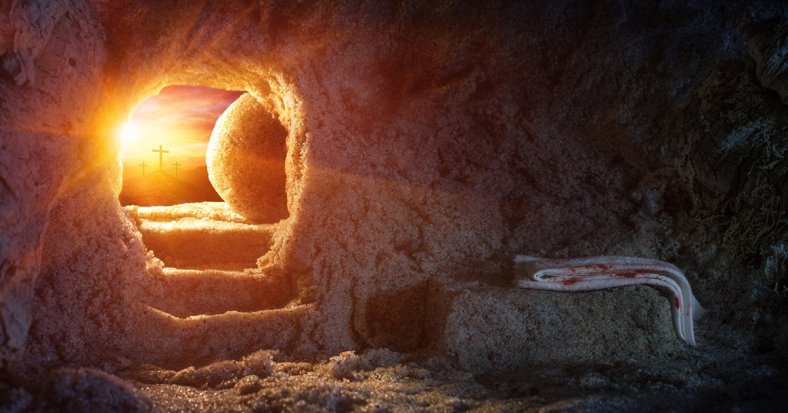
‘The great turning point in human history, the moment when everything changed was when Jesus came out of the tomb on Easter morning. We live in a world which fools itself that the great turning point in history came in Europe and America in the 18th Century, when we had what was called ‘The Enlightenment’ and with our new ideas, and our new science and our new democracies etc we were actually going to solve the problems of the world. If you look back at the last couple of hundred years, you say, ‘Well give me a break! If that’s called solving the problems of the world then we are going to have to think a bit better in the future.’ But actually, that’s because ‘The Enlightenment’ has offered a parody of Christianity. The Enlightenment therefore wants to rubbish the resurrection because if the resurrection happened it means that THAT was the great turning point in history and not Europe in the 18th Century and so the agenda for Christians today … is to go back and re-inhabit the truth that God’s new world was born, not when certain European thinkers had some bright ideas 200 years ago, but when Jesus came out of the tomb on Easter morning, and as we learn to live ‘out’ of that belief, ‘out’ of that event, then that is the way that God’s kingdom is going to come on earth as in heaven.’

If each of us can get a small glimpse of this, and hold it thoughtfully, intelligently and respectfully in our hearts, we can properly celebrate and wish each other a very Happy Easter.


Then go quickly and tell his disciples: “He has risen from the dead and is going ahead of you into Galilee. There you will see him.” Matthew 28.7

The Nations Morals Are Like Its Teeth …

196648316

THE NATIONS MORALS ARE LIKE ITS TEETH, THE MORE DECAYED THEY ARE THE MORE IT HURTS TO TOUCH THEM” – George Bernard Shaw

At the start of the year many of us made New Year’s resolutions and will do our best to keep them as the year progresses (lose weight; give up smoking; pass a driving test or embark on a new career etc, etc). Sometimes our thoughts are more reflective as we consider our place in the world and the lives of those around us, often culminating is a silent prayer for the world to be more peaceful, kinder and charitable than it was the year before. Sadly it doesn’t seem long before the very next calamity or personal tragedy pops up on our television screens or appears in our newspapers to dampen our New Year optimism. ‘What has the world come to?’ we say; ‘Doesn’t the world have any standards?’; ‘Things weren’t like this when we were young!’

What we are doing is lamenting the passing of standards or a moral code by which people commonly live; a moral backdrop, climate or culture which protects us from the negative excesses of society. And yet to speak about morals makes us feel uneasy. We don’t like it! We don’t like people interfering with the way that we live our lives or questioning our standards, or the way we behave – we just simply don’t like being preached at!

The problem is made all the worse because we don’t know or perhaps can’t agree on what standards are acceptable. This is because we have made relativity a virtue in its own right! There is no such thing as absolute right or wrong, just what is right or wrong for me. We are all like Humpty Dumpty in Lewis Carroll’s “Through the Looking Glass” who said “When I use a word …. it means just what I choose it to mean – neither more nor less”. The problem with each person choosing their own set of values as if ‘no one else matters’ is, that ultimately they don’t – each person does their own thing and can’t be held responsible for going their ‘own way’ even if the effect is to hurt or grieve another.

You don’t have to be necessarily rigid or religious to appreciate the need for a common set of values, and yet as a Christian minister I can’t think of any better guide to live by than those found in Scripture, based upon the message of a loving creator who nurtured the understanding that each person ‘made in his image’ was therefore special. So special that through the life, death and ministry of Jesus, God demonstrated his love for the world and encouraged his followers to do the same. Perhaps the answer to the world’s moral malaise (at least in our own small corner) lies not just in what we do but in what we believe. It always, always starts with us.


“ Love the Lord your God with all your heart and with all your soul and with all your mind and with all your strength’ and ‘Love your neighbour as yourself.’ Mark 12.30-31