
Where is the truth and does it matter?

I think we can all agree that today (15th June) was a bad day for the Prime Minister, for not only did the EU restart its legal proceedings against the government plans to unilaterally scrap parts of the Northern Ireland Protocol, but also a fiercely heated debate took place over ‘who understood what’ at the time of signing the Brexit deal and how it should be practically interpreted – with the European Commission vice-president Maros Sefcovic effectively accusing the British government of lying to the general public. Secondly, Lord Geidt resigned from his position as Boris Johnson’s independent ethics advisor stating that there was a legitimate question as to whether the Prime Minister broke the ministerial rules over Partygate. Once again, the whole issue of ‘who knew what’ and who was lying came to the fore.

The problem is that we live today in a postmodern world where it is fashionable to believe that there is no such thing as absolute truth; all truth is said to be relative, depending upon your own particular point of view, which in the realm of politics (and much of society at large) tends to mean that ‘the truth’ becomes whatever suits me and is the most convenient and practically expedient. In fact, in recent years,  the most expedient thing has often been to deny the truth completely. We saw this in Donald Trump’s use of the term ‘Fake News’ to dismiss anything that he didn’t agree with, and his false accusation that the US Presidential election result was rigged, which in recent days even close family members and political advisors have dismissed as nonsense. Sadly, we have seen the most serious and blatant denial of truth coming from Russia, as President Putin conducts his ‘special military operation’ within Ukraine, which most observers would have no hesitation in calling a war, which has disastrous consequences for us all.

The problem with all this political spin, ‘fake news’ and propaganda is that it erodes trust as people lose faith in their political leaders and become disillusioned and suspicious instead. What can we believe and where can truth be found?

One’s own perspective of the world is greatly determined by one’s values and what one believes, which is why for many, Christianity offers a bedrock of security in a sea of change and relativity, for in the person of Jesus, we see a man who as the ‘Son of God’ not only had a great love and compassion for the world, but also kept his promises, living a life full of integrity and truth, backing up his words with action. Jesus had described himself as ‘the way, the truth and the life’ (John 14.6), offering his disciples not only a way to his Father in heaven but ‘life in all it’s fullness’ (John 10.10) and a ‘truth that will set you free’ (John 8.32). Despite the fact that the people were living in difficult and uncertain times, because he spoke with such authority and lived with such integrity, people were willing to embrace his words ‘do not let your hearts be troubled. Trust in God, trust also in me’ (John 14.1), and many people did trust Jesus because not only were his words trustworthy and true, but also so were his actions, as ultimately demonstrated by his life, death and resurrection.

As much as I would like everyone to enjoy a firm confidence in Christ, I’m also certain that we need to step back from a world where ‘all things are relative’ but have the confidence of one’s own convictions, for paraphrasing a comment made by Jeff Myers, a Christian commentator – ‘If something is true, then it is true whether we admit it, like it or not! May we and all our politicians live in the light of such certainty, and within it foster a high regard and appreciation for the truth.


 31 Jesus said, “If you hold to my teaching, you are really my disciples. 32 Then you will know the truth, and the truth will set you free.” John 8.31-32

Easter hope in the midst of conflict!

Ukranian Easter Egg

I write this letter on the day that President Zelensky of Ukraine spoke to the US Congress, thanking them for their help but also appealing for them to do more, most notably the establishment of a no-fly zone, ‘closing the sky’. Whatever we may think about the prudence of such an action, the disappointment from a Ukrainian point of view is easy to understand. This war has generated a huge wave of emotion in us all, whether it be a profound shock and disbelief that it could happen in the first place; to anger and despair as we witness the appalling suffering; to quiet admiration at the courage & stoicism of the people as they resourcefully defend their country; coupled with a huge amount of sadness, pity and compassion for the people who have suffered and lost so much. Yet at the same time we admire the extraordinary acts of kindness and generosity of surrounding nations as they open their hearts and their homes to take care of refugees and provide medical and humanitarian assistance where they can.

In the face of so much suffering, it would be easy to lose heart and lose faith wondering – just where precisely, is God is in all this? But of course, God is at work in the hearts of all those who are trying to look after their loved ones and those less fortunate than themselves. He’s in the compassion of doctors and nurses, trying to save lives and bind up the wounded. He’s in the voice of Russian protesters who are trying to speak truthfully to their neighbours in the light of false propaganda. He’s in the massive effort of governments, humanitarian agencies and charities all trying to act as one to relieve suffering and promote peace. Not forgetting to mention those who literally put themselves in harm’s way while trying to protect others. Finally, he’s in all our tears and prayers as we determine together that there must be a better way of being and living life.

Indeed, the Christian will recall that it is for this better way of life that Jesus came. His message was constantly about how we should ‘love God and our neighbour as ourselves’ (Matthew 19.19). In fact, it was precisely because we were so bad at doing this, wishing to promote our own agenda and thinking that we knew better than God, that sin came into the world in the first place, resulting in pain, suffering and death. But Jesus’ death upon the cross was the start of God putting things right, for when we recognise that the death he died, he died for us, and put our faith and trust in him as our Lord and Saviour, then we are forgiven our sins and given the chance to start again. But of course, Christ’s death is not the end of the story, for Christ’s divinity is demonstrated not only by the way he died, but by the way he rose again! The resurrection is therefore the basis of our Christian Easter hope, giving us, by faith, not only the strength to meet the challenges of today, but also a sure and certain hope for all eternity. May this be a real source of peace and comfort to each of us as we continue to demonstrate the love that God has for us in the way that we live and treat one another.  

Happy Easter to you all.                 


Let the peace of Christ rule in your hearts, since as members of one body you were called to peace. And be thankful. Colossians 3.15

A Prayer for Ukraine

God of peace and justice,
we pray for the people of Ukraine today.
We pray for peace and the laying down of weapons.
We pray for all those who fear for tomorrow,
that your Spirit of comfort would draw near to them.
We pray for those with power over war or peace,
for wisdom, discernment and compassion to guide their decisions.
Above all, we pray for all your precious children, at risk and in fear,
that you would hold and protect them.
We pray in the name of Jesus, the Prince of Peace.
Amen

Archbishop Justin Welby
Archbishop Stephen Cottrell

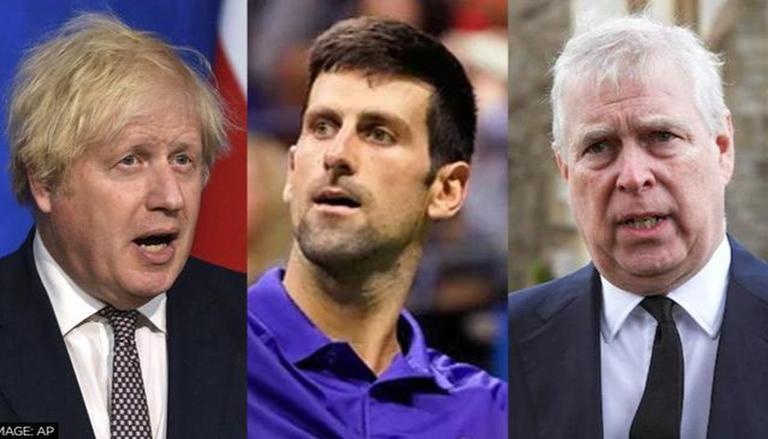
What do Boris Johnson, Prince Andrew and Novak Djokovic all have in common?


They all believed that they were free to do as they wished with little thought of the consequences or how their actions might be felt, perceived, or viewed by others. Sue Barker, the BBC’s tennis commentator and presenter, was spot on when she spoke to Radio 4 about Novak Djokovic being thrown out of the Australian Open because of his lack of vaccination status.

“We wanted the No 1 player in the world. He could have been there by being vaccinated. I know he’s chosen not to and that is his right, but it is also his choice and with that choice come consequences and this is why he is where he is now.”

Novak Djokovic may have felt that he was entitled to play, but his choice not to be vaccinated led others to think otherwise. Boris Johnson may have felt that behind the closed doors of Number 10, there was little difference or distinction between meeting for work or for drinks, but when it became public knowledge against such a stark background of the pandemic and its restrictions, many were aghast that the Prime Minister and his colleagues should think that they were above the rules. Prince Andrew’s story is still unfolding, but with his military titles and patronages already stripped from him, along with the use of his  HRH title, it is clear that the consequences of previous choices and company are profound.

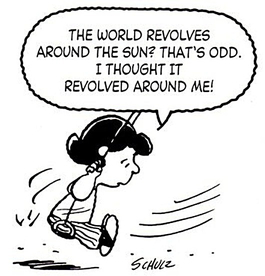
It’s easy for us to point the finger and accuse others of hypocrisy, but in truth how many of us haven’t bent or ignored the rules from time to time to suit our own dreams, desires and convenience?  We all have a natural tendency to put ourselves at the centre of the universe and expect the world to obey us. Sometimes our misdemeanours are frivolous and of no real consequence, but sometimes they become huge, affecting not only ourselves but also others. The Bible calls this waywardness ‘sin’, and perhaps the word sin should be spelt with a capital ‘I’, because so often the causes of sin are the pursuit of ‘me, ‘myself’ and ‘I’. In other words the putting of myself first, spoiling our lives and those of the people around us.

The Christian will be aware that God hates sin, but he loves us and through the loving and selfless actions of Jesus Christ and his death upon the cross, God takes the tremendous pain and consequences of our sin upon himself and offers us, in exchange, the forgiveness of sins, freedom to start again and the hope of a new life – a hope which is eternal.

Let’s be clear, in this life none of us are perfect or ever shall be, but in Christ we are given a new life and a new perspective, one which helps us to be a bit more loving, thoughtful and considerate not only about the people around us but the consequences of our choices and the way we behave.


“And what does the LORD require of you? To act justly and to love mercy and to walk humbly with your God.” Micah 6.8

Remembrance Sunday – Are we in danger of forgetting?

Later this month we will be observing Remembrance Sunday, the annual occasion when we as a nation can come together to mark and remember with gratitude all those who gave their lives serving their country throughout two world wars and other conflicts. This simple act of remembrance is supposed to encourage us to strive for peace as we appreciate the incredible cost of war and the damage that it does to all concerned. Yet it seems as if the world in which we live is more fragile than ever, not only in terms of the environment marked by the COP26 climate conference, but by the volatile nature of world relations. Although we may have got used to the almost routine launching of missiles by North Korea over the seas of South Korea, the world was shocked by the belief that China had launched a hypersonic missile that flew around the world at five times the speed of sound. Senator Lindsey Graham said, “If in fact, the Chinese have developed a hypersonic missile that can deliver a nuclear weapon, it’s a military game-changer when it comes to nuclear forces – God help us all”.  “We have no idea how they did this,” another US intelligence official is quoted as saying. Despite the fact that the Chinese may simply be developing their space technology and that respective nations are still seeking investment and wishing ‘to do business’ with China, the International Institute for Strategic Studies has concluded that its global ambitions are clear, for in terms of tonnage, China has launched more submarines and warships than any other nation, equivalent to the entire Royal Navy every four years.

And yet, as recent events in Afghanistan remind us, military take overs by dictatorial regimes do not always lead to greater freedoms, security, prosperity or peace. We seem to be in danger of forgetting ourselves and the terrible cost of war and hostility. Surely, the heart of the problem is the problem of the human heart! – especially when people, countries and nations seek to manipulate, gain control and take advantage of those around them. The Christian will be mindful of the words of Jesus, who reminded the crowds that “out of men’s hearts, come evil thoughts, .. theft, murder, .. greed, .. arrogance and folly” (Mark 9.21-22). The recent death of Sir David Amess was a tragedy, but his family were absolutely right when they called for a change of heart. “Our hearts are shattered,” they said. “We ask people to set aside their differences and show kindness and love to all”. Jesus had said something similar when he had commanded his disciples “to love each other as I have loved you” (John 15.9). Loving like this requires a real change of heart, mind and perspective; one that does not seek to simply better oneself, but puts the other person first so that collectively we might all live better lives of freedom, love, joy and peace. These are the goals, values and ambitions that we should strive for and those that previous generations fought so hard to protect at great cost. So let us all take a moment to come together this Remembrance Sunday – ‘lest we forget’.  


Be careful … that you do not forget the things your eyes have seen or let them slip from your heart as long as you live. Deuteronomy 4.9

Patience Is A Virtue – Even In ‘Lockdown’

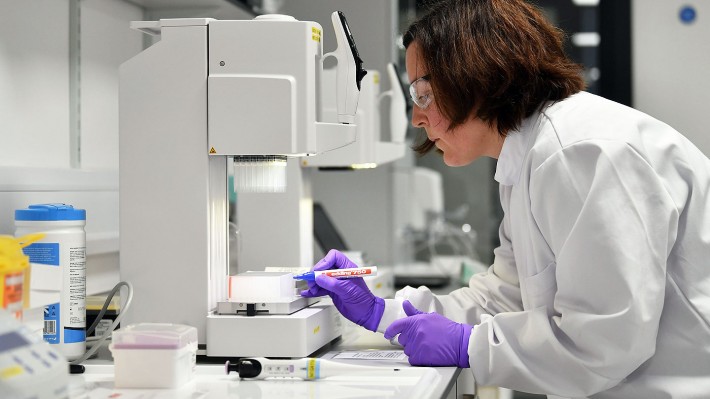
200501-coronavirus-research

Every Thursday evening my family and I, like many others, have stood outside our house clapping our hands, applauding the sterling work of the NHS whose doctors and nurses have been battling on the ‘front line’, looking after and caring for sick coronavirus patients. But over the weeks our appreciation has grown as we have become more aware (and thoughtful) of all those who are playing such a massive part at this difficult time, not just the doctors and nurses but all employees of the NHS; alongside care workers in care homes (the new and perhaps previously forgotten front line?); ‘key workers’ in so many various and different fields (supermarkets, schools, and utilities) and not forgetting the increasingly significant part played by funeral directors, whose own personal ‘risk’ is not inconsequential.

The panic buying of the first few weeks has been largely forgotten by the many acts of kindness that we have seen by members of the public as they look after and support one another, especially the vulnerable, at this difficult time. We have seen real acts of courage, bravery and sacrifice undertaken by those whose professionalism and dedication to public duty and care has put themselves at risk in the service of others. We remember especially all those doctors, nurses and care workers who have died, largely and inexplicably from the BAME community. All this has been coupled with massive acts of generosity as people have rallied to support one another and the NHS behind such inspirational figure heads as Captain Tom Moore.

Coronavirus stats

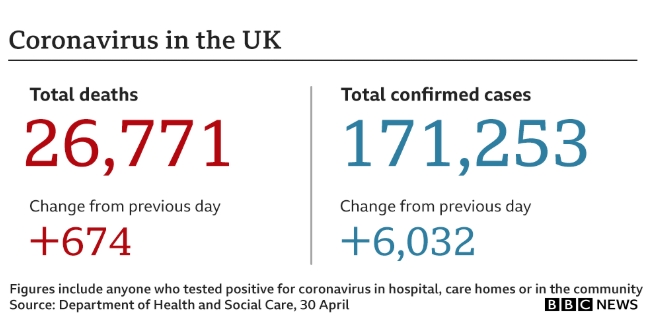
But of all the virtues we have witnessed there is one that seems to be in increasingly short supply (particularly in the media) and that is – patience! Despite being told from the outset that this crisis would be more like a marathon than a sprint, we were barely ‘locked down’ for a fortnight before the media started to ask as to when the lockdown might be lifted. This question gained momentum from business and opposition parties as the cost to business and the economy started to bite. In one sense these are natural questions to ask and no one underestimates the very real pain and uncertainty that people are feeling and experiencing. The costs and pain to peoples’ lives and livelihoods at this time is immense, and yet I would suggest that it is nothing compared to the pain of losing a loved one. For many life will go on, even if it is different, but once you have lost someone you can never get that life back! That’s why it is crucial that we all pay attention to the rate of infection (the ‘R’ number) and follow the government guidelines. Until we have ‘flattened the curve’ and this number becomes ‘1’ or ‘less than 1’ it would be irresponsible to lift the restrictions. The cost to the economy and people’s lives would be much, much worse if we allowed this rate to increase again – which it could easily and very rapidly do. At the time of writing 26,771 people have died of the coronavirus in the UK alone, a rise of 674 from the previous day. These are unprecedented numbers which is why we must hold on to our nerve and our courage! We must bravely hold on to our resolve and our dedication. We must continue to have faith, courage and patience! As tempting as it may be to return to work, to enjoy the sunshine and pick up our normal lives once again, we can’t until it is safe to do so. Neither can we allow the sacrifice of others to be wasted, nor destroy our hope for a better future.

BB13uBmy

The Christian will be aware that Jesus also undertook a very long, arduous and painful journey towards the cross. The shadow of his looming death must have been a constant and fearful presence, and yet he bravely continued on, knowing that it would be the only way by which others might be saved. So, at this time of national crisis, let’s continue to embrace the path which is set out before us, doing so with the same love, resolve, determination and kind generosity of spirit – and let us be patient!  


4 Love is patient, love is kind. It does not envy, it does not boast, it is not proud…. 6 Love does not delight in evil but rejoices with the truth. 7 It always protects, always trusts, always hopes, always perseveres.

            1 Corinthians 13.4,6-7


Necton Benefice Logo

Duty, Service And The Monarchy – A Right Royal Muddle?

Prince Harry And Meghan Markle Attend UK Team Trials For The Invictus Games Sydney 2018

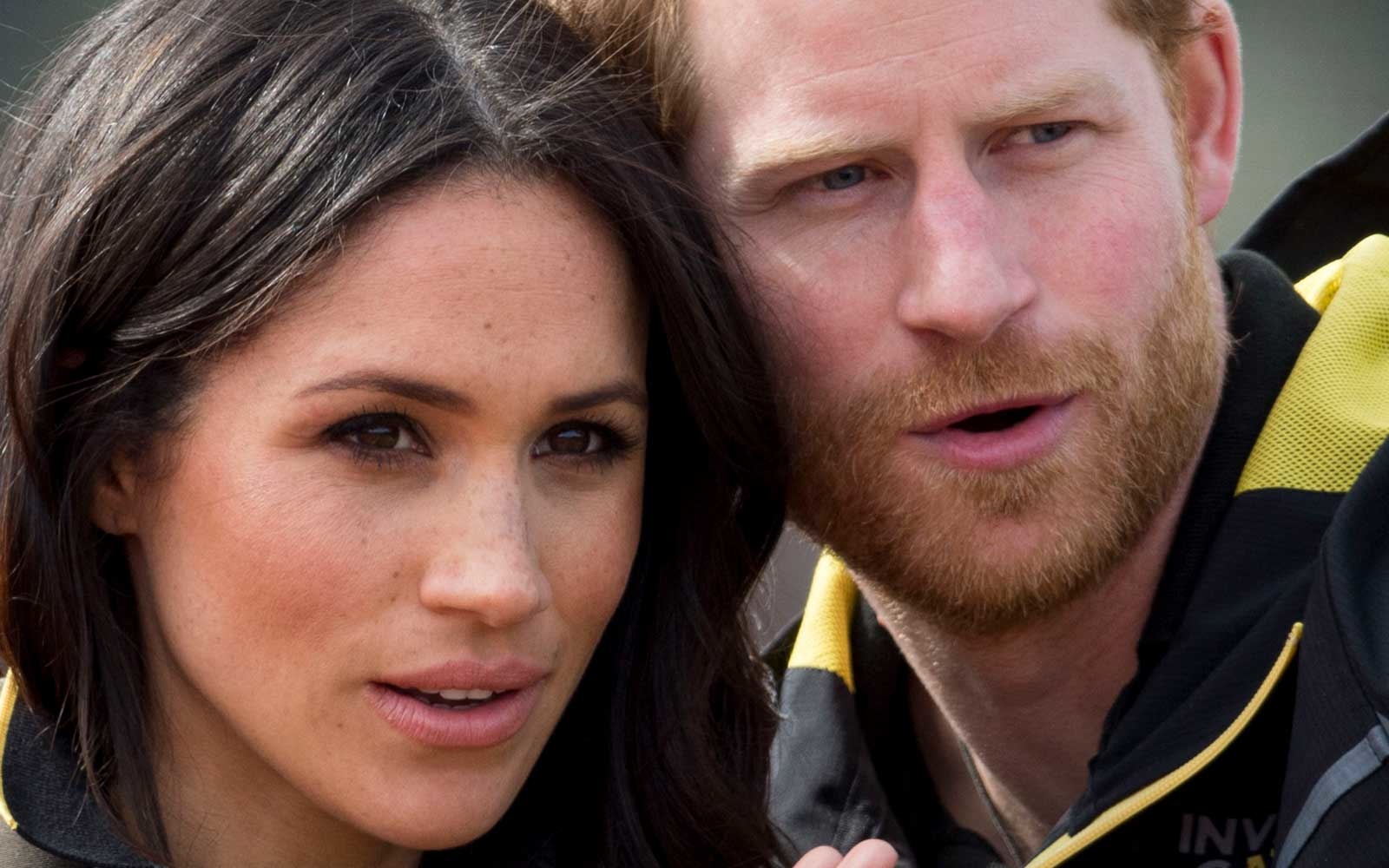
Meghan and Harry’s decision to step back from royal duties and spend more of their time in Canada ‘away from media intrusion’ has sparked another mad frenzy in the newspapers and media outlets, dividing public opinion and knocking other major stories into the shadows (the reconvening of the Irish assembly at Stormont after three years was almost completely over-looked!). Inevitably public opinion is divided. Some take a sympathetic view accepting that the progressive young royals have a right to live their lives as they choose, believing that the biased tabloid newspapers forced them into making this decision having treated them, and Meghan in particular, abysmally. Others see this as nothing other than a snub to the Nation, the Crown and the Queen, depicting Meghan and Harry as selfish individuals who want all the fame, fortune and advantages of their royal status with none of the duties or responsibilities, and blame Meghan as the catalyst for it – the Duchess of Sussex described as becoming ‘the Duchess of Anywhere’ by one leading political commentator. The truth of the situation is probably none of this. It’s very hard for those of us who are on the outside to truly understand the pressures that face this particular couple and royal family on the inside. Despite her personal preferences, The Queen’s loving and gracious acceptance of the situation wanting to support her ‘grandchildren’ as best she can I think is a good example and lesson to us all.

However, the Christian will be well aware of another royal personage who not only held his royal status lightly but was prepared to set aside his majesty in order to serve the world. We love The Queen because we recognise that she has dedicated her whole life to duty and service on behalf of the nation which is much applauded, but Jesus speaks of himself not only as being in service – but as a servant, one who ‘made himself nothing’ (Philippians 2.7) in order to reach out, rescue and in love serve the world. Jesus frequently turned the values of the world upside down and once, when his disciples were arguing between themselves as to who was the greatest, he taught them that if they wanted to be truly great, they had to be prepared to come last and be the servant of all (Matthew 9.35), an act he modelled himself not only by washing his disciples feet but later by dying upon the cross – the ultimate act of self-giving, humility and sacrifice.

There’s absolutely nothing wrong with the Duke and Duchess of Sussex using their privilege and status to highlight and generate good will for various charities, good causes and those less fortunate than themselves, and we wish them well in their family life, but we also pray and trust that given their royal status and privilege they will use their position wisely and hold their prestige with some humility.


“The kings of the Gentiles lord it over them; and those who exercise authority over them call themselves Benefactors. 26 But you are not to be like that. Instead, the greatest among you should be like the youngest, and the one who rules like the one who serves. Luke 22.24-26


Finding Common Ground After The Election!

It’s 12th December and I’m writing this letter on the day of the General Election! Although it may have been interesting to write after the Election and once the result is known, I thought that perhaps it might be fairer and more helpful to write a comment before we do so! Because it seems to me that one of the things that the election has drawn out and made clear is just how divided we are as a nation! It’s not just simply a case as to whether one voted Labour or Conservative, Liberal Democrat, Brexit or Green – the divisions in our society are much broader and deeper than that; whether one voted for ‘Leave’ or ‘Remain’; whether you be rich or poor; privileged or disadvantaged; old or young; male or female; employed or unemployed; from the north or the south; socially conservative or liberal; married or not – and all these things challenge and shape our perspective. Not only this but despite the fact that our parliamentary system isn’t supposed to be presidential, the focus was very much on personalities rather than policy – with some of the language used being vile and abusive. So where can we find unity and how can we develop trust?

It’s interesting to note that the BBC wrote an article entitled Crossing Divides – What unites us: 10 reasons why we’re not a divided nation, in an attempt to find and construct a new sense of unity, being:

1. Being faithful to our partners
2. The principle of equal pay
3. Viewing a woman’s role as no longer in the home
4. Seeing gay relationships as “not wrong at all”
5. Supporting a woman’s right to have an abortion
6. Trusting science and scientists
7. Believing in the NHS
8. Believing the Royal Family is important
9. Thinking climate change is at least partly caused by humans
10. Loving David Attenborough, health charities, Heinz, Lego, Google Maps and Malteasers

Whilst the majority of Britain’s may agree with some of these attitudes, it only takes a moment to appreciate that not everyone will agree with all of them, particularly those of a more traditional, socially conservative or religious persuasion. Perhaps in truth this list reflects more of a ‘wish list’ held by those who run the BBC.

For as John Stevens an online commentator observes ‘unity cannot be established or maintained on the basis of values and attitudes that do not in fact capture the hearts and minds of the vast majority of the people’ and I would like to add that it cannot be imposed upon us either.

The Christian will immediately recognise that what we need is a higher narrative, something that looks beyond our immediate, narrow and somewhat self-absorbed (and perhaps selfish) perspective and gives us a new standard and guide to live by, something that transforms our hearts and minds for the better. No one is saying that the Church is perfect or that it can’t ever make mistakes or disagree, but it does have a larger vision than that presented by party politics and a common framework by which it can promote reconciliation and encourage unity and trust within itself and the wider community. A kinder, gentler politics always has to begin with us as we try to serve one another in the loving manner that Christ served us, and I’d like to encourage you all to give it a try.

May I wish you all a very happy and peaceful new year.


“Trust in the LORD with all your heart and lean not on your own understanding; in all your ways acknowledge him, and he will make your paths straight.” Proverbs 3.5-6


“Loving You To The Moon And Back” – And So Much More!

0_Apollo-11-astronaut-Buzz-Aldrin-standing-on-moon-with-astronaut-Neil-Armstrong

Although I can’t honestly say that I actually remember Neil Armstrong’s famous moon landing of the 20th July 1969 (I was 7!) I do remember seeing some of the Apollo missions by the time that they finished in 1972 and being aware of the profound effect that they had upon me. When I looked out at the night sky it was incredible to think that men had actually stood on the moon. It was so exciting! What would they do next and where would they go? I still think it’s absolutely incredible and exciting – and I’m in utter awe of the men who undertook such a brave and perilous journey. It took Apollo 11 four days, six hours and 45 minutes to get to the moon (8 days including the return journey) and cost NASA around $25 billion (£20 billion). It may have been ‘one small step’ for Neil Armstrong, Buzz Aldrin and Michael Collins but it was a huge accomplishment for the 400,000 people who had worked upon the mission. The Earth, the Moon and space would never be seen in quite the same way again. However, during the recent 50th anniversary celebrations, it’s been the reflections of Alan Bean, who was part of the Apollo 12 mission and the 4th man on the moon that struck me most. Gazing back to the beautiful but profound sight of the Earth hanging in the darkness of space (later referred to as ‘the blue marble’ by the crew of Apollo 17) Alan Bean was powerfully struck by the recognition that all the people I have ever loved are over there! A thought he would frequently share with his family upon his return.

I suppose the truth is that of course the human spirit has an immense desire to explore and discover, to look beyond the horizon and around the corner in search of new things – and incredibly through our brave ingenuity, determination and skilled use of finite resources we often have the capacity to achieve more than is usually thought humanly possible – but at the same time it is love which unites us and binds us together and gives us not only the motivation to succeed, but a sense of place, belonging and home. Used wisely, intellect and love are powerful gifts with which we can pursue not only our goals, dreams and ambitions but also serve our nations and further the common good.

The accomplishments of Apollo 11 and all those missions that followed it combined with the fragility of the Earth have fostered our modern desire to go further and reach for the stars, the Moon, Mars and beyond – and yet however amazing those thoughts might be, the Christian is struck by another amazing theological concept, which is not only did God create the world that we see hanging so beautifully in space, but that he actually stepped into it, and not because it was pristine and perfect but precisely because it wasn’t. For the beautiful world that God had originally created had been spoilt by the often selfish, unkind and greedy actions of its inhabitants which the Bible calls sin. Yet, the mission that God embarks upon is not one of running away, starting again and abandonment, but one of new beginnings, new starts and digging deep as people recognise the grace, peace and restoration that is made possible through Jesus and his death upon the cross. It’s an amazing act of love that reaches out to us across the depths of time and space and calls us – home!


Praise him from the heavens … praise him, you sun and moon and shining stars. Psalm 148.1,3


Posted on the 50th Anniversary of Neil Armstrong’s Moon Landing with Apollo 11 

Fake News, Brexit And ‘The Prophets Of Doom’

Brexit_cartoon_06.23.2016

Long before Donald Trump coined the phrase ‘Fake News’ (dismissing whatever is inconvenient), British politicians were juggling with ‘spin’ and ‘spin doctors’, as certain individuals or political parties tried to get their own political message across in the most favourable way possible, whilst portraying competing projects, events and points of view negatively. ‘Project Fear’ is perhaps one of the most recent and prominent examples of this where politicians favouring a ‘no deal’ Brexit consider the arguments presented by Remainers as scaremongering, whereas those in favour of remaining portray Leavers as chasing after unicorns and duping the public (arguing therefore that many of those who voted to leave didn’t really understand the implications of what was put before them). Naturally, this is seen as patronising twaddle by those who voted ‘leave’. All of this has been magnified by television, social media and the internet to fever pitch. However, the stakes have been significantly raised by Conservative politicians each vying to be the next Prime Minister with many leaning towards a harder or no-deal Brexit in the light of the recent European elections. But this has caused many on the opposition benches and those wanting to remain in the EU to highlight all the more fervently the perils of a no deal Brexit and falling off the so-called ‘cliff edge’.

The problem is of course that we are not homogeneous human beings – we all come to life with our own particular values and perceptions, but in the game of politics, many of our politicians are deliberately selective, trying to promote their own particular viewpoint or party-line to gain some sort of party or personal advantage. It’s therefore very difficult for members of the general public to ‘see the wood for the trees’ and discern the impartial truth. The BBC may try to give us its own ‘reality check’ but many people are still wary of fake news and ‘media spin’ and therefore find it hard to discern fact from fiction. Surveys repeatedly demonstrate that people want honest politicians but discerning the truth, the whole truth and nothing but the truth is very hard.

With so much at stake it’s becoming increasing important that we should trust the politicians who represent us – and honesty is paramount, because it’s honest and transparent politicians who garner the greatest trust and respect. As someone who the Bible describes as being ‘full of grace and truth’ (John 1.14) it’s not surprising that Jesus encouraged his disciples to be equally open and honest, advising them not to make promises that they can’t keep but urging them to simply, “let your ‘Yes’ be ‘Yes’ and your ‘No’ be ‘No’; anything beyond this comes from the evil one” (Matthew 5.37). Biblically speaking it’s not just cleanliness which is close to godliness but truthfulness, whereas lies and deceit generate confusion and are much more likely to be destructive. So let us do our best to discern the fact from the fiction, the fake news from reality and when it comes to determining our future, let us call for less political spin and more honesty and truth from our politicians and then vote for those who do so.


He whose walk is blameless … speaks the truth from his heart. Psalm 15.2


project fear

Brexit – If At First You Don’t Succeed ….

eu referendum shutterstock_392967421

IF AT FIRST YOU DON’T SUCCEED TRY, TRY AGAIN seems to be the Prime Minister’s mantra as she tries to get her Brexit deal through Parliament – which seems to be a herculian task given the fact that Parliament had already voted against it by 432 votes to 202 – the biggest government defeat ever known. This immediately led to the leader of the opposition tabling a ‘Vote of No Confidence’ which was also roundly defeated. So, the Prime Minister has the ‘confidence of the house’ but not the power to proceed with her proposed deal which had taken her and her government two years to negotiate. Confusion reigns as politicians and the public alike ponder ‘where do we go from here?’

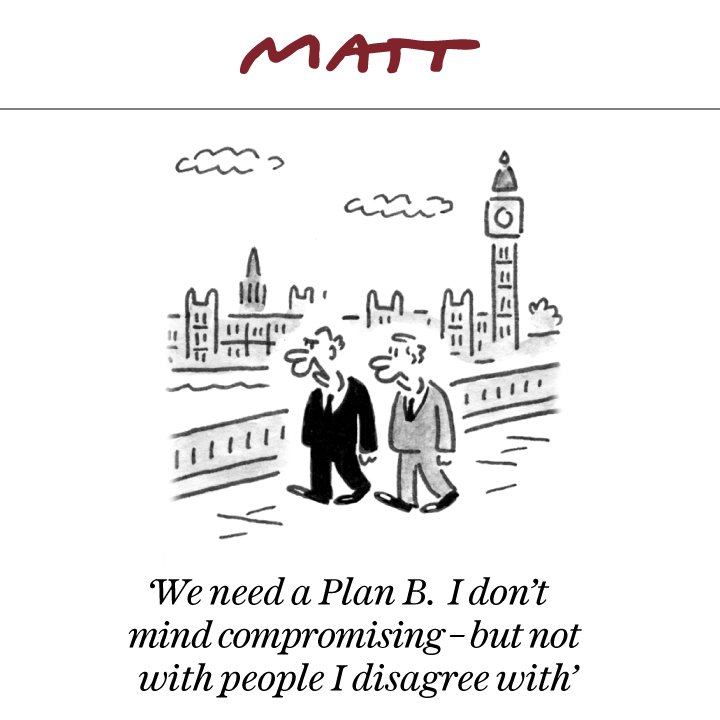
Typically, most people in such a situation would seek a compromise, but unfortunately the problem fundamentally doesn’t really lend itself to one. Like the Brexit referendum of two years ago, we are still left really with the binary choice of ‘do we stay or do we leave?’ Perhaps in reality, the slogan used by Boris Johnson of ‘having one’s cake and eating it’ whilst Foreign Secretary highlights the Achilles heel of our negotiations; one immediately spotted by the EU’s negotiator Michel Barnier who was unequivocally opposed to the UK ‘cherry picking’ what it did and didn’t want. Our politicians should have not only recognised the result of the referendum but embraced wholeheartedly the intrinsic nature and logic of it as spelt out by the simple Leave means Leave campaign slogan. Then our negotiators might have made more positive headway in the discussions, but instead the constant desire to keep ‘as close a tie as possible’ with the EU, and find a middle way, has spectacularly backfired and come back to haunt it. Unfortunately, there is now no potential solution (Norway, Canada, rescinding article 50, or a second referendum) which doesn’t severely undercut somebody’s redline or in my personal opinion fundamentally undermine the democratic process.

The King James Version of the Bible rather poignantly states that ‘where there is no vision the people perish’ (Proverbs 29.18) and we are in danger of seeing this in reality. The sharing of thoughts views and opinions is of course fundamentally important, but without a clear sense of direction, leadership and vision, we will always struggle. Instead of constantly grand-standing on an issue of such national significance, our politicians should humbly come and work together. Those who aren’t in positions of power and authority shouldn’t act as if they were, but positively try to encourage those who do have the power to make the best decision possible – and those with the power and authority should humbly listen to all sides and respect the fact that they are required to act on behalf of the nation. And we who are members of the general public should recognise the referendum result and prayerfully encourage them to do so. That’s democracy!


If my people …. humble themselves and pray and seek my face and turn from their wicked ways, then I will hear from heaven … forgive their sin and will heal their land.    2 Chronicles 7.14


matt cartoon