Who Says Politics And Religion Don’t Mix?

004

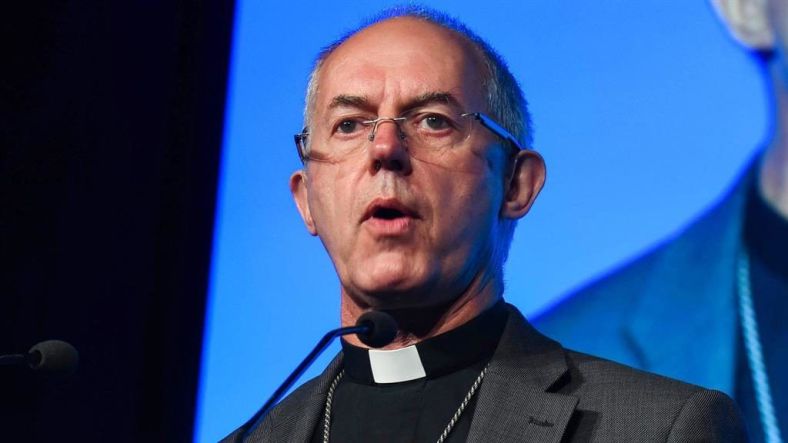
The Archbishop of Canterbury’s recent speech to the TUC (Trade Unions Congress) to mark their 150th anniversary was well received by many who saw it as a wonderful example of the Church ‘speaking truth to power’ and standing up for the marginalised and the oppressed – and particularly workers’ rights. It was also heavily criticised by the Tories as being party political and not the sort of behaviour expected from an Archbishop. Indeed, Phillip Davies MP said “Mr Welby should quit his position as the head of the church and join the Labour Party properly if he wishes to comment on issues of government”, suggesting that the Archbishop “ought to consider removing his dog collar and replacing it with a Labour Party rosette”.

It always amazes me the number of times that we hear people (usually politicians) trot out the old adage that ‘Politics and Religion shouldn’t mix’ as if they have absolutely nothing to do with each other, and of course in reality this statement couldn’t be further from the truth. People of all descriptions have every right to challenge the authorities on political matters whenever necessary and Christians are no different. It’s just that their particular understanding of the world is inevitably coloured by their religious faith and perspective – a perspective which sees all people as equally important ‘made in the image of God’ and loved by him. Although nobody would suggest that Christians have a monopoly on moral goodness or social fairness, matters of mutual love and respect, service and justice are biblical themes repeatedly seen in the lives of the prophets, Jesus and the apostles as they sought to transform a broken and sinful world into ‘the Kingdom of God’. It was Archbishop Desmond Tutu who once exclaimed that “I don’t know what Bible people are referring to when they say that politics and religion shouldn’t mix”, because the Bible is full of politics.

The simple fact is that Christians are not motivated to be a thorn in the side of any one political party, but all political parties if their programmes and policies undermine and speak in the face of Christian values and principles, and in truth this is what being a prophet is all about. It’s about bravely speaking God’s truth into the world wherever necessary without fear or favour, appropriately challenging and encouraging it in due portion. Indeed, the Apostle Paul always felt that his task was to preach on ‘the whole counsel of God’ (Acts 20.27) and he wouldn’t allow any ‘political’ party or those in authority to prevent him from doing so, for usually the people who make the loudest protest about the mixing of religion and politics are those who fundamentally misunderstand the nature of Christian witness and would rather avoid the glare of its inspection.


And what does the Lord require of you? To act justly and to love mercy and to walk humbly with your God. Micah 6.8

To Print Or Not To Print – That Is The Question!

Sir Cliff Richard awarded damage sum in BBC trial

Let’s ‘print and be damned’ has often been the unsaid mantra used by journalists, newspapers and media outlets for many years, and is ironically said to have arisen from a statement uttered by the Duke of Wellington, when confronted with a letter threatening to reveal salacious details about an affair. The Duke would not give in to blackmail and so suggested that the publisher should print as he wished and therefore reap the consequences.

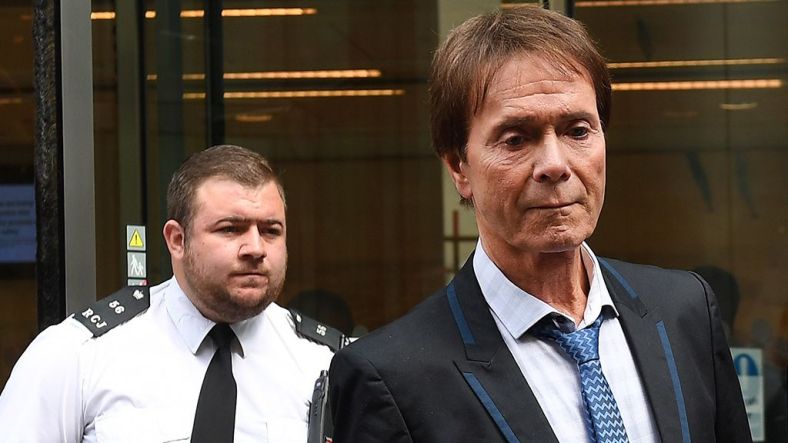
The consequences can be profound as we have seen from the recent case between Sir Cliff Richard and the BBC, when the High Court judge Mr Justice Mann ruled in favour of the singer and awarded him £210,000 in damages, agreeing that promoting unsubstantiated accusations against Sir Cliff and publishing sensational video footage of the singer’s home being searched when he was never arrested or charged, was a ‘serious invasion of his privacy’. In response, the BBC were considering an appeal, suggesting that not being able to publish the name of a suspect prior to a formal charge was a serious restriction of the ‘freedom of the press’ and would not be in the public interest. This overlooks the terrible hurt personally caused to Sir Cliff and the irreparable damage done to his reputation, coupled with the judge’s own conclusion that ‘no matter of public interest’ was served in this case. Although emotionally unable to comment on the steps of the High Court, Sir Cliff made it clear in his interview with ITV that he had no desire to curtail the ‘freedom of the press’ but to ensure that the privacy of the individual was respected until the point that a formal charge is made. After all, it is a fundamental principle of our society that all people are innocent until proven guilty and as Sir Cliff himself observed ‘freedom without responsibility is anarchy’.

It seems to me that although it’s right to promote openness and transparency, we all need to accept that this doesn’t give us an automatic right to know everything about every individual or institution. The problem is that we are all nosy, and gossip sells newspapers, and we simply can’t bear not knowing and this is where the dilemma lies – we expect to have everything laid out on a plate and become frustrated and disgruntled when it isn’t so. The BBC may have hoped that its reputation for rigorous journalism would be enhanced, but they forgot (or perhaps didn’t care) that it’s prize scoop came at the expenses of trashing the reputation of an innocent person.

Perhaps we should all remember that only God knows everything and that one day our lives will be judged by him as if it were an ‘open book’, but until then we need to live, love and respect each other with as much grace and dignity as we can muster. Doing ‘to others as you would have them do to you’ (Luke 6.31), otherwise we will all have to suffer the consequences.


 “And what does the LORD require of you? To act justly and to love mercy and to walk humbly with your God.” Micah 6.8


The NHS, Brexit And The ‘Magic Money Tree’

_102122541_may_dividend_tweetpic-nc-4

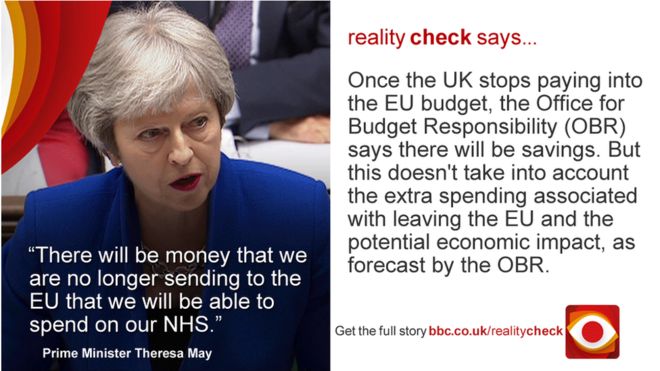
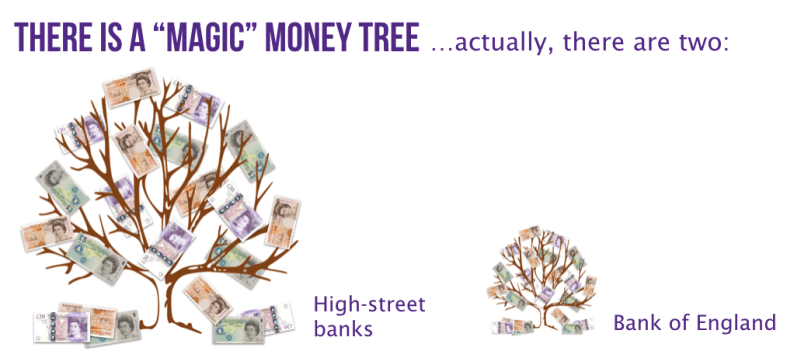
Sometimes I find myself feeling a bit incredulous! The Prime Minister has just announced a £20 billion pounds funding increase for the National Health Service (NHS) after Brexit, partly funded by tax increases and partly from money that will no longer be going to the European Union (the so called ‘Brexit Dividend’). On the face of it, this would seem to be good news, but immediately, the politics has kicked in by those who would wish to either undermine the Prime Minister, the Conservative Party or derail Brexit. Yes, I completely understand and accept that more should have been paid to doctors and nurses years ago; I also understand that merely referring to the controversial ‘£350 million per week’ quote painted on the side of the now infamous red Brexit bus is like ‘waving a red rag to a bull’ to some – but the point remains that this is still good news! Especially, when one accepts that according to recent opinion polls 66% (2/3rds) of the British public are in favour of paying higher tax to fund the NHS regardless of whatever may or may not come back from Brussels. Admittedly, during the election campaign Amber Rudd had accused Jeremy Corbyn of believing in a ‘magic money tree’ – a phrase which the Prime Minister herself had also used, but now (ignoring the inconvenient truth that the government has produced loads of new money via loans to business through its process of ‘Quantative Easing’) critics have accused the Prime Minister of ‘pulling a rabbit out of a hat’, of finding a ‘magic money tree’ after all, albeit through increased taxes and money that would have gone to the EU. However, putting Politics aside – why can’t we simply celebrate the fact that new money is going to the NHS in time for its 70th anniversary which is precisely what so many people have wanted, waited and called for, for such a long time? This is still good news! Or must it always be part of our human nature to criticise and complain?

Screenshot-2017-06-01-17.12.06

Ironically, it would seem so, for as the Christian can testify, the greatest example of good news being stifled by the politics of the day is perhaps the coming of Jesus himself! Which is strange, because for centuries having been conquered by a series of foreign regimes, the people of Israel were only too aware of the fact that they lived in a broken world, where ‘might seemed to be right’ and where their lives were not their own. Society was often cruel and unjust, and the lives of weak and the poor were often treated shamefully or neglected. What they needed, and what they longed for, was a hero, a Saviour, a Messiah who could lift them out of their suffering and save them from their plight. And of course, the biblical notion of salvation is a lot broader than we might imagine, for it refers not just to rescue and restoration – but to healing! Just like modern day clinicians, Jesus was not just concerned about the presenting problems but the underlying causes. In other words, he was concerned about the whole person! And for Jesus, the main underlying problem of the human condition spiritually speaking was – sin!

It was sin that spoiled people’s lives, their relationships with one another and their relationship with God, and it was because of sin that Jesus had come into the world, so that through his loving death upon the cross our lives could be profoundly changed, restored and healed when we put our faith in him. We would be saved! This is good news! Sadly, the politics of the day prevented many from appreciating what was happening before their eyes. May our minds and our vision be open to all that is good and praiseworthy.


“On each side of the river stood the tree of life …. and the leaves of the tree are for the healing of the nations.” Revelation 22.2


‘In God We Trust’ – Or Is It The American President?

trump

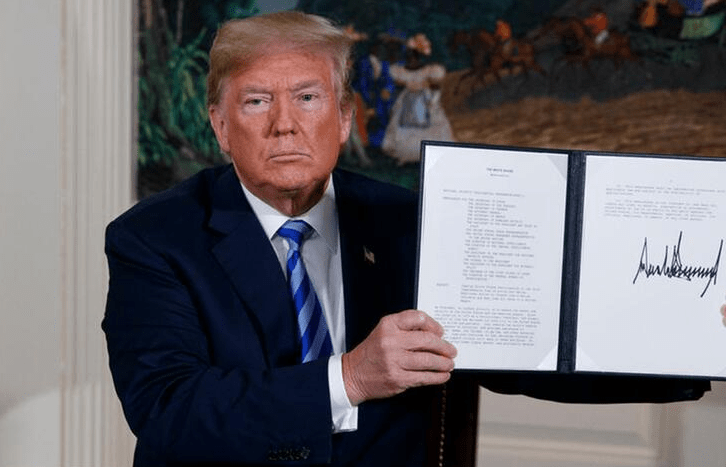
In the light of Brexit, one of Prime Minister Theresa May’s most notable remarks was that ‘No deal is better than a bad deal’, but now that President Trump has pulled the United States out of the Iranian nuclear deal, we are all left wondering whether a bad deal is actually better than a broken one? Naturally, the complexities of the issue are immense and the implications of pulling out of the deal with the Iranians very serious indeed, especially as it was generally believed that the Iranians were in fact ‘keeping their end of the bargain’. This was underscored by the vain attempt of several national leaders to keep Donald Trump ‘onside’ prior to his announcement.

Now of course, it’s very difficult for the common man to get any sense of what’s really going on behind the scenes or the ‘inside track’, but boldened by his recent success in North Korea, it appears that President Trump is playing a tremendous game of brinkmanship in an attempt to force the Iranians once again to the negotiating table in order to generate a new, better, more wonderful deal than the one previously negotiated under President Obama. Of course, if he succeeds then he will deserve the world’s plaudits, but if he doesn’t, then we will all have to girder our resolve as we come to terms with the consequences.

However, on a simple level one is left wondering ‘what do these events say about trust?’ How can we expect Iran (or any other nation state for that matter) to trust America if it can tear up its agreements at a moment’s notice? It’s slightly ironic that one of Donald Trump’s campaign slogans was Trust me! I’m going to make America great again!’. No doubt the President believes that this is precisely what he’s doing in keeping with his ‘America first’ approach but surely it will become much harder for other signatories or nation states to be so confident about US policy or the trustworthiness of its President!

Perhaps the US, which takes such pride in it’s Christian heritage, should pause and reflect upon its national motto which is stamped on the back of every two-cent coin, the simple slogan which reads ‘In God we trust’! The Spiderman movies may have brought to the public consciousness the thought that ‘with great power comes great responsibility’, but the Bible also has a lot to say about the folly of those who look purely to their own strength, wealth and resources to get things done (see Psalm 52.6-7), whereas the godly man humbly appreciates that he can’t do everything in his own strength, but only with the wise and prayerful backing and support of others, trusting God as he does so. For trust needs to be cultivated and encouraged – it can’t be demanded. If you want people to trust you, you need to give them reason to do so. Christians will recall how Jesus encouraged his disciples to ‘Trust God and to trust also in me’ (John 14.1), but this wasn’t a blind sort of trust, ‘a stab in the dark’, it was a reasoned trust based on what they knew God had done for them in the past and what they could see Jesus doing for them now. His deeds gave his words authenticity. His whole life was one of integrity. People may break their word, but God never does and now, through the person of Jesus, God was keeping his Word, and fulfilling every promise, agreement and covenant that had ever been made. Let’s hope that in the fulness of time the American President will win a fulsome victory, but will it also earn him praise, respect – and fulsome trust?


“He who was seated on throne said, ‘behold I am making everything new!” Then he said, “Write this down, for these words are trustworthy and true” Revelation 21.5


1865_Two_Cent_Obverse

The Incredible Art Of Forgiveness

The Trial Begins Of Two Men Accused Of Murdering Stephen Lawrence

In the light of the recent chemical weapons attack upon the Syrian citizens of Douma, alongside March’s assault upon Sergei and Yulia Skripal when a Novichok nerve agent was used in Salisbury, one could be forgiven for thinking that the world has sunk to a new low and that the world had become a much darker and dangerous place. What has become of our moral values, common decency and respect for human life?

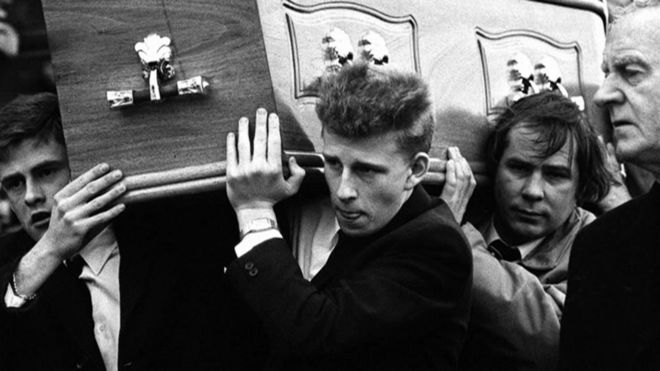
In recent weeks, we have seen the American, French and British authorities take military action against those who use chemical weapons, but there have also been two incredibly moving stories which perhaps given the circumstance have not been given the prominence that they rightly deserve. The first was the comedian Patrick Kielty’s BBC documentary entitled “My Dad, the Peace Deal and Me”, exploring the legacy of the Good Friday Agreement as it reached its 20th anniversary. Patrick’s story is poignant as his own father was murdered by paramilitary gunmen during ‘The Troubles’ – men who were subsequent released from prison as part of the agreement. Patrick’s view was nuanced, because although he admitted that he couldn’t forgive the gunmen, he accepted that their release was necessary if there was ever to be reconciliation. He was stunned by an interview with Richard Moore, who as a child had been totally blinded by a rubber bullet fired at him by a British soldier – and yet Richard had forgiven his assailant and had made great strides to find him in order to say so, resulting in a lasting friendship. How could Richard forgive the soldier so?

_100688594_kieltyfuneral

[Patrick Keilty carrying his father’s coffin in 1988]

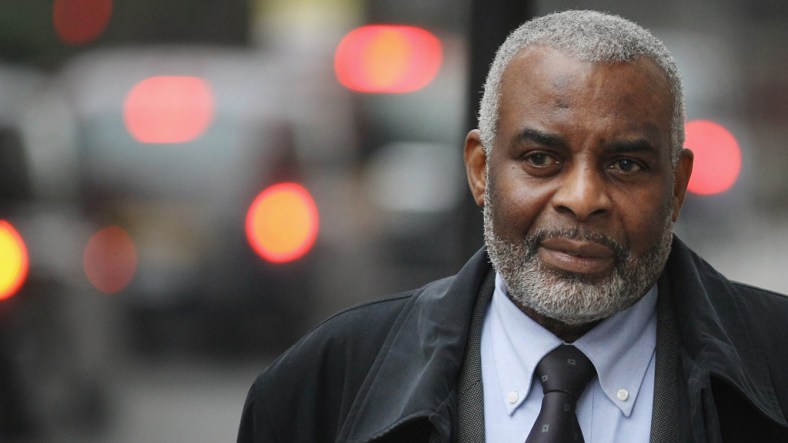
This was followed by an amazing interview given by Neville Lawrence, the father of the murdered teenager Stephen Lawrence, whose story has regularly been in the headlines for 25 years. Two men had been convicted of Stephen’s death and yet it’s understood that five were involved. Neville revealed how he had forgiven them all for the murder of his son. Like Patrick, Neville’s story was incredibly hard and painful, and described as a ‘life sentence’ that would never go away, and yet he had forgiven his son’s murderers. How could this be possible?

It seems that both Neville and Richard had discovered an ancient Christian truth which is that forgiveness is not dependent upon the perpetrator saying sorry or even being met with. It’s an act of the heart and mind which allows the victim to find peace, ‘to let go’, and won’t allow any anger, hurt or pain they feel to fester and become a well of bitter malice within them, which probably does nothing to bring about reconciliation, and may not even be known by the perpetrator, but simply mars and cripples their own life henceforth. It comes from a deep-seated understanding that you are not going to hold a grudge or allow hurt to define you. Naturally, this isn’t easy – and shouldn’t be remotely confused with ‘letting other people get away with it’ or not wanting justice. Neville Lawrence wants justice as keenly as ever he did – it’s just that he won’t allow his anger and hurt to corrupt and corrode his heart and soul.

True forgiveness isn’t ‘a trick of the mind’; it isn’t secretly hoping for revenge or holding on to resentment. It has to be genuine and is therefore both a true art and an act of grace. Whether forgiveness is or isn’t asked for, it certainly isn’t deserved – it can only be given. It’s therefore a beautiful thing – a gift, which allows the victim to find peace, and can wonderfully, occasionally lead to repentance and reconciliation by all parties.

The Christian will see clear parallels between this and the Gospel story – how our sin naturally makes us all perpetrators, leading to the death of Jesus upon the cross where he graciously and lovingly takes upon himself the punishment for our sins (justice demands it) so that we might be reconciled and freely forgiven by God when we turn to him in sincerity, faith and repentance.

The stories of Richard, Neville (and perhaps even Patrick, who began to wonder if he had actually forgiven his father’s murderers after all) demonstrate that by God’s good grace and mercy there is still a lot of love and light in the world – and the world isn’t quite as dark as it might be.


“Forgive us our sins as we forgive those who sin against us” Luke 11.4


From Hollywood To OXFAM – Has The Sexual Revolution Let Us Down?

2018-02-12T22-37-22.766Z--640x360

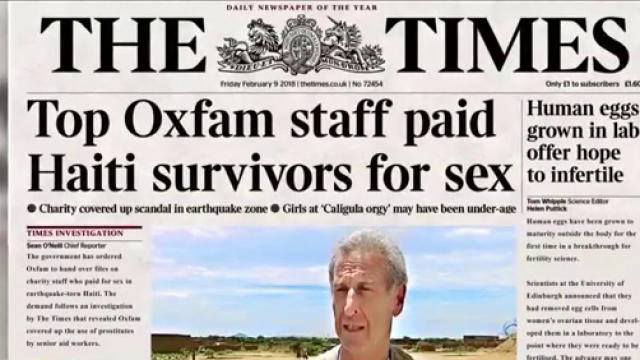
Sexual impropriety has always been with us, but when the film mogul Harvey Weinstein was accused of a series of sexual misdemeanours last October, the public was shocked by the scale of it all as actress after actress (and some actors too) lined up to accuse the film producer of misconduct against them. The #MeToo social media campaign went viral as people standing in solidarity with Weinstein’s victims sought to publicise the widespread nature of sexual assault and harassment within society as they told their own personal stories of unwanted sexual abuse. Like a stone cast into a pond, the effects of this movement soon rippled out into every quarter of modern society – from the music and entertainment industries to politics and the workplace. But, undoubtedly the most shocking story of this type is the recent news that staff working for the Oxfam charity paid vulnerable people for sex when they were supposed to be distributing aid in Haiti, made worse by the fact that the organisation failed to sufficiently report the matter to the authorities or warn other aid agencies about their former staff members who sought new employment with them.

oxfam-shop

The sexual revolution kickstarted by the arrival of the contraceptive pill in 1961 has certainly transformed women’s lives for the better, giving them a much greater sense of peace of mind as they control their bodies, and enjoy the ability to choose whether or not to have children – but in the light of the current scandals it could be argued that the glamour of the swinging 60s has somewhat faded, as men (and particularly those with power and influence) who have grown used to uncomplicated sex without restriction or entanglement seek to exploit others for their own personal satisfaction. The men who take advantage of others as outlined above may think it’s ‘just sex’ and consensual, but if you expect favours in return for giving a new acting role, a promotion, money or aid, and threaten to withhold them if you aren’t treated, then it isn’t consensual at all – it’s coercive!

Most people appreciate that there is no such thing as ‘just sex’ because our bodies are not really designed to exploit one another but to joyfully love one another, because as the Christian will understand true love is not ‘self-seeking’ (1 Corinthians 13.5) but self-giving, of which sex in marriage is the ultimate expression – which is why we call it ‘making love’.

This month, we are in the season of Lent, in which we are as Christians are invited to contemplate our own lives in the light of Jesus who loves us, his life, death and resurrection. It’s a time for sober reflection and penitence, a time for ‘turning around’ and seeking God’s forgiveness. I would therefore like to suggest that there is no better time for putting our lives straight, for reflecting upon our own attitudes about sex and the way that we treat each other. We may not be able to do anything about the Harvey Weinsteins of this world, or those who wilfully exploit and take advantage of others, but we can make sure that we are not like them, by putting our own house and lives in order and being determined to really, really love one another, just as God intended.


“Let him kiss me with the kisses of his mouth – for your love is more delightful than wine’ Song of Solomon 1.2


Can Intolerance Be A Virtue?

p05mx3fn

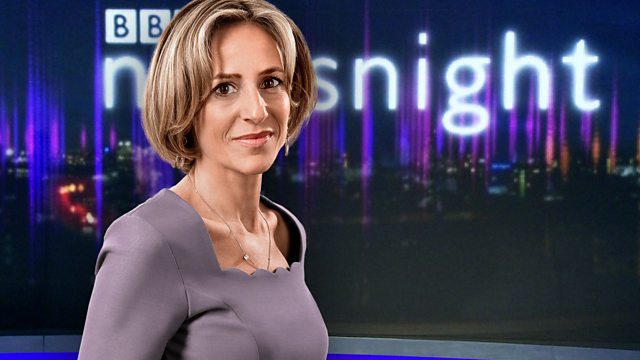
Recently, Newsnights Emily Maitlis discussed a report that had been published by the independent cross-party think-tank Demos as part of their At Home in One’s Past project. The title may sound fancy, but in a nut-shell it was trying to gauge public opinion about how people viewed modern British Society and culture by inviting people to reflect upon a series of typical statements (sometimes provocative) heard in modern society. The focus groups in question contained a diverse mix of citizens by age, socio-economic status and ethnicity. However, the vast majority of participants were white British people over the age of 55 and although the survey covered a wide range of areas those relating to cultural identity were particularly interesting. The common view was that all participants wanted to be treated with decency and fairness and took great pride in the fact that Britain was on the whole a fair and just society. However, participants also reported (and I quote) “feeling that British politics and the media now focus too heavily on the rights and needs of minority groups, and that there is an absence of ‘fair exchange’ of tolerance between minority groups and dominant White British, Christian Culture – which is expected to constantly adapt” (end quote). The report stated that Political Correctness was widely seen as having been overextended to such an extent that it was now not only hindering free speech and open debate but quickly changing British culture to the regret of our older citizens. One of the interviewees on the television programme reminded us quite rightly that we should be careful about the things that we say because our words have consequences, but another argued that the mood had changed to such a degree that people were reluctant to speak their mind because they were afraid of the backlash that their ‘out-of-step’ and perhaps traditional views might create. In other words, the ‘fair exchange of tolerance’ wasn’t working towards those who had suddenly discovered that their traditional values weren’t currently popular or mainstream.

So, what is tolerance and to what extent can it be described as a Christian virtue? The Cambridge Dictionary describes tolerance as ‘the willingness to accept behaviour and beliefs that are different from your own, although you might not agree with or approve of them’, but Don Carson in his book The Intolerance of Tolerance has noted how in recent times there has been a subtle shift from defending the rights of those who hold different beliefs to affirming all beliefs as equally valid and correct in which case it becomes increasingly difficult to say, ‘I disagree with you’.

Many would applaud such Christian values as ‘love your neighbour as yourself’ (Luke 10.27) or ‘do to others as you would have them do to you’ (Luke 6.31) which would seem to support a mutual sense of love and respect for one another, but statements such as these can’t be used to imply that anything goes or that there is no difference between right and wrong. In fact, most people including Christians should be prepared to passionately defend what they believe even if this appears on the surface to be intolerant to those who assume the cultural norm – not just in matters of fairness, social equality and justice but in matters of faith such as ‘salvation is found in no-one else, for there is no other name under heaven given to men by which we must be saved’ (Acts 4.12). People have every right to disagree with this statement but they have no right to suggest that it shouldn’t be viewed or aired for that would be equally intolerant and contrary to free speech, our traditional British values and Christian heritage.


“Preach the Word; be prepared in season and out of season; correct, rebuke and encourage— with great patience and careful instruction.” 2 Timothy 4.2


The Rohingyas – Where Are The Peacemakers?

download

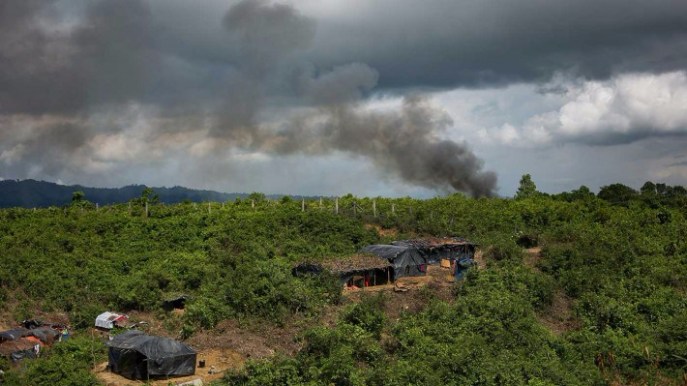
There have been many sad and sorry stories about trouble spots around the world – about people who have been caught up in the midst of war, civil unrest, barbarity and violence, but none are so poignant at the present time as that of the Rohingyas. The Rohingas Muslims are from the Rakhine state in Myanmar (formerly Burma). They are a ‘stateless’ people who have faced many years of persecution from the Buddhist majority and deep seated historic tensions have fuelled the latest catastrophe, sparked by the actions of Rohingya militants earlier in August. However, the scale of the military response from the Burmese Generals alongside Buddhist monks has been vast and unprecedented, driving hundreds of thousands of Rohingya, men, women and children, across the border and into squalid relief camps in Bangladesh.

150917-wd-myanmar

This terrible situation has become even more tragic as the Burmese leader is Aung San Suu Kyi – the 1st State Counsellor of Myanmar (akin to our Prime minister), the former ‘non-violent’ civil rights campaigner and leader of the National League for Democracy who won the Nobel Peace Prize in 1990. Quoted in 2007 as saying “I do not hold to non-violence for moral reasons, but for political and practical reasons”. This statement may ironically shed some light on her current, bewildering silence as the leader for Myanmar. Does she now believe that for political and practical reasons, violence against the Rohingyas is justified? Has she been persuaded by her Generals that violence is necessary? Is she prejudiced against the Rohingyas? Admittedly, it may appear that her actual power is very limited, but her ambivalence seems to perfectly illustrate the statement often attributed to Edmund Burke that “the only thing necessary for the triumph of evil is that good men (or women) do nothing”. Which is such a shame, as for many years she was held up as the shining light and beacon for civil rights and democracy. It seems that this mantle has now passed to another recipient of the Nobel Peace Prize – young Malala Yousafzai, herself the victim of violence in Pakistan. “We can’t be silent right now,” she says. “The number of people who have been displaced is hundreds of thousands …. This should be a human rights issue. Governments should react to it. People are being displaced, they’re facing violence. We need to wake up and respond to it,” she continues, “… and I hope that Aung Sang Suu Kyi responds to it as well.”

The Christian will be aware that when Simon Peter, one of Jesus’ disciples, tried to protect Jesus and prevent his arrest by the temple guards, Jesus warned him urgently to put his sword back into place “for all who live by the sword will die by the sword” (Matthew 26.52) and had conversely famously promoted the cause of peace in his ‘sermon on the mount’; “Blessed are the merciful for they will be shown mercy” he said “…blessed are the peacemakers, for they will be called children of God,” (Matthew 5.7,9). So, where are today’s peace makers? Well, they are all around us – in fact they are us! For like Malala Yousafzai, we should be encouraging our government to act swiftly to put pressure on the Myanmar government and not to stand silent. There may be very little that we can do personally, other than to pray for peace and support relief organisations and charities that we know are working in the area, but we can also be clear that these sorts of actions will never be seen by us as being part of a just, fair, civil and democratic society.


“… and what does the Lord require of you? To act justly, and to love mercy and to walk humbly with your God” Micah 6.8


Would You Recognise A Slave If You Saw One?

3584

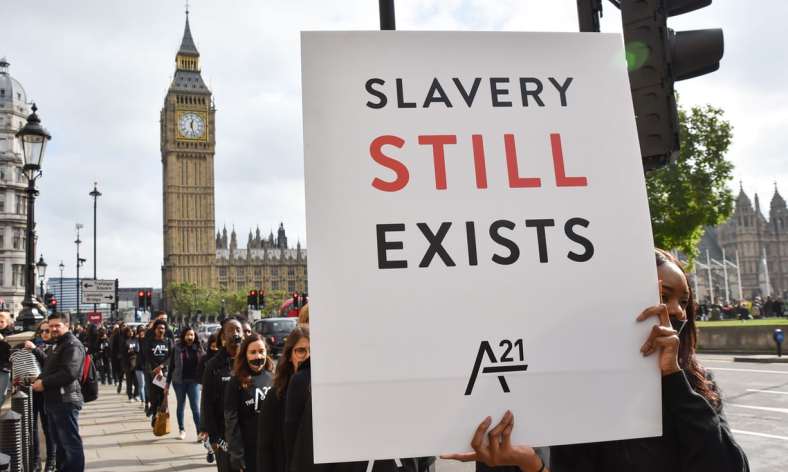
Whilst many of us were enjoying the Summer holidays and watching the World Athletics, a darker side of our society also came to the fore last month. The BBCs Home affairs correspondent Dominic Casiani reported how the NCA (National Crime Agency) had revealed that victims of modern day slavery were being forced to work in every large town and city in the UK in far higher numbers than was previously thought – “from the person who washes your car, to the worker who picks your fruit, to the labourer who helped build your house, more people would be coming into contact with them every day” he said. “These are people who are forced to work against their will, under the threat of punishment or as a form of debt repayment. Some of them may not even realise that they are the victims of crime – in many cases they are victims of criminal gangs”.

These are all incredibly vulnerable people who are usually disadvantaged, poor or from other countries who are being repeatedly ill-treated, abused and exploited. The NCA sadly described how the more they looked at the problem the worst the figures became, so much so that they have now asked the public and the general community to help them by reporting any form of this sort of exploitation that they may come across.

Previously, the Archbishop of Canterbury, Justin Welby alongside the Ecumenical Patriarch of Constantinople at a conference in Istanbul had observed that slavery is more rampant today than at any other time in human history and called it an “abomination to human dignity”. “There is no religious basis or justification for a practice that commodifies human beings” he said and suggested that the church with a presence in every parish was uniquely placed to help spot, confront and challenge those who seek to exploit others in this way. The Prime Minister, Theresa May welcomed the subsequent declaration that came out of the Istanbul conference saying that “modern slavery is one of the great human rights issues of our time, subjecting people around the world to experiences that are horrifying in their inhumanity. We have a duty, as human beings and as Christians, to bring it to an end. The UK is leading the way…but governments alone will not be able to stop it. It is vital that all parts of society do their part”.

The Christian will recognise that as human beings, we are all made ‘in the image of God’ and all equally of value and worth before him. Indeed, Jesus not only summarised the Jewish faith as ‘loving God’, and ‘your neighbour as yourself’, but capped it in his own unique way by giving his disciples the ultimate command that they should ‘love one another as I have loved you’ (John 13.34). In other words, selflessly, sacrificially, compassionately and with a generous spirit as ultimately displayed in his own death upon the cross.

These are sentiments, I believe, that whether we be religious or not, we can all sign up to as marks of our common decency and shared humanity. The challenge is of course, would we recognise this sort of exploitation if we saw it – and if we had a suspicion would we have the courage to report it? I truly hope so, for this sort of problem will only get worse if people ‘turn a blind eye’, ‘mind their own business’ or try to ‘sweep it under the carpet’. Ultimately, we always need to put ourselves in the place of the victim, and treat others as we would like them to treat us – with common decency, dignity, value and respect. That’s part of what it means to ‘love one’s neighbour as one’s self’.


“There is neither Jew nor Greek, slave nor free, male nor female, for you are all one in Christ Jesus” Galatians 3.28


Can Evangelical Christians No Longer Be In Politics?

tim farron

Naturally, our hearts go out to all the people that were caught up so tragically in the fire that destroyed the Grenfell Tower in North Kensington. We pay tribute to the fire and other emergency services and we applaud the amazing generosity, love and charity demonstrated by the people of the local community. We pray for all affected and hope that lessons will be learned to prevent such tragedies in the future.

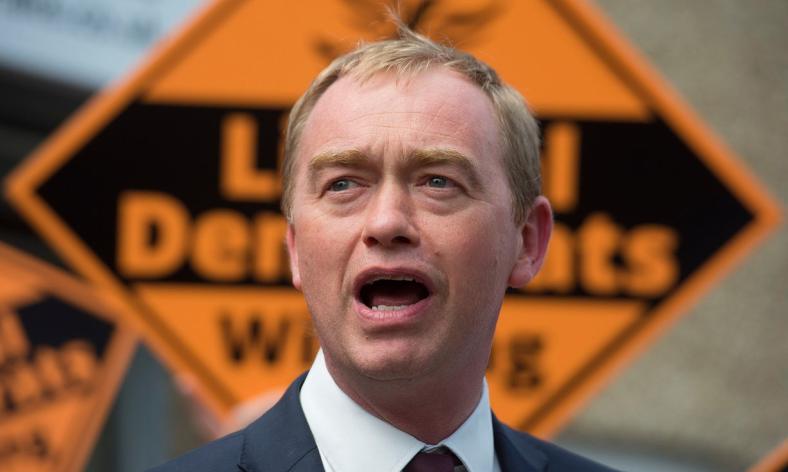
However, on the same day another interesting story took place when Tim Farron announced that he would be standing down as leader of the Liberal Democrats citing the pressures that had been placed upon him by the media due to his Christian convictions particularly over the matter of ‘Gay Sex’. “A better, wiser person may have been able to deal with this more successfully, to remain faithful to Christ while leading a political party in the current environment. To be a leader, particularly of a progressive liberal party in 2017 and to live as a committed Christian and to hold faithful to the Bible’s teaching has felt impossible for me,” he said.

The irony of all this was that Tim Farron’s voting record had been exemplary in the support of gay rights and as a politician he had publicly and passionately supported peoples’ rights to live in whatever way they chose, regardless of his own personal thoughts or opinion. Knowing that biblically and theologically speaking, the bible does regard gay sex as a sin (it’s hard to come to any other conclusion if you read the Bible honestly) the media saw this as a stick to beat him with and wouldn’t let it drop, despite the fact that Tim Farron had represented all of his constituents with integrity to the best of his ability (even though the Office for National Statistics itself believes that the gay community only represents 1.5% of the population). It’s interesting to note that the media didn’t bully Muslim MPs in the same way, even though the whole matter of gay sex is just as contentious in the Qur’an and Islam as it is in the Bible, which once again is an example of systematic media bias and spin.

The problem with our society is one of an extremely bad and intolerant ‘political correctness’ which doesn’t only wish to restrict any form of language which might offend, marginalise or disadvantage people on grounds of race, sex or religion (which is good) but actually stifles debate in the process (which is bad) and is intolerant of anyone who doesn’t hold the commonly held party view, regardless of its failings.

Over the years many Christians have faithfully and passionately sought to serve their communities with ‘love and devotion’, seeing it as part of their Christian and political vocation to make the world a better place. We have a proud Christian heritage which has shaped many of our laws and influenced the way we govern ourselves and look after one another, based on mutual understanding and the traditional Christian values of love, justice, equality and the intrinsic worth of the individual made ‘in the image of God’. It would therefore be such a shame and a real detriment to our communities if Christians were discouraged from entering politics or thought that their contributions to society were of little value or worth.


“Love the Lord your God with all your heart … and love your neighbour as yourself.” Luke 10.27