With war in Europe and the Middle East – how do you define a just war?


  1. The reason for going to war in the first place must be just. i.e. a morally right or just cause, such as defending a nation (Revelation 19.11).
  2. The war must be called by a legitimate legally recognised national authority such as a government. It can’t be called by private individuals or corporations (Romans 13.1).
  3. There must be a genuine desire for comparative justice. It should be clear that the actions of the enemy are morally wrong and that the motives of one’s own government should be, in comparison, morally right. There must be a genuine intention to establish good and restrain evil (Proverbs 21.2). Revenge, conquest, economic gain and matters of ideological superiority  are poor motives for conflict and do not remotely satisfy the conditions for a just war.
  4. There must be a reasonable chance of success (Luke 14.31); will the good results that come from victory be significantly greater that the harm and loss caused?
  5. Only sufficient force must be used, and civilians should not be involved. Will conflict be proportionate and conducted with a right intention discriminating between combatants and noncombatants? Will those captured be treated with justice and compassion according to the rights and norms set out by international law?
  6. Finally, as mentioned previously, is the war a matter of last resort; have all other diplomatic avenues and possibilities been extinguished?

Celebrating Harvest – against all the odds!

Many of us will be familiar with the story Jesus told his disciples known as the ‘parable of the sower’ (Matthew 13.1-9,18-23), which demonstrated the spiritual reality that sadly not every heart would be open to the ‘Word of God’ like seed sown on good soil – but rather, like seed that was eaten by birds on a path, scorched by the sun in rocky places or choked by thorns and thistles, would be destroyed and rejected by those whose hearts were influenced, shaped and hardened by the worries, cares and problems of the world,  resulting in what appears to be at first glance, a massive 75% failure rate!

But even if we put the spiritual metaphors to one side for a moment, and take the parable ‘literally’, it still speaks to us, because it chimes with what we understand and see going on around us at the present time. The ongoing war in Ukraine has been a disaster for the world’s food store. Because of damage to fields and farms, 40% fewer crops have been planted in 2023 than the year before. The lack of fertiliser has literally left many crops struggling to grow against thorns, thistles, and weeds. Many farmers have therefore switched to growing easier oil-based crops such as sunflowers, resulting in the fact that this year’s grain harvest is even smaller than before. The ‘rocky ground’ left by an overabundance of military ordinance, such as landmines, has left a deadly legacy so that many fear to gather the crops, and now that Russia has pulled out of its Black Sea crop exporting deal, the worries, cares and pressures of the world are exasperated for many. In other parts of the world, climate change and excessive heat waves literally scorch the seed sown for food. All of this reduces supply, forces up prices, fuels inflation and cements the cost of living crisis, leaving 20% of people on the lowest incomes in the UK with not enough money to feed themselves after two weeks.

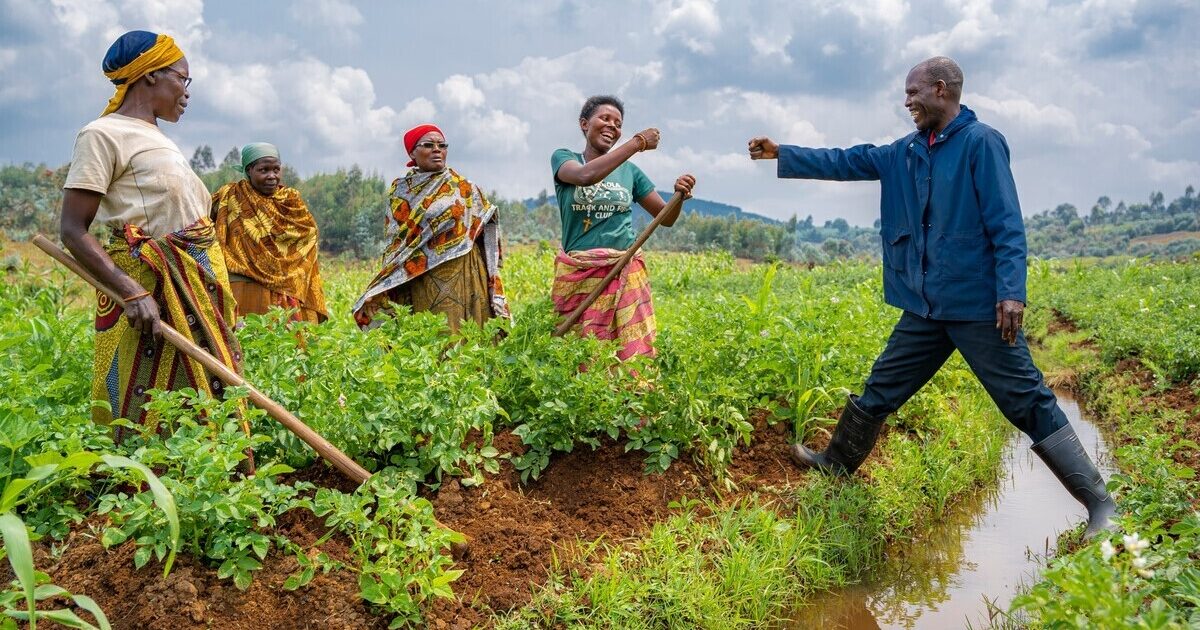
The situation is no doubt even more complicated than this, but it is why we need to celebrate harvest and be grateful for what we have, supporting those who through no fault of their own are less fortunate than ourselves. So as many of our churches begin to look forward towards the harvest season, may I encourage you to join us. This year our harvest charity will be Ripple Effect (formerly known as Send a Cow), helping poorer African nations learn how to farm and feed themselves sustainably, and we will be using our dry provisions and harvest gifts to support our local foodbank. Kindness and generosity are great spiritual values whether you consider yourself to be Christian or not, and just as the ‘Word of God’ teaches us, seed that is sown into good soil ‘can produce a crop a hundred, sixty or thirty times what was sown’ (Matthew 13.8). Wouldn’t it be wonderful if our kind, generous and thankful hearts had a similar effect this harvest season?!      

Easter hope in the midst of conflict!

Ukranian Easter Egg

I write this letter on the day that President Zelensky of Ukraine spoke to the US Congress, thanking them for their help but also appealing for them to do more, most notably the establishment of a no-fly zone, ‘closing the sky’. Whatever we may think about the prudence of such an action, the disappointment from a Ukrainian point of view is easy to understand. This war has generated a huge wave of emotion in us all, whether it be a profound shock and disbelief that it could happen in the first place; to anger and despair as we witness the appalling suffering; to quiet admiration at the courage & stoicism of the people as they resourcefully defend their country; coupled with a huge amount of sadness, pity and compassion for the people who have suffered and lost so much. Yet at the same time we admire the extraordinary acts of kindness and generosity of surrounding nations as they open their hearts and their homes to take care of refugees and provide medical and humanitarian assistance where they can.

In the face of so much suffering, it would be easy to lose heart and lose faith wondering – just where precisely, is God is in all this? But of course, God is at work in the hearts of all those who are trying to look after their loved ones and those less fortunate than themselves. He’s in the compassion of doctors and nurses, trying to save lives and bind up the wounded. He’s in the voice of Russian protesters who are trying to speak truthfully to their neighbours in the light of false propaganda. He’s in the massive effort of governments, humanitarian agencies and charities all trying to act as one to relieve suffering and promote peace. Not forgetting to mention those who literally put themselves in harm’s way while trying to protect others. Finally, he’s in all our tears and prayers as we determine together that there must be a better way of being and living life.

Indeed, the Christian will recall that it is for this better way of life that Jesus came. His message was constantly about how we should ‘love God and our neighbour as ourselves’ (Matthew 19.19). In fact, it was precisely because we were so bad at doing this, wishing to promote our own agenda and thinking that we knew better than God, that sin came into the world in the first place, resulting in pain, suffering and death. But Jesus’ death upon the cross was the start of God putting things right, for when we recognise that the death he died, he died for us, and put our faith and trust in him as our Lord and Saviour, then we are forgiven our sins and given the chance to start again. But of course, Christ’s death is not the end of the story, for Christ’s divinity is demonstrated not only by the way he died, but by the way he rose again! The resurrection is therefore the basis of our Christian Easter hope, giving us, by faith, not only the strength to meet the challenges of today, but also a sure and certain hope for all eternity. May this be a real source of peace and comfort to each of us as we continue to demonstrate the love that God has for us in the way that we live and treat one another.  

Happy Easter to you all.                 


Let the peace of Christ rule in your hearts, since as members of one body you were called to peace. And be thankful. Colossians 3.15

A Prayer for Ukraine

God of peace and justice,
we pray for the people of Ukraine today.
We pray for peace and the laying down of weapons.
We pray for all those who fear for tomorrow,
that your Spirit of comfort would draw near to them.
We pray for those with power over war or peace,
for wisdom, discernment and compassion to guide their decisions.
Above all, we pray for all your precious children, at risk and in fear,
that you would hold and protect them.
We pray in the name of Jesus, the Prince of Peace.
Amen

Archbishop Justin Welby
Archbishop Stephen Cottrell

When war is looming, it’s essential that we act with wisdom, integrity & prayer!

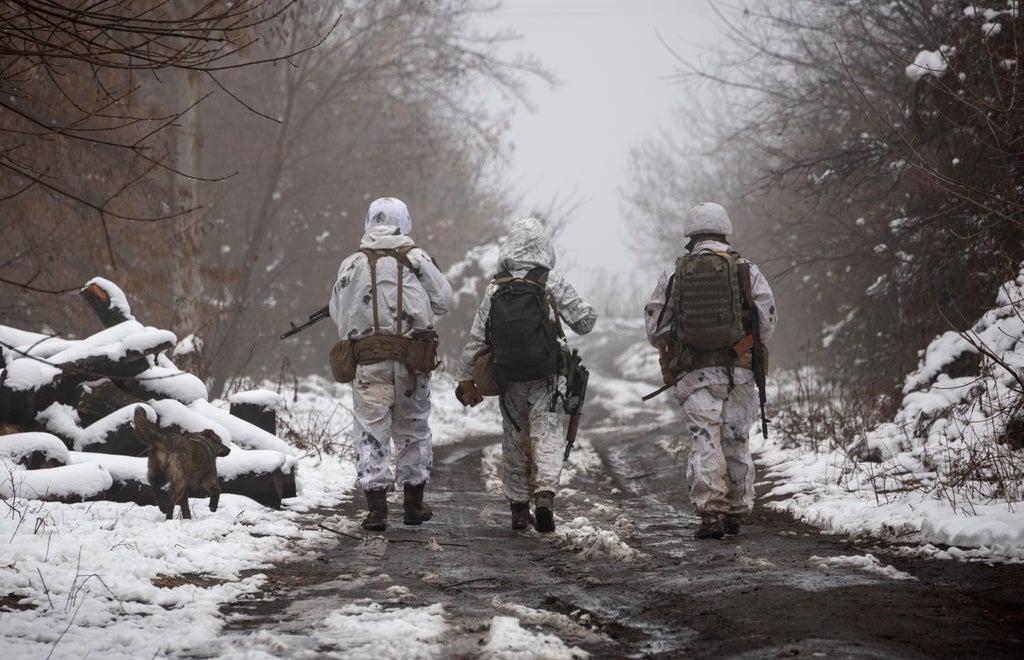
As I write this letter, the West is becoming increasingly alarmed by the number of Russian troops gathering on the borders of Ukraine. President Putin has repeatedly said that Russia has no intention of invading Ukraine, and his government has repeatedly accused the West of ‘histrionics’. In fact, hopes raised by President Putin’s recent statement that the Kremlin has authorised a partial withdrawal of its forces were quickly dashed by NATO’s chief, Jens Stoltenberg who insisted that satellite imagery showed no evidence of such a withdrawal, in fact, strategically, quite the reverse. This was swiftly followed by Liz Truss our own foreign secretary urging the West at a press conference in Kyiv, to ‘wise up’ in its dealings with Russia.

She no doubt has a point – when war is looming, and peoples’ lives are at stake it is beholden upon all of our national leaders to act with prudence, wisdom and caution. Concerns that Russian information might be misleading or that their tacticians might be engineering a so called ‘false flag’ provocation to justify a military invasion of Ukraine are as shocking as they are deceitful. This is why the West must ensure that it acts with wisdom and integrity, powerfully speaking to those who threaten harm, and with care to those who are in harm’s way. Every nation has the right to defend itself, but the engagement of warfare should always be a last resort.

The Christian will be aware that although Jesus commanded his disciples ‘to love your neighbour as yourself’ (Matthew 19.19), he also commanded them to ‘love your enemies and pray for those who persecute you’ (Matthew 5.44). This is not a soppy, sentimental, ‘wishy-washy’ sort of love, but a love that allows the individual to keep a clear head and a clear perspective, not allowing oneself to descend into a mindless anger or hatred. Let’s pray that our national leaders will continue to act with as much tact and diplomacy as they can muster to encourage peace and deter the minds of those who might be tempted to go to war out of greed and evil self-interest.    

    “Do not repay anyone evil for evil. Be careful to do what is right in the eyes of everybody. If it is possible, as far as it depends on you, live at peace with everyone.” Romans 12.17-21


———-

Since writing this initial post, Russia has invaded Ukraine, we therefore continue to pray for the people of Ukraine, and trust that they will not only be able to endure this ordeal with integrity and courage, but that the Western nations will do all that they can to ease their suffering, confront aggression and promote peace.