
From Hollywood To OXFAM – Has The Sexual Revolution Let Us Down?

2018-02-12T22-37-22.766Z--640x360

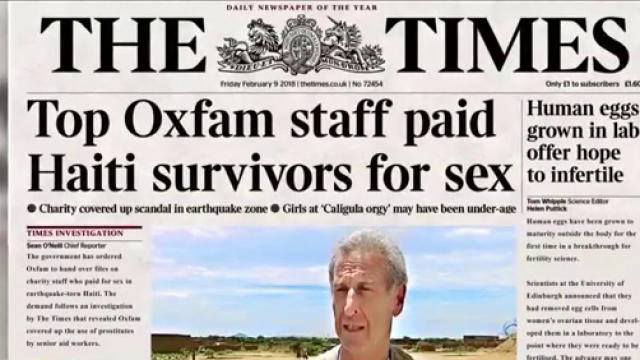
Sexual impropriety has always been with us, but when the film mogul Harvey Weinstein was accused of a series of sexual misdemeanours last October, the public was shocked by the scale of it all as actress after actress (and some actors too) lined up to accuse the film producer of misconduct against them. The #MeToo social media campaign went viral as people standing in solidarity with Weinstein’s victims sought to publicise the widespread nature of sexual assault and harassment within society as they told their own personal stories of unwanted sexual abuse. Like a stone cast into a pond, the effects of this movement soon rippled out into every quarter of modern society – from the music and entertainment industries to politics and the workplace. But, undoubtedly the most shocking story of this type is the recent news that staff working for the Oxfam charity paid vulnerable people for sex when they were supposed to be distributing aid in Haiti, made worse by the fact that the organisation failed to sufficiently report the matter to the authorities or warn other aid agencies about their former staff members who sought new employment with them.

oxfam-shop

The sexual revolution kickstarted by the arrival of the contraceptive pill in 1961 has certainly transformed women’s lives for the better, giving them a much greater sense of peace of mind as they control their bodies, and enjoy the ability to choose whether or not to have children – but in the light of the current scandals it could be argued that the glamour of the swinging 60s has somewhat faded, as men (and particularly those with power and influence) who have grown used to uncomplicated sex without restriction or entanglement seek to exploit others for their own personal satisfaction. The men who take advantage of others as outlined above may think it’s ‘just sex’ and consensual, but if you expect favours in return for giving a new acting role, a promotion, money or aid, and threaten to withhold them if you aren’t treated, then it isn’t consensual at all – it’s coercive!

Most people appreciate that there is no such thing as ‘just sex’ because our bodies are not really designed to exploit one another but to joyfully love one another, because as the Christian will understand true love is not ‘self-seeking’ (1 Corinthians 13.5) but self-giving, of which sex in marriage is the ultimate expression – which is why we call it ‘making love’.

This month, we are in the season of Lent, in which we are as Christians are invited to contemplate our own lives in the light of Jesus who loves us, his life, death and resurrection. It’s a time for sober reflection and penitence, a time for ‘turning around’ and seeking God’s forgiveness. I would therefore like to suggest that there is no better time for putting our lives straight, for reflecting upon our own attitudes about sex and the way that we treat each other. We may not be able to do anything about the Harvey Weinsteins of this world, or those who wilfully exploit and take advantage of others, but we can make sure that we are not like them, by putting our own house and lives in order and being determined to really, really love one another, just as God intended.


“Let him kiss me with the kisses of his mouth – for your love is more delightful than wine’ Song of Solomon 1.2



Can Intolerance Be A Virtue?

p05mx3fn

Recently, Newsnights Emily Maitlis discussed a report that had been published by the independent cross-party think-tank Demos as part of their At Home in One’s Past project. The title may sound fancy, but in a nut-shell it was trying to gauge public opinion about how people viewed modern British Society and culture by inviting people to reflect upon a series of typical statements (sometimes provocative) heard in modern society. The focus groups in question contained a diverse mix of citizens by age, socio-economic status and ethnicity. However, the vast majority of participants were white British people over the age of 55 and although the survey covered a wide range of areas those relating to cultural identity were particularly interesting. The common view was that all participants wanted to be treated with decency and fairness and took great pride in the fact that Britain was on the whole a fair and just society. However, participants also reported (and I quote) “feeling that British politics and the media now focus too heavily on the rights and needs of minority groups, and that there is an absence of ‘fair exchange’ of tolerance between minority groups and dominant White British, Christian Culture – which is expected to constantly adapt” (end quote). The report stated that Political Correctness was widely seen as having been overextended to such an extent that it was now not only hindering free speech and open debate but quickly changing British culture to the regret of our older citizens. One of the interviewees on the television programme reminded us quite rightly that we should be careful about the things that we say because our words have consequences, but another argued that the mood had changed to such a degree that people were reluctant to speak their mind because they were afraid of the backlash that their ‘out-of-step’ and perhaps traditional views might create. In other words, the ‘fair exchange of tolerance’ wasn’t working towards those who had suddenly discovered that their traditional values weren’t currently popular or mainstream.

So, what is tolerance and to what extent can it be described as a Christian virtue? The Cambridge Dictionary describes tolerance as ‘the willingness to accept behaviour and beliefs that are different from your own, although you might not agree with or approve of them’, but Don Carson in his book The Intolerance of Tolerance has noted how in recent times there has been a subtle shift from defending the rights of those who hold different beliefs to affirming all beliefs as equally valid and correct in which case it becomes increasingly difficult to say, ‘I disagree with you’.

Many would applaud such Christian values as ‘love your neighbour as yourself’ (Luke 10.27) or ‘do to others as you would have them do to you’ (Luke 6.31) which would seem to support a mutual sense of love and respect for one another, but statements such as these can’t be used to imply that anything goes or that there is no difference between right and wrong. In fact, most people including Christians should be prepared to passionately defend what they believe even if this appears on the surface to be intolerant to those who assume the cultural norm – not just in matters of fairness, social equality and justice but in matters of faith such as ‘salvation is found in no-one else, for there is no other name under heaven given to men by which we must be saved’ (Acts 4.12). People have every right to disagree with this statement but they have no right to suggest that it shouldn’t be viewed or aired for that would be equally intolerant and contrary to free speech, our traditional British values and Christian heritage.


“Preach the Word; be prepared in season and out of season; correct, rebuke and encourage— with great patience and careful instruction.” 2 Timothy 4.2