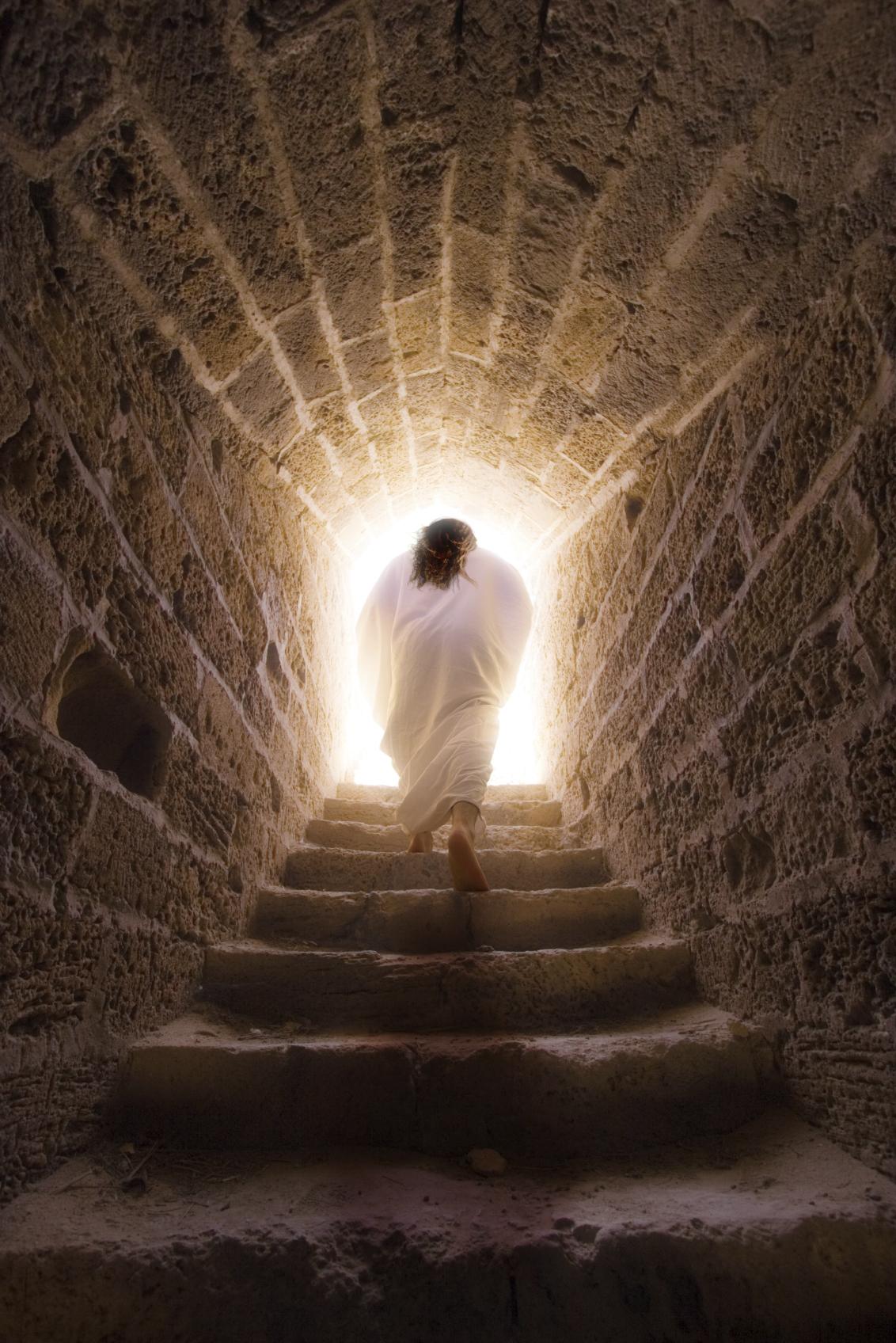
The difference between optimism and hope is – Easter!

With best wishes for Easter. Stephen Thorp


Mary Magdalene and other women: (Matthew 28.1-10, John 20.11-18). The disciples on the road to Emmaus: (Luke 24.13-35). Simon Peter (Cephas (Luke 24.34, 1 Corinthians 15.5). The apostles (without Thomas): (John 20.19-24). The apostles (including Thomas): (John 20.26-29). Over 500 believers at once: 1 Corinthians 15.6. James, the brother of Jesus: 1 Corinthians 15.7. The disciples at the Sea of Galilee: (John 21). The group at His ascension: (Acts 1.3-9).
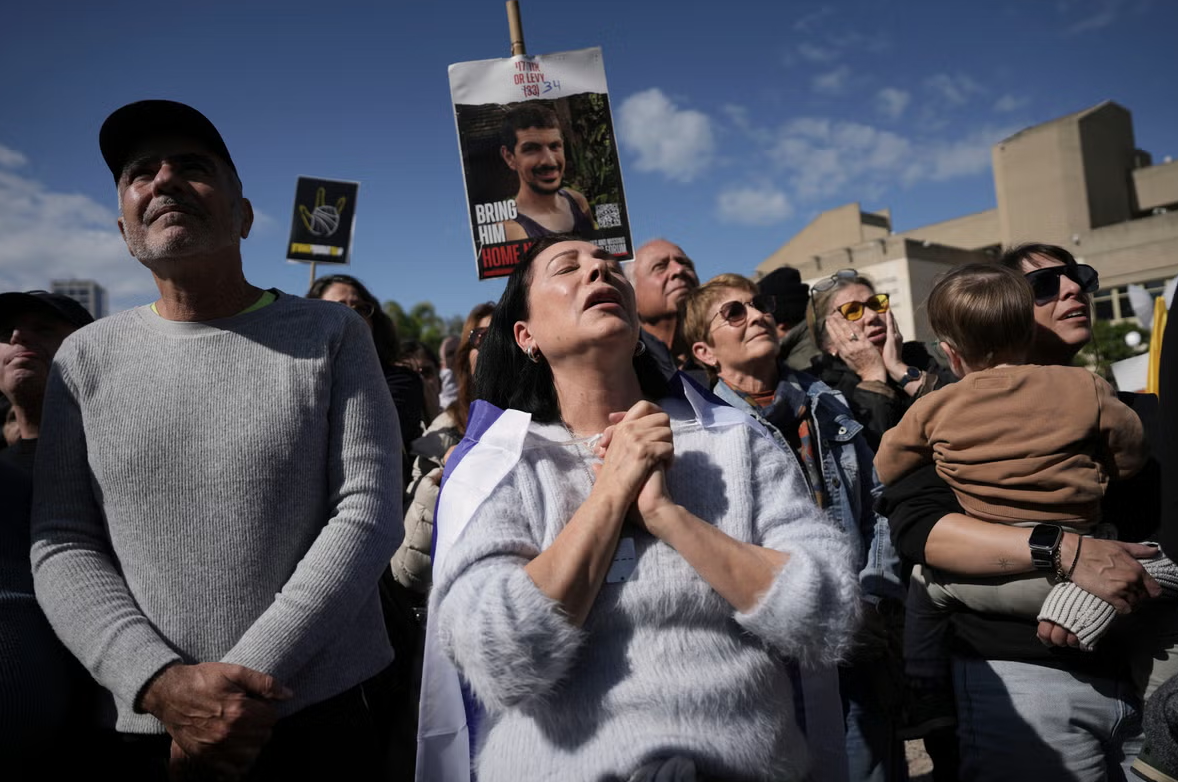
In light of the release of Israeli & Palestian captives – a reflection


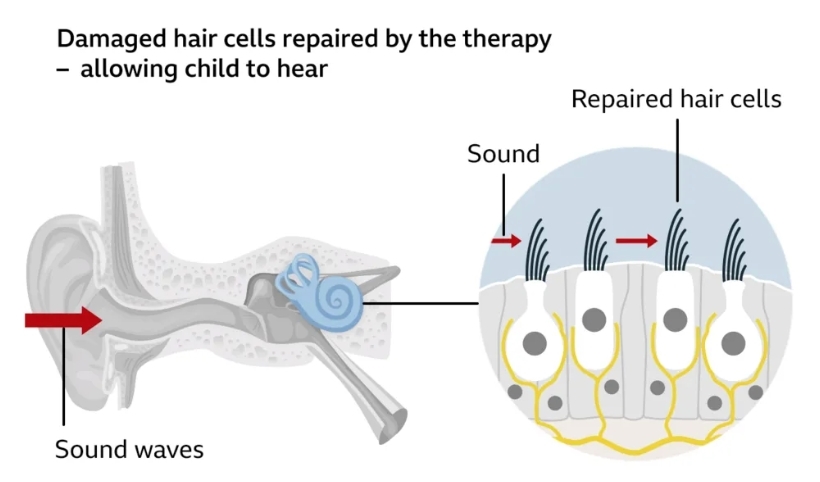
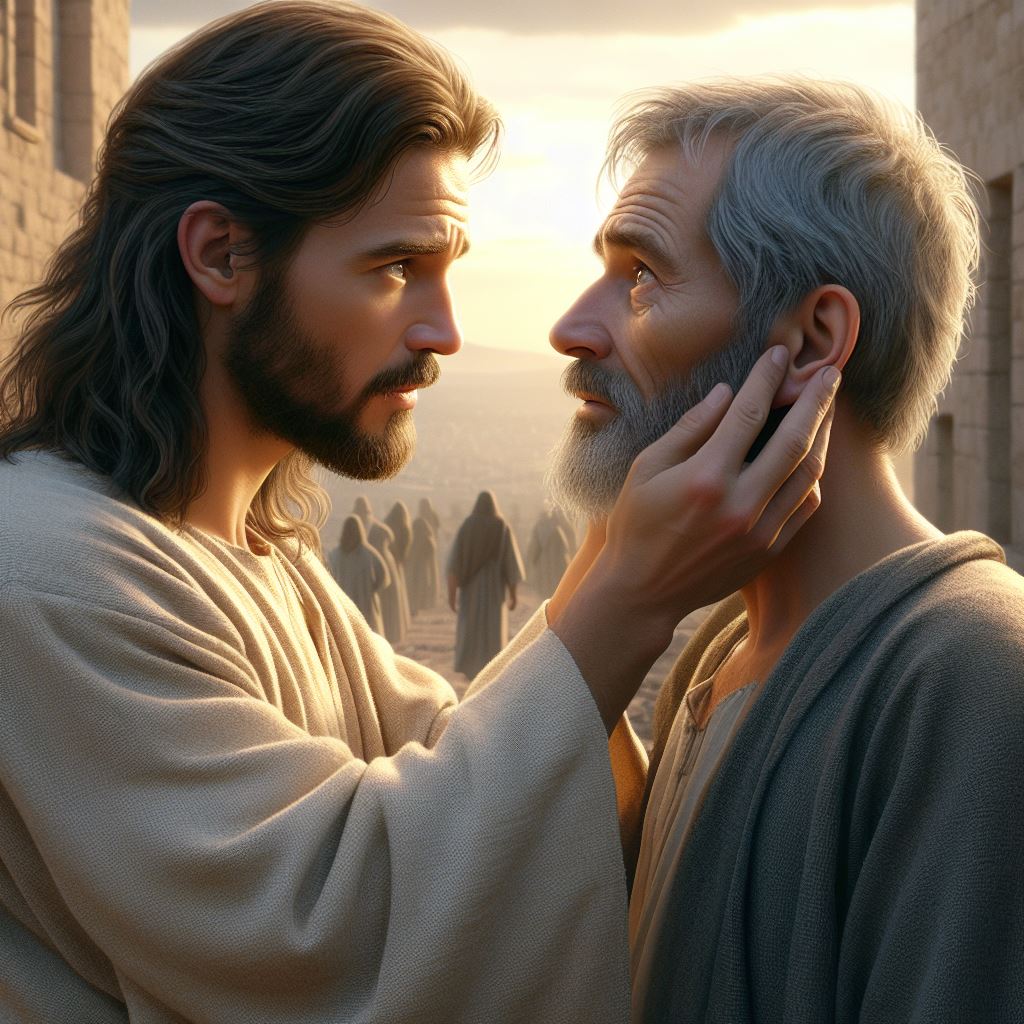
The miraculous joy of hearing!


What can ‘Mr Bates v The Post Office’ teach us about Lent?


Earthquakes, floods and famine – “There but for the grace of God go I”

The recent tragedies in Morocco and Libya have been truly heartbreaking. With 3000 people dying as a result of the Moroccan earthquake, and the possibility of 20,000 people dying in the Libyan floods, the amount of human suffering is hard to imagine or comprehend. It’s no wonder that many traumatised victims, trying to make sense of things and come to terms with their grief, have been recorded by journalists as simply saying ‘It’s the will of God’ or ‘Allah wills it’, which leaves the rest of us safely looking on from the comfort of our homes thinking, ‘well, thank God I wasn’t caught up in that’ or ‘there but for the grace of God go I’. But now, of course, the difficult questions arise! Why aren’t buildings built to be more earthquake resilient, and why aren’t dams which are known to be faulty immediately repaired? Surely a lot more lives could have been saved if only they had been. Perhaps part of the problem is a fatalistic mindset, which encourages people to believe that certain tragedies are an ‘act of God’ and ‘what will be will be’. If this is your attitude, then why should you bother learning from your mistakes or from tragedy, because effectively all responsibility is taken out of your hands and left in the hands of the divine. But this isn’t a biblical perspective, because despite the fact that the world is imperfect (as so clearly demonstrated by recent events) God cares! “The Lord is good to all; he has compassion on all that he has made” (Psalm 145.9). So, instead of thinking that God is aloof, uncaring or absent, we should think of him as being deeply concerned and hands on, working through the kind and compassionate words and deeds of those who act in his name and struggle to bring assistance and relief to the needy. In a sense, this mirrors the Gospel itself, for God has always sought to step into the world rather than step out of or away from it. This is most ably demonstrated in the person of Jesus, who taught his disciples to love God and their neighbour as themselves and who by his death, demonstrated a selfless love for the world so that it might be renewed, restored and forgiven of sin. Although we might tend to think ‘there but for the grace of God go I’ when it comes to earthly tragedies, in the light of sin the Gospel message might be summed up in the words ‘there but for the grace of God, goes God’ achieving for us something that we couldn’t possibly achieve for ourselves.

So, in the face of calamity, whether it be at home or abroad, let us hold on to the fact that God’s love and compassion is with us, and echo and demonstrate it in our own thoughts, words and deeds.

Well done England’s Lionesses. Let’s go again!


No doubt like me, many of you are disappointed that England’s Lionesses failed to win the Women’s Football World Cup 2023! But what a wonderful tournament it has been, and what excitement! Who can forget Chloe Kelly’s incredible winning penalty strike against Nigeria which at 69 mph was more powerful than any goal scored in the Premier League last season – or young Lauren James announcing herself on the world stage with 2 wonderful goals against China and an incredible strike against Denmark – or finally Mary Earps’ sensational penalty save against Spain in the Final which rightfully won her the ‘golden glove’ award and confirmed her place as one of the world’s top female goalkeepers admired by millions (whatever Nike might say by not producing a copy of her shirt for fans to buy). Not forgetting the rest of the team who all did so very well under the wonderful management of Sarina Wiegman. It’s such a shame that the final proved to be ‘one game too far’, but their skill and dedication has brought us all a lot of joy and entertainment over the last few days and we can as a nation take great pride in what they have accomplished, and they have certainly inspired many other ‘little boys and girls’ to play football and be the ‘lions and lionesses’ of the future.

However, we all know that it is the possibility of winning or losing which makes football and so many other sports, so enthralling. It is embracing the idea and stepping up to the challenge which makes sport such a wonderful metaphor for the stresses and strains and challenges of life. It’s been 57 years since England last won the football world cup and perhaps for many it may seem like we will never win it, but still it’s a challenge which inspires.

The Christian will know that when it comes to earning our place in heaven, we are all doomed to fail, because as frail, fallen, sinful human beings we can never make the grade or live up to God’s standards – we have all fallen short! (Romans 3.23) But fortunately, God’s love for us means that we are not abandoned or left to our own devices; God steps into the world in the person of Jesus Christ, so that he might take upon himself all the terrible consequences of our fallen nature by dying for us upon a cross. His death paid the price of our sins and so now we can enjoy a new forgiven life and a new relationship with God when we put our faith and trust in him. The Apostle Paul sums it up so well, when he says ‘forgetting what is behind and straining towards what is ahead, I press on towards the goal to win the prize for which God has called me heavenwards in Christ Jesus’ (Philippians 3.12-14).

So, let’s be thankful for all that Christ has accomplished, and like England’s lionesses, pick ourselves up and grab that second chance ‘to go again’.      


But thanks be to God! He gives us the victory through our Lord Jesus Christ. 1 Corinthians 15.57

Georgia Stanway, Rachel Daly, Millie Bright, Mary Earps, Alessia Russo, Lucy Bronze, Lauren Hemp, Ella Toone, Jess Carter, Keira Walsh, Alex Greenwood

Cultivating a generous heart this harvest

There can be little doubt that the ‘cost of living’ crisis is upon us. The continuing war in Ukraine, soaring energy costs and climate change (as demonstrated by the recent heatwave) have all had a devasting effect upon wholesale prices leading to a sharp rise in inflation. The impact of all this for those with limited incomes is enormous – how can the poorest and most vulnerable in society possibly feed themselves and manage their daily existence? Farmers too are struggling to ‘feed the nation’ as the lack of rain stunts their crops and forces them to feed precious winter supplies to their animals in the height of summer. Never have we been so eager and pleased to pray for rain!

However, imagine what it is like for those in poorer countries. Tearfund reminds us that 18 million people are desperately short of food in East Africa, for not only have they been impacted by the lack of grain coming out of Ukraine, but they haven’t had any significant rain for at least four years. The land is therefore parched, and malnutrition is widespread. Oxfam’s International Executive, Gabriela Butcher, said that “competing priorities” have meant that as the world’s attention is on the humanitarian crisis in Ukraine, East Africa is simply not on its agenda, meaning that it is missing one of the greatest crises ever known.

Nepal is another poor country in need. Landlocked between India and China, more than 85 per cent of its population relies upon subsistence farming to feed their families, but climate change has meant that often people go hungry as their crops fail resulting in whole communities withering away.

This is why we at All Saints Necton have decided to support Tearfund, who have worked in both East Africa and Nepal for many years, as our harvest charity this year. They are teaching farmers new techniques to help them produce more crops in this changing climate; how to set up better irrigation systems to make people less dependent on the rains, and finally how to farm sustainably, protecting the land for future generations. Please join us for our harvest service – as in previous years our cash donations will go to our harvest charity (Tearfund) and we encourage you to bring dry provisions that will go to our local food bank.

Yes, our current circumstances may well be difficult, but if anything, this harvest should encourage us all to be a little more appreciative and to give thanks for what we do have – and be even more mindful, compassionate and understanding of those who have less.

A generous person will prosper; whoever refreshes others will be refreshed.

1 Timothy 2.1–2

Where is the truth and does it matter?

I think we can all agree that today (15th June) was a bad day for the Prime Minister, for not only did the EU restart its legal proceedings against the government plans to unilaterally scrap parts of the Northern Ireland Protocol, but also a fiercely heated debate took place over ‘who understood what’ at the time of signing the Brexit deal and how it should be practically interpreted – with the European Commission vice-president Maros Sefcovic effectively accusing the British government of lying to the general public. Secondly, Lord Geidt resigned from his position as Boris Johnson’s independent ethics advisor stating that there was a legitimate question as to whether the Prime Minister broke the ministerial rules over Partygate. Once again, the whole issue of ‘who knew what’ and who was lying came to the fore.

The problem is that we live today in a postmodern world where it is fashionable to believe that there is no such thing as absolute truth; all truth is said to be relative, depending upon your own particular point of view, which in the realm of politics (and much of society at large) tends to mean that ‘the truth’ becomes whatever suits me and is the most convenient and practically expedient. In fact, in recent years,  the most expedient thing has often been to deny the truth completely. We saw this in Donald Trump’s use of the term ‘Fake News’ to dismiss anything that he didn’t agree with, and his false accusation that the US Presidential election result was rigged, which in recent days even close family members and political advisors have dismissed as nonsense. Sadly, we have seen the most serious and blatant denial of truth coming from Russia, as President Putin conducts his ‘special military operation’ within Ukraine, which most observers would have no hesitation in calling a war, which has disastrous consequences for us all.

The problem with all this political spin, ‘fake news’ and propaganda is that it erodes trust as people lose faith in their political leaders and become disillusioned and suspicious instead. What can we believe and where can truth be found?

One’s own perspective of the world is greatly determined by one’s values and what one believes, which is why for many, Christianity offers a bedrock of security in a sea of change and relativity, for in the person of Jesus, we see a man who as the ‘Son of God’ not only had a great love and compassion for the world, but also kept his promises, living a life full of integrity and truth, backing up his words with action. Jesus had described himself as ‘the way, the truth and the life’ (John 14.6), offering his disciples not only a way to his Father in heaven but ‘life in all it’s fullness’ (John 10.10) and a ‘truth that will set you free’ (John 8.32). Despite the fact that the people were living in difficult and uncertain times, because he spoke with such authority and lived with such integrity, people were willing to embrace his words ‘do not let your hearts be troubled. Trust in God, trust also in me’ (John 14.1), and many people did trust Jesus because not only were his words trustworthy and true, but also so were his actions, as ultimately demonstrated by his life, death and resurrection.

As much as I would like everyone to enjoy a firm confidence in Christ, I’m also certain that we need to step back from a world where ‘all things are relative’ but have the confidence of one’s own convictions, for paraphrasing a comment made by Jeff Myers, a Christian commentator – ‘If something is true, then it is true whether we admit it, like it or not! May we and all our politicians live in the light of such certainty, and within it foster a high regard and appreciation for the truth.


 31 Jesus said, “If you hold to my teaching, you are really my disciples. 32 Then you will know the truth, and the truth will set you free.” John 8.31-32

Will the Church Survive the Coronavirus Challenge?

The challenges of the past year have indeed been heavy and obvious – apart from the terrible loss of life caused by the coronavirus and the pain felt by grief-stricken families, we are all aware of the immense stresses and strains that have been placed upon other sectors of society, ranging from the NHS and schools, and through to the economy. But recently people’s thoughts and attention were directed by various news articles and items to the state of ‘the church’. This is because the church, like the rest of society, was strongly encouraged to ‘stay at home, protect the NHS and save lives.’ With a natural concern for their communities and indeed their congregations, many of whom are elderly and vulnerable, the church wanted to do the right thing and protect its members. Unfortunately, this meant that the public ‘face’ of the church was strongly curtailed, as many churches felt obliged to close their churches for public worship, and numbers for weddings and funerals were heavily restricted. In many ways this posed a serious challenge, as many usual church activities, home, fellowship & prayer groups, lunch clubs and school activities came to a halt, and along with it all the usual fund-raising activities. However, surprisingly, for churches here within the Necton Benefice, we have managed to provide a pre-recorded online service every week since last March which has been very well received, with folk who aren’t online able to request a DVD or audio CD. Parochial Church Council meetings have continued via Zoom, and most wonderfully people have continued to meet, support and pray with and for each other and their communities weekly by Zoom since last March, which has been a great source of fellowship and encouragement.  However, churches across the benefice have seen a drop in their financial income because of the pandemic, and this is true both at diocesan and national levels as well, leading to press speculation that the church is in decline and will find it hard to survive post pandemic. When articles such as the one that appeared in the Church Times (4th December 2020) report that Chelmsford Diocese had formally proposed to cut 61 stipendiary clergy post by the end of this year, it is clear that the national Church is having to ask itself some difficult questions, prompting The Spectator (6th February 2021) to ask whether the Church of England would become a ‘Holy Relic’ post-pandemic.  This led to a spirited response by both the Archbishops of Canterbury and York (Justin Welby and Stephen Cottrell) in the next issue, who whilst acknowledging the financial difficulties of the current situation, rightly reminded the reader how its priests have buried the dead, comforted the bereaved and both prayerfully and pastorally supported families throughout this pandemic. Yes, the times are changing, and no doubt the parochial system as we have known it will have to change too, and some stipendiary posts will be lost, but the church is not dead, nor dying. There have been more people turning to God and finding faith in Jesus Christ than ever before. “This year, we have seen the biggest rise in ordained and lay vocations for a quarter of a century,” the Archbishops said – which of course neatly reminds us of the church’s greatest asset and ‘not so secret weapon’ which is of course it’s laity. The church is not a building or even a collection of buildings – it’s people, a people who together do not simply put their faith in mere structures or some lauded institution, but in God and his Son, the Lord Jesus Christ.    

So, will the church survive the coronavirus challenge? Yes, of course by the grace of God and with your help!

“I long to see you … so that you and I may be mutually encouraged by each other’s faith.” Romans 1.11-12


Christmas lights, Candle Arches, Comfort and Joy

This year, Christmas is going to look and feel very different to others. Although the vast majority of us will no doubt do our best to enjoy the festivities (especially now that university students will be able to return home), for some it will be a sad and painful experience as they contemplate Christmas without loved ones who have sadly died during the year because of the coronavirus or other associated issues. Which is why the Church of England’s Christmas campaign ‘Comfort and Joy’ is so aptly named, because although the title comes from the traditional Christmas carol ‘God rest ye merry gentlemen’, its essence is to be found in the Bible which speaks of a God who so loved the world that he was prepared to step into it, in the person of Jesus Christ. The baby born at Bethlehem was therefore God’s one true light, ‘the light of the world’ (John 8.12) who shines not only into the darkness of our world, but also our hearts and minds, and brings us life – life in all its fulness (John 10.10). This comes as no real surprise to the believer because as John so wonderfully reminds us in his Gospel, ‘in him was life and that life was the light of men’ (John 1.4). The nativity story therefore reminds us that however dark the world might be, God still loves and cares for us. It is this knowledge that the Bible describes as good news and which provides us with so much ‘comfort, hope and joy’ as we celebrate the fact that in Christ, God is with us.

The ancient Jew also believed that God was with them, for deep within the Temple there was the menorah, a golden lamp with seven branches which burned oil from evening to morning. Although several of the outer branches were allowed to burn out, the central branch was always kept alight as a symbol of God’s presence.

I know that many people like to celebrate Christmas by decorating their houses with Christmas lights and decorations, but in this most particular, peculiar and stressful of years, I would like to encourage as many people as possible to place a ‘candle arch’ in their windows, as a little act of prayer and blessing for their neighbours, families and friends, to remind us all that although this Christmas period may be different – the meaning of Christmas is still the same – that God is with us.

May I take this opportunity on behalf of my family and the parishes I represent, to wish you all a very Happy Christmas (full of comfort and joy) and a peaceful (coronavirus free) New Year.


“Glory to God in the highest, and on earth peace to those on whom his favour rests.” Luke 2.14