In light of the release of Israeli & Palestian captives – a reflection


Knowing Christmas joy and peace in a world of uncertainty


Have you taken down your Christmas decorations too soon?


Pray for the peace of Jerusalem this Remembrance Season

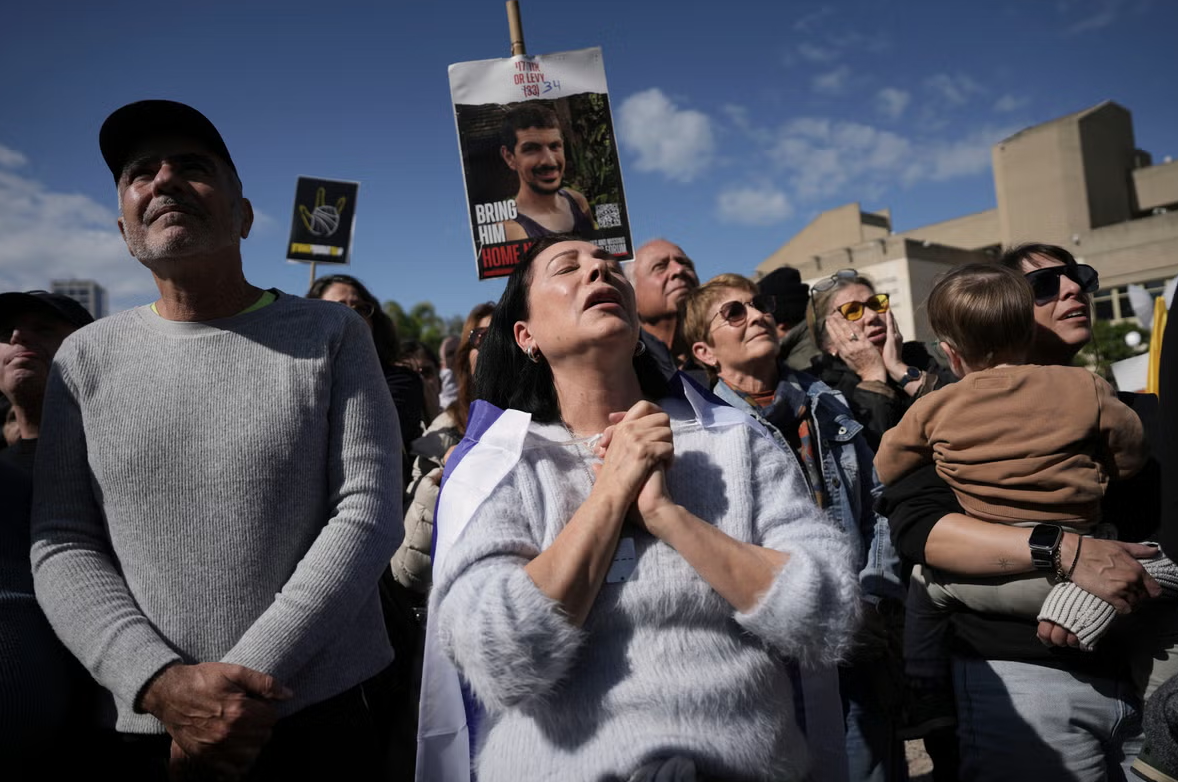
It has been heartbreaking listening to the BBC news stories coming out of Israel in recent days. Stories like that of twenty-two year old Neta Portal telling the news reporter how, despite being shot in the leg six times, she had survived with her boyfriend the terrible massacre carried out by Hamas on the Israeli kibbutz at Kfar Aza – or seeing Mariam, a young British Palestinian girl, expressing her fears of dying as she clutches her British passport in the hope that the Rafah gate might be opened, granting her safe passage into Egypt. These stories remind us that in times of conflict it is always the innocent who suffer.

Let’s be clear, what Hamas did was barbaric and Israel has every right to defend itself – and yet we pray and hope that they will have a higher regard for civilians than the terrorists. The Israeli / Palestinian conflict is complicated, but the truth is that ever since the 1948 Arab-Israeli War, Israel has made a number of concessions, offers and overtures to its Palestinian neighbours which would create a Palestinian state (even voluntarily giving up its worship upon the Temple Mount) all of which have ultimately been rejected by the Palestinian leadership, leading to the current unsatisfactory situation. And yet relations in the wider Middle East have been improving and things were looking better than they had been for years – all of which has now been blown away by the recent attack by Hamas, sponsored by Iran.

The irony is that the word ‘Jerusalem’ means ‘foundation of peace’ incorporating the Arab word for peace ‘salam’ as in ‘As-salamu alaykum’ meaning ‘peace be upon you’  and this is akin to the Hebrew word ‘shalom’ also meaning ‘peace’, ‘tranquillity’ and ‘wholeness’, but it’s not just a simple sort of peace but a deeply rich sort of peace that belongs to God himself. So, in a city and a part of the world which has such a high regard for peace, it’s incredibly sad that there is so much anger, hostility and hatred.

The Christian will be aware that the prophet Isaiah predicted a time when ‘every warrior’s boot used in battle and every garment rolled in blood would be destined for burning and used as fuel for the fire’ (Isaiah 9.5) because ultimately God’s messiah would arrive and put things right, and he would be called ‘Wonderful Counsellor, Mighty God, Everlasting Father and Prince of Peace (‘sar shalom’)’ (Isaiah 9.6), and that person is of course Jesus who, after his death and resurrection, met his frightened disciples in a locked room and said ‘peace be with you’ (John 20.19).

So as we approach Remembrance Sunday, let us be grateful for the peace that we currently enjoy, made possible by those who sacrificed so much to look after and protect us in past years, but may we also be wise enough to pray for Jerusalem and the peace of the world, trusting that God’s wisdom, and the loving, peaceful spirit of Christ, might touch all our hearts.


Can we afford to celebrate Christmas?

The greatest gift of all: The birth of Jesus Christ

I’m writing this letter the day before Prime Minister Rishi Sunak and his Chancellor Jeremy Hunt reveal their Autumn Statement, and many people are wondering about how they will be affected by their policies. The three wise men may have been able to afford their extravagant gifts of gold, frankincense and myrrh, but for many the ‘cost of living’ crisis currently fuelled by higher energy prices, high inflation and fewer resources has meant that Christmas is rapidly losing its sparkle. A recent survey suggests that 42% of people are worried about how they will pay for Christmas this year compared to previous years and the media is full of sad stories and advice on how people can make ends meet. Martin Lewis, the Money Savings Expert states that most people start from the wrong place; “They have a perfect Christmas pictured in their mind of everything that they want and exactly how it is going to be, and then they try and work out how they can do it. Please don’t do that. That’s likely to lead to debt and disappointment. Decide on how much you are going to spend on Christmas this year and stick to it.”

The Christian will be aware that although presents are nice, Christmas is not really about presents at all, but about a God who loved the world so much that he freely stepped out of the majesty of heaven, becoming as the ‘Son of God’ a man born in Bethlehem to poor parents. He did this, so that we ‘as poor as we are’ might get to know him in a deeper, better and more profound way, trusting that his love, (ultimately demonstrated for us by his death on the cross) might not only lead to our salvation and the forgiveness of our sins but offer us a better, brighter and more positive future, for as the Apostle Paul once said ‘for your sake he became poor, so that you through his poverty might become rich’ (2 Corinthians 8.9).

Yes, the wise men may have offered Jesus expensive gifts as part of their worship, but in truth Christmas is really all about God’s good gift in Christ to us – and so on his birthday, what might he want most of all? An expensive lavish present? Not at all! He simply wants to be your friend as you put your faith and trust in him.

It’s a gift that grows with the receiving, each day becoming more and more satisfying as we come to appreciate and learn just what God has done for us in the person of Christ.

It is my hope that you will all have a really lovely Christmas with your respective families and friends, but not allow the finances to get in the way of your celebrations, but simply rejoice in each other’s company as God in love and ‘in Christ’ rejoices in you.

May I on behalf of my family and all the parishes I represent wish you all a very happy Christmas and a worry free, peaceful new year.  

What can I give him, poor as I am?
If I were a shepherd I would bring a lamb;
if I were a wise man I would do my part;
yet what I can I give him – give my heart.

From ‘In the bleak mid winter’ by Christina Rossetti

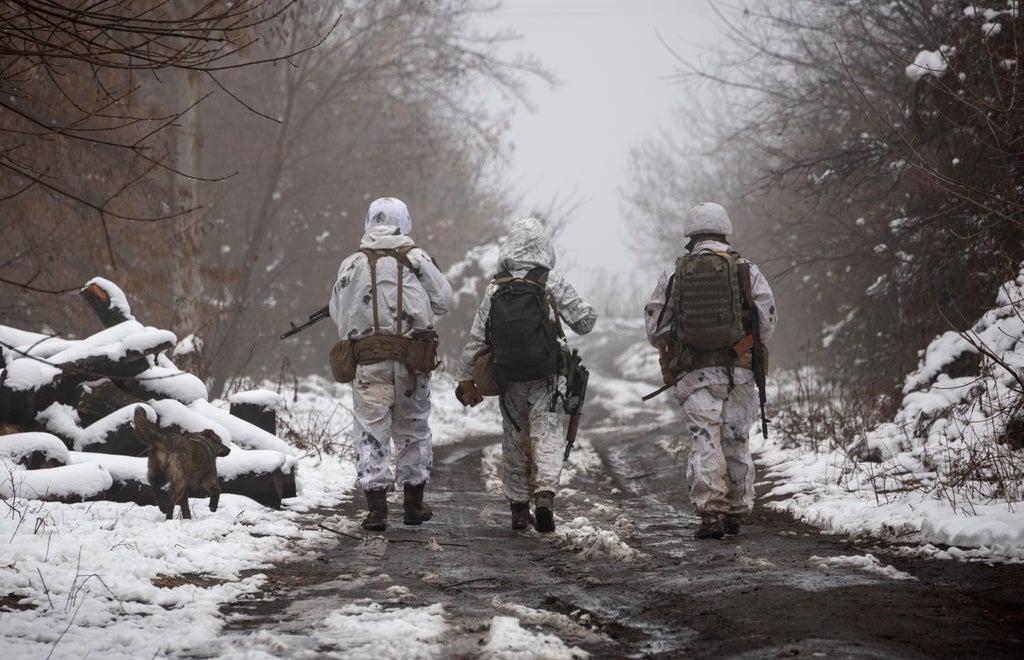
When war is looming, it’s essential that we act with wisdom, integrity & prayer!

As I write this letter, the West is becoming increasingly alarmed by the number of Russian troops gathering on the borders of Ukraine. President Putin has repeatedly said that Russia has no intention of invading Ukraine, and his government has repeatedly accused the West of ‘histrionics’. In fact, hopes raised by President Putin’s recent statement that the Kremlin has authorised a partial withdrawal of its forces were quickly dashed by NATO’s chief, Jens Stoltenberg who insisted that satellite imagery showed no evidence of such a withdrawal, in fact, strategically, quite the reverse. This was swiftly followed by Liz Truss our own foreign secretary urging the West at a press conference in Kyiv, to ‘wise up’ in its dealings with Russia.

She no doubt has a point – when war is looming, and peoples’ lives are at stake it is beholden upon all of our national leaders to act with prudence, wisdom and caution. Concerns that Russian information might be misleading or that their tacticians might be engineering a so called ‘false flag’ provocation to justify a military invasion of Ukraine are as shocking as they are deceitful. This is why the West must ensure that it acts with wisdom and integrity, powerfully speaking to those who threaten harm, and with care to those who are in harm’s way. Every nation has the right to defend itself, but the engagement of warfare should always be a last resort.

The Christian will be aware that although Jesus commanded his disciples ‘to love your neighbour as yourself’ (Matthew 19.19), he also commanded them to ‘love your enemies and pray for those who persecute you’ (Matthew 5.44). This is not a soppy, sentimental, ‘wishy-washy’ sort of love, but a love that allows the individual to keep a clear head and a clear perspective, not allowing oneself to descend into a mindless anger or hatred. Let’s pray that our national leaders will continue to act with as much tact and diplomacy as they can muster to encourage peace and deter the minds of those who might be tempted to go to war out of greed and evil self-interest.    

    “Do not repay anyone evil for evil. Be careful to do what is right in the eyes of everybody. If it is possible, as far as it depends on you, live at peace with everyone.” Romans 12.17-21


———-

Since writing this initial post, Russia has invaded Ukraine, we therefore continue to pray for the people of Ukraine, and trust that they will not only be able to endure this ordeal with integrity and courage, but that the Western nations will do all that they can to ease their suffering, confront aggression and promote peace.


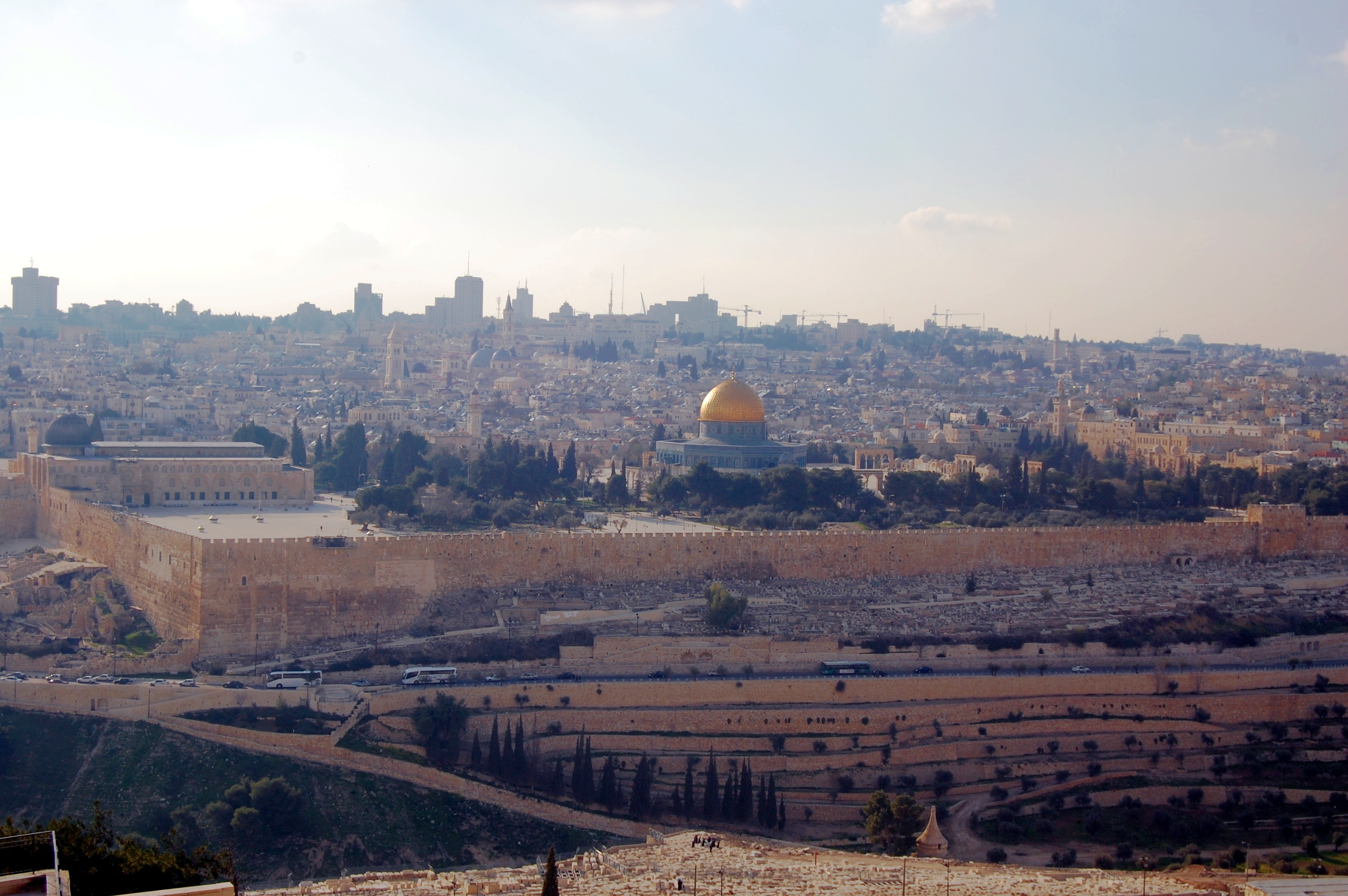
Dare we Pray for the Peace of Jerusalem?


“Pray for the peace of Jerusalem … may there be peace within your walls and security within your citadels”  (Psalm 122.6-7). Yet it is with great sadness that we see anything but peace and security in Jerusalem at the present time as conflict increases – at the time of writing it is believed that 213 Palestinians have been killed in Gaza with 12 on the Israeli side. As Hamas fires more rockets into Israel, and as Israel prepares another night of ‘intensive’ strikes against Hamas’s network of underground tunnels, President Biden joins calls for a ceasefire between Israel and Palestinian militants – and yet this seems like a forlorn hope as most commentators know that Israel will always defend itself whenever it is attacked, whereas Hamas sees the Israelis as an oppressive occupying force and has threatened to continue firing rockets into Israel for months. But assuming peace was possible – what should it look like, and what should we pray for?

For many years, successive American administrations have favoured a two state solution, but this vision has been constantly hampered by the frequent building of Israeli settlements in disputed sectors, and more recently by President Trump’s decision to move the American Embassy to Jerusalem, implicitly recognising Jerusalem to be ‘Israel’s undivided capital’. This has upset Palestinians who want East Jerusalem to be their capital of any future state. This was the backdrop to the current crisis which was sparked off when Israeli forces stormed the Al-Aqsa Mosque to quell Palestinian rioters who were using the sacred site to store rocks and fireworks to throw at Israeli officers.    

This rapid escalation of violence has confirmed for many the view that a two state solution is now impossible, and yet the ‘winner takes all’ mentality of both Muslim and Jew will only lead to even more violence, pain and suffering – so, how should we pray?   

Well, perhaps Christians have something to offer here! Judaism, Christianity and Islam are all Abrahamic faiths, believing that God gave the land to Abraham and his descendants, but if you only look at the land purely through the eyes of the ‘Old Testament’, you might understandably perceive this ‘giving’ to be a ‘right’ (and therefore something to be fought over), but the Christian doesn’t just see this story through an ‘Old Testament’ lens but a ‘New Testament’ one as well. Viewed through this lens, the Christian understands that the giving of the land was not a right nor an end in itself ‘lasting forever’, but a ‘temporary’ gift through which the love of God would ultimately be revealed, as it was – in Jesus! For ‘in Christ’, God’s love for the world was not only revealed to Jews, but also to every nation and tribe in the world. It is therefore no coincidence that Jesus’ statement ‘blessed are those who hunger and thirst for righteousness’ is immediately followed by ‘blessed are the peacemakers’. So incredible as it may sound, and as difficult as it may be, perhaps we should not be working towards a two state solution, but praying for a one state solution, where all those who hunger and thirst for righteousness can also learn to live, love and respect one another. Surely it is only in this way that we can truly pray for the peace of Jerusalem.   


The earth is the Lord’s, and everything in it, the world, and all who live in it. Psalm 24.1

Christmas lights, Candle Arches, Comfort and Joy

This year, Christmas is going to look and feel very different to others. Although the vast majority of us will no doubt do our best to enjoy the festivities (especially now that university students will be able to return home), for some it will be a sad and painful experience as they contemplate Christmas without loved ones who have sadly died during the year because of the coronavirus or other associated issues. Which is why the Church of England’s Christmas campaign ‘Comfort and Joy’ is so aptly named, because although the title comes from the traditional Christmas carol ‘God rest ye merry gentlemen’, its essence is to be found in the Bible which speaks of a God who so loved the world that he was prepared to step into it, in the person of Jesus Christ. The baby born at Bethlehem was therefore God’s one true light, ‘the light of the world’ (John 8.12) who shines not only into the darkness of our world, but also our hearts and minds, and brings us life – life in all its fulness (John 10.10). This comes as no real surprise to the believer because as John so wonderfully reminds us in his Gospel, ‘in him was life and that life was the light of men’ (John 1.4). The nativity story therefore reminds us that however dark the world might be, God still loves and cares for us. It is this knowledge that the Bible describes as good news and which provides us with so much ‘comfort, hope and joy’ as we celebrate the fact that in Christ, God is with us.

The ancient Jew also believed that God was with them, for deep within the Temple there was the menorah, a golden lamp with seven branches which burned oil from evening to morning. Although several of the outer branches were allowed to burn out, the central branch was always kept alight as a symbol of God’s presence.

I know that many people like to celebrate Christmas by decorating their houses with Christmas lights and decorations, but in this most particular, peculiar and stressful of years, I would like to encourage as many people as possible to place a ‘candle arch’ in their windows, as a little act of prayer and blessing for their neighbours, families and friends, to remind us all that although this Christmas period may be different – the meaning of Christmas is still the same – that God is with us.

May I take this opportunity on behalf of my family and the parishes I represent, to wish you all a very Happy Christmas (full of comfort and joy) and a peaceful (coronavirus free) New Year.


“Glory to God in the highest, and on earth peace to those on whom his favour rests.” Luke 2.14

Follow That Star!

1

We used to talk about the ‘stars of stage and screen’ but in today’s celebrity culture the definition of who is ‘a star’ and what makes ‘a star’ has broadened to cover almost every type of entertainment and eventuality – because the traditional categories of Pop Star, Rock Star and Film Star have been joined by Social Media and Reality TV stars (and more besides), all trying to capture our attention and their fleeting five minutes of fame and fortune – especially around Christmas. In fact, it could be argued that we have so many celebrity ‘stars’ that the term has somewhat lost its impact. But Christmas provides us with an opportunity to step outside of the noisy razzmatazz of the entertainment industry and focus once again upon the true meaning of Christmas and upon someone whose significance and stardom never fades – and that is of course Jesus of Nazareth whose birth we celebrate and who Christians believe is the incarnate ‘Son of God’; ‘the eternal word made flesh’; ‘the Saviour of the World’.

At first glance, the casual observer wouldn’t have thought that his birth was anything remarkable, a simple child born into poverty with two loving but very humble parents, but for those with the eyes to see, his birth was not only remarkable, but completely astonishing and highly significant as demonstrated by the train of visitors who came to see him; first shepherds and then ‘kings’ or more accurately Magi, ‘wise men from the East’ who had been drawn to his birth place by the appearance of a STAR!

Now perhaps we are so familiar with the nativity story that we tend to think we know it, and so it is only too easy to overlook the significance of these special visitors. Ever since the time of King David, Israel’s Kings thought of themselves to be like ‘shepherds’ as he was and so the appearance of the Shepherds at the manger was highly symbolic of his royal pedigree. Likewise the appearance of a star was deemed to be the fulfilment of ancient prophecy heralding God’s anointed; ‘a star will come out of Jacob; a sceptre will rise out of Israel’ (Numbers 24.17). Strangely, even in Roman Culture a star signified divine status as demonstrated by the fact that when a ‘wandering star’ appeared after the death of Julius Caesar it was believed to signify his deification – a star symbol thus being engraved upon imperial coins. So what with the anointing of Jewish thought and the divine ruler from Roman thought, there is a double significance here!

But this is not the end of the story because later Jesus would describe himself as ‘the bright Morning Star’ of Revelation 22.16. His Kingdom and his stardom never ends!

So this Christmas, may I encourage you to reflect once again upon the Christmas story and to ‘follow the star’ as you consider just who Jesus is and embrace the eternal nature of God’s love and peace for you and your family this Christmas.

May I wish you all a very Happy Christmas.

#followthestar


“I, Jesus, have sent my angel to give you this testimony …. I am the Root and the Offspring of David, and the bright Morning Star.” Revelation 22.16


H4002HBF

Who Are You Missing This Christmas?

gods final word_christ_t_nt

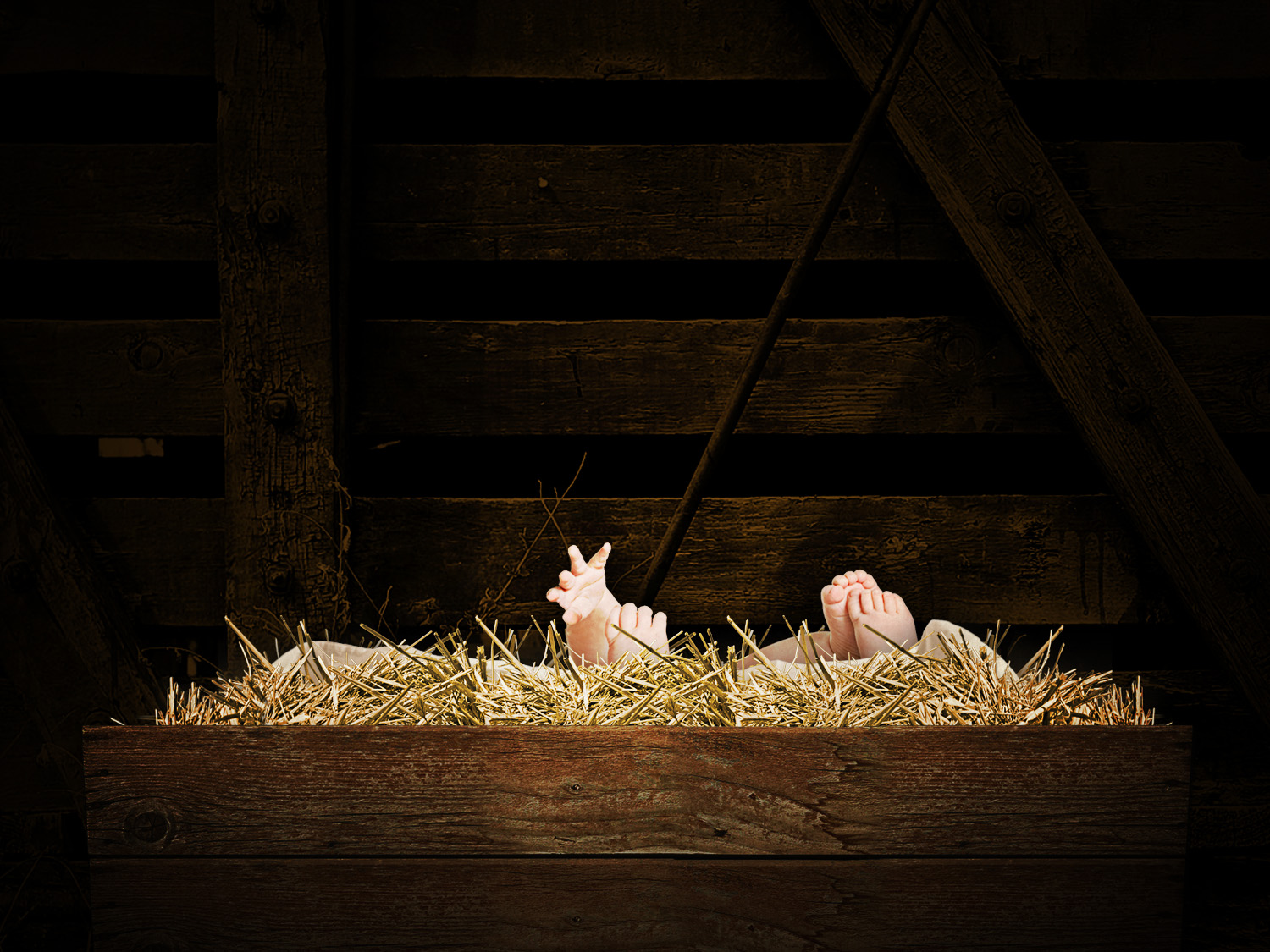
There’s a quiet and wonderful hush as Mary and Joseph, holding hands, slowly walk to the front of the school hall, he with a large staff in his right hand and she clutching a small bag to her chest. The music to ‘O little town of Bethlehem’ gently fades into the background as Joseph knocks upon the door standing in front of him – and as the innkeeper appears Joseph calls out in a loud voice ‘please sir, do you have any room where we can stay? For we have travelled a long way and my wife is about to have a baby!’ The innkeeper lets out a loud sigh and sadly shakes his head, but then after a momentary pause his face brightens up with a big grin as he politely and kindly directs them to a stable.

This wonderful and captivating scene has been played out by many generations of school children over the years watched by their proud parents, but it is also a scene that leaves a lot to the imagination and makes a lot of assumptions, for the Bible account never actually mentions the innkeeper, but simply says that after the birth of the baby Jesus ‘she wrapped him in cloths and placed him in a manger, because there was no room for them in the inn’ (Luke 2.7). The kindly innkeeper never actually features, but is strangely absent – missing!

Christmas is often said to be a time for children having fun and families getting together, but perhaps for some this biblical story actually reflects a present reality in their lives – perhaps because someone special, someone significant is missing and Christmas just isn’t the same without them. This could be because circumstances dictate that they can’t be present (such as serving in the armed forces or emigrated or away on business); or it could be because they have started a new chapter in their lives (such as young people leaving home or getting married leaving parents feeling isolated and alone); or it could be because of some sad circumstance (such as a divorce, a broken relationship or the death of a loved one). It’s at times like these when the love and support of family, friends and the community is so crucial, mutually encouraging people to appreciate that they are not alone, but cared for by the people around them – kind words and deeds which can mean so much and mirror the love that God has for us.

But perhaps for some the most significant missing person this Christmas, is Christ himself – which is such a shame because in the person of Jesus we meet with a God who loves and cares for us so deeply that he actually steps into this world of ours, and takes upon himself our humanity when he was born as a baby at Bethlehem. So no-one can say therefore that ‘God does not understand me’ because in Christ he has been there, done it and ‘got the T-shirt’. Our lives aren’t perfect and neither is the world in which we live, but in Christ we meet with someone who not only wants us to feel better but actually makes it possible for us to be better; loved, forgiven and at peace when we put our faith and trust in him. So, don’t miss out this Christmas because in Christ we have a friend who has promised to be with us, not just for today, or for tomorrow, but for always. Christmas just isn’t the same without him!


“The virgin will be with child and will give birth to a son, and they will call him Immanuel”—which means, “God with us.” Matthew 1.23