Good Morning, Mr President!

donald-trump-e1484933490944

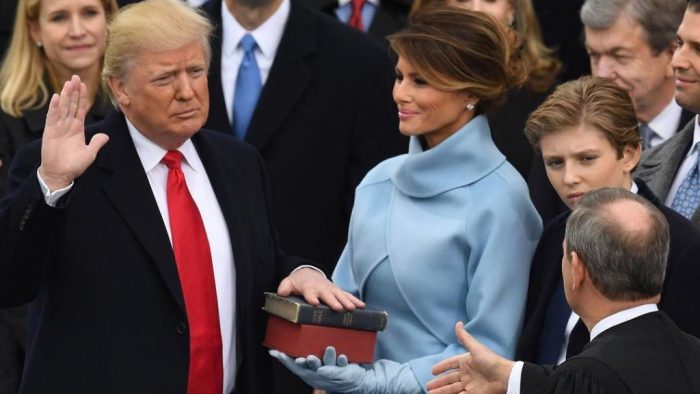
By the time, you get to read this letter, Donald J Trump will have been sworn in as the 45th President of the United States of America, and life, it seems will never be the same again. Adopting Ronald Reagan’s campaign slogan, Donald Trump will set about ‘making America great again’, but not without some controversy. Will Donald J Trump build a wall between the United States and Mexico? Will he impose import taxes on US companies that create product intended for the US market whilst using foreign workers in foreign plants? Will he continue to stir up controversy with China whilst seeking to improve relations with Russia? Will he continue to denounce the workings of the American Intelligence agencies, and with regard to Russia – is he politically compromised? The list of controversial questions seems to be added to each day with a flurry of response being sent on Twitter.

But can President Trump ‘make America great again’ and is he really that powerful? Well, in a sense the answer is both yes and no! As President, he certainly commands a lot of power, but in theory even he is subject to the higher authority of the American Constitution. It is this document which is so sacred to Americans which is considered to be the ultimate resort. Congress may make laws, but it is the American courts which interpret them according to the Constitution and determine how they should ultimately be applied – a system designed, it is said, to prevent any one person having too much power or being subject to corruption. However, this means that ultimate power can be said to reside with the unelected members of the Supreme Court. To counter their influence American Presidents are able to appoint a number of ‘Justices’ to the Supreme Court according to their political persuasion; Republicans tend to appoint conservatives or ‘originalist’ judges and justices who will always try to interpret the law according to the Constitution as it was originally understood by the ‘founding fathers’. Democrats will say that the Constitution is a ‘living document’ which needs to be interpreted according to the issues of the day and so will appoint Liberal or ‘activist’ judges and justices, and try to promote their own particular agenda on modern day issues of concern (e.g. abortion). This is one of the main reasons why Presidential campaigns become so messy as everyone wants to get their candidate elected so that they might be able to shape and influence society and politics not just within Congress but through the courts. The problem with Donald Trump it seems, is that because of his outlandish statements and apparent policy making ‘on the hoof’ he’s been quite capable of upsetting both Republicans and Democrats and so his candidacy as President hasn’t always been easy for either side to settle with or predict.

So where does this leave us? Well, the Christian response has always been to pray for those in authority that they will govern wisely and well for the benefit of all people, and do all that they can to support and encourage them in that task. Equally, in a period of so much change and uncertainty, we are encouraged to think about what do we consider to be our ultimate guide and authority? For many Christians that guide would be the Bible, which has been the foundation and backbone of so many of our laws and legal frameworks within British Society for countless generations, but the constant task is of course, not only to understand the context in which the Bible was originally written, but how we can also best apply it to today’s modern society. We may call ourselves Great Britain, but in my own humble opinion, our national status would be greatly enhanced if we were to spend a little more time quietly, prayerfully, and intelligently reflecting upon some of the biblical and Christian principles which have served us so well in the past.


 “Pray for all people … kings and all those in authority, that we may live a tranquil and peaceful life in all godliness and dignity” 1 Timothy 2.2

Politics, Leadership And Authority – What A Responsibility!

Tony Blair

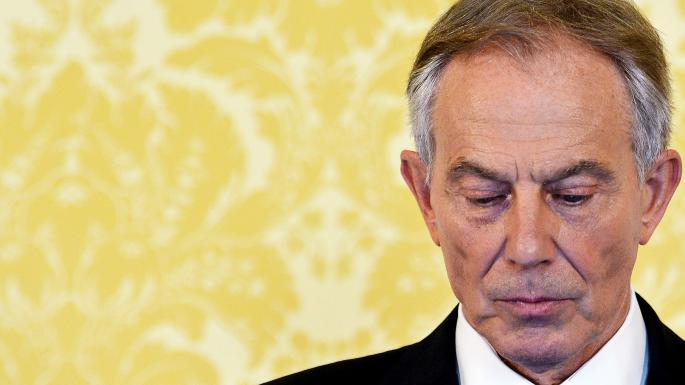
They say ‘a week is a long time in politics’, but it’s taken seven long years for the Chilcot Report to be published. The Inquiry into the Iraq war may have been announced by Prime Minister Gordon Brown on 15th June 2009 but the final report published on the 6th July 2016 with its ‘damming conclusions’ about the ‘decision to go to war’ and upon what basis the nation did so, immediately shone a light, once again, upon his predecessor, Tony Blair. The media were waiting with eager anticipation as to what he would say – and whether he would apologise for the deaths of 179 British Servicemen and many others killed during the conflict.

The pros and cons of such a debate are far too long and complex for me to consider here, but they do raise some interesting questions about power, leadership and authority, and raise the conundrum of what do we do when the people that we vote into government (often with large popular majorities), do things that we rather wish they didn’t? Frequently the cry is for firm leadership – but what happens when our leaders firmly direct us in the wrong direction? Understandably many people will have a view on Tony Blair, and hindsight as they say is a wonderful (and occasionally cruel) thing, but perhaps it should be noted that despite his many failings Chilcot does not say that Tony Blair wilfully deceived Parliament, rather that he honestly believed the flawed intelligence that had been given to him, and despite many people marching in protest against the war, polls showed that at the time, public opinion was overwhelmingly in support of military action. All of which goes to show how easy it is for us a nation to be led up the garden path, unless we ensure that all the appropriate checks and balances are in place. This is all salient, because once again we find ourselves as a nation at a crossroads, and once again ‘firm leadership’ is called for as the Conservative Party elects a new leader and Prime Minister. In homage to Margaret Thatcher, Teresa May and Andrea Leadsom are already being touted as the new ‘iron maidens’ for our generation but they will need to be careful that in their desire to provide firm and positive leadership in the light of the nation’s decision to leave the EU, that they do so collegiately and with the full support of their cabinet, colleagues and party members or else they too in future years could find the swathe of public opinion against them. Firm leadership is not always about getting one’s own way, but taking sound advice and acting in the best interest of others.

It’s interesting that there is a sober lesson to be the learnt from the pages of the Bible, because at one point the people of Israel were so unhappy with their current system of leadership, that instead of the historic train of prophets ruling over them, they demanded a king so that they might be like all the “other nations” having a king to govern them and go out before them and fight their battles (1 Samuel 8). The prophet Samuel saw this as a rejection of God’s voice and authority administered via the prophets and warned them about all the disadvantages of having a king and the possible corruption that came with it, but the people wouldn’t listen. So Samuel prayed to God about it who graciously let the people have their way. The lesson is that sometimes God grants us the very thing that we wish for, but then not only do we have to take responsibility for our actions but we sometimes also have to live with the consequences.


And what does the LORD require of you? To act justly and to love mercy and walk humbly with your God. Micah 6.8


What Can We Learn From The Archbishop’s Identity Crisis?

The leaking of the Panama Papers from one of the world’s most secretive companies, a law firm called Mossack Fonseca last month caused a great deal of pandemonium in the press and society as it was revealed how the rich and powerful used so called tax havens to hide their wealth and reduce the amount owed in tax to their respective countries and governments. Shocking revelations were made worse in the UK by the fact that our Prime Minister, David Cameron was shown to have directly benefited from such arrangements made by his late father, in the form of an offshore investment fund called Blairmore Holdings. Despite the fact that no law had been broken and some taxes had been paid, the public perception was a damaging one, that somehow the Prime Minister had unfairly benefitted from some ‘dodgy’ tax arrangement which wouldn’t have been available to the vast majority of ordinary people living on more modest incomes and without power and influence. A rather frantic and clumsy ‘damage limitation’ exercise ensued with the Prime Minister ultimately encouraged to publish his tax return in the name of ‘open transparency’, forcing other political leaders to do the same.

2016. 05

All this was in stark contrast to another astonishing story to hit the headlines, namely the fact that the Archbishop of Canterbury, Justin Welby’s father was not the man he thought he was (Gavin Welby) but the late Sir Anthony Montague Browne, the last private secretary to Sir Winston Churchill. What made this revelation all the more astonishing and poignant was that it came as a complete surprise not only to Justin Welby, but to Lady Jane Williams, his mother (although she instantly acknowledged that a brief liaison with Anthony Browne had taken place). At first glance the story seemed incredible, but upon closer inspection it became readily understandable. In fact, it was a human story that no doubt many different people and families could relate to, for as the Archbishop himself acknowledged “My own experience is typical of many people. To find that one’s father is other than imagined is not unusual. To be the child of families with great difficulties in relationships, with substance abuse or other matters, is far too normal.” The amazing openness and transparency of the Archbishop and his family appeared to be in great contrast to the other events of the week, but did nothing to lessen the impact and turmoil that this particular revelation must have had upon him and his family, who still have to come to terms with and be reconciled to it and all its implications. However, the extreme openness, honesty and candour of the Archbishop demonstrated that this man can be trusted – and trust in any walk of life is a precious commodity.

Jesus of course once described himself as being ‘the way, the truth and the life’ (John 14.6), and it’s an appreciation of this truth which gives the Archbishop such confidence, not just about who he is ‘in Christ’ but about the way that he should lead his life. This confidence springs from an understanding that he is greatly loved, not just by his family and friends but by God himself as his loving heavenly father – a love demonstrated through the actions of Jesus and his death upon the cross cultivating trust. One might expect that the recent revelation might make the Archbishop question his identity, but not a bit of it, for as he himself put it:

At the very outset of my inauguration service three years ago, Evangeline Kanagasooriam, a young member of the Canterbury Cathedral congregation, said: “We greet you in the name of Christ. Who are you, and why do you request entry?” To which I responded: “I am Justin, a servant of Jesus Christ, and I come as one seeking the grace of God to travel with you in His service together.” What has changed? Nothing!

Perhaps we should all from time to time, take stock of ourselves and think about who we are – what makes me, me? What is my identity, am I trustworthy and in whom do I place my trust?


Jesus said “Do not let your hearts be troubled. Trust in God; trust also in me.” John 14.1


The Dilemma Of Voting For The Right Kind Of Leader

500

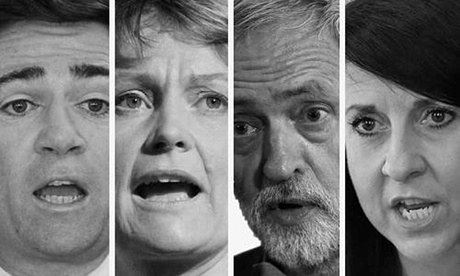
This week the Labour Party will start to elect its new leader and many will breathe a huge sigh of relief to think that at long last it’s nearly over. Whatever one’s political view, it’s hard to pretend that this particular Labour Contest hasn’t thrown up a few surprises. Who would have thought that Jeremy Corbyn’s candidacy would have proved so popular? It’s even been dubbed Corbynmania by the press as this most left-wing of the four leadership candidates throws the election contest wide open to the astonishment of the Labour party’s political elite and former leaders. With 610,753 people registered to vote, many see Jeremy Corbyn as the new fresh voice of traditional, socialist Labour values; whereas others warn that his leadership will be a disastrous move for the Labour Party, rendering it practically unelectable as its moves away from the centre ground which proved so popular under Tony Blair and ‘New Labour’. I guess we shall just have to wait and see which of these political perspectives comes out on top, but surely Gordon Brown was right when he argued that the main thing all political parties needed to offer the electorate is hope!

One of the privileges of living in a democracy is the fact that we get a chance to say who we would like to represent us. Sometimes this process can be quite challenging, daunting and uncomfortable – ‘I would like to vote for you but I most certainly wouldn’t want to vote for you’. How do we cope when we feel that our trust has been misplaced or the person representing us doesn’t adequately share our vision? We want leaders, but only when they agree with us! It was precisely this sort of dilemma that faced people when Jesus first burst on to the scene. At first he was taken as a radical, someone who would challenge the authorities, kick against the establishment, and give power to the people. He spoke about a kingdom that was ‘breaking in’, being established before their very eyes, but not just any kingdom this was ‘the kingdom of God’! It all sounded very revolutionary, but was Jesus the king? Was he the long awaited and eagerly anticipated Messiah? “Who do people say I am?” Jesus once asked his disciples. “Some say John the Baptist; others Elijah; and still others, one of the prophets” was the general reply. Only Peter had the courage to voice what no doubt many of the others were thinking – “You are the Messiah he said. There it was, out in the open, the Messiah was here! Well done Peter! But almost immediately hopes and dreams were turned upside down as Jesus explained that he was required to go to Jerusalem, face suffering and rejection and even death, culminating three days later in his resurrection. This was astonishingly dismal! What about all those hopes and dreams about the cleansing and restoration of the Jewish Temple; defeating the enemy (namely the Romans) who threatened and oppressed God’s people; and the long awaited longing for justice and freedom – were all these hopes and dreams to be horribly broken and terribly smashed? Surely Jesus was mistaken and Peter rebukes him. It was unthinkable that the long awaited Messiah and King should face suffering, rejection and death. The problem was then (as it is today) that so many people want a leader, but not a leader like that!  Not one who was so completely at odds with their long held vision, dreams and values. Now, I’m not remotely suggesting that Jeremy Corbyn is the ‘saviour’ of the Labour Party, but it is this clash of perspectives and ideals which I find most fascinating.

Peter was in turn rebuked by Jesus who accused him of not having in mind ‘the things of God, but the things of men’. His vision was simply too mundane and too small to comprehend all that God had in store. I don’t know what lies in store for our nation or the Labour Party, but biblically speaking, the ministry of Jesus achieved something way beyond our human imagination, for it provides us all with the possibility of a new start, a new and restored relationship with God which provides us with new possibilities and encourages us to work towards a more loving, fair and just society, with rewards not just for the present moment but for all eternity. That’s what Jesus the Messiah meant when he spoke about the Kingdom of God breaking in and this is a cause of much joy, celebration and hope. Naturally, he wins my vote – what about yours?


‘but what about you? He asked. “who do you say I am?”’ Mark 8.29


Can We Afford Not To Vote?

_81900422_election_2015_624

ALL RIGHT I CONFESS – I DON’T KNOW WHO TO VOTE FOR!

And the truth is I suspect that I’m not alone! Like most people the present ‘coalition government’ has done some things that I completely agree with whilst others have brought me to utter despair. Indeed, there have been many times when I have felt completely disenfranchised by the current stream of politicians without any one single party capable of fairly representing me or my views. The possibility of another ‘hung parliament’ leading to yet another coalition has made things even more difficult with traditional labels no longer seeming relevant: now the Conservatives are the party of the ‘working people’ and Labour are anxious to show that they can be fiscally trusted with the economy. The political permeations are vast with the Liberal Democrats, UKIP, Greens and Scottish National Party all vying for our votes – but who has the right ideas and who can be trusted? After all, we all ‘know’, don’t we, that politicians are famous for saying one thing and doing another so why should we bother – and how is it all going to be paid for anyway? Perhaps we should all follow the Russell Brand style of doing things by simply withholding our vote and using our lack of engagement as a silent weapon of protest against the political establishment and elitist system until they see sense. Unfortunately not voting, in my opinion, far from being ‘radical and edgy’ simply translates into an abdication of rights and responsibility and becomes a lame excuse for apathy! How can we possibly influence things for the better if we can’t be bothered to engage with the process? Democracy doesn’t always achieve for us the things that we hope for as individuals, but for us as a society it’s a hard won freedom that we should each cherish, respect and observe.

The problem is of course that we don’t live in a perfect society and neither do our political parties, therefore each one is made up of a mixture of things we like and dislike, good and bad (or good and not so good) and things that we can better identify with or not. Therefore instead of absenting ourselves from the process we need to make even stronger efforts to engage with it and understand things until we come to a decision. This isn’t always easy and for many is a bit of a struggle. Appreciating that there will never be a perfect fit in any human institution, I will vote for the party that sits most comfortably with my Christian faith and looks as if it will enhance our society in the most fair, just and compassionate way – just as you will vote according to your principles and what matters most to you. Perhaps, like me at the time of writing, you don’t know which way to vote, but there is one thing upon which I hope we can all agree and that is that ‘not voting’ is not an option!


“What does the Lord require of you? To act justly and to love mercy and to walk humbly with your God” Micah 6.8


REGISTER TO VOTE ON THE LINK BELOW

banner_news_large