Where is the truth and does it matter?

I think we can all agree that today (15th June) was a bad day for the Prime Minister, for not only did the EU restart its legal proceedings against the government plans to unilaterally scrap parts of the Northern Ireland Protocol, but also a fiercely heated debate took place over ‘who understood what’ at the time of signing the Brexit deal and how it should be practically interpreted – with the European Commission vice-president Maros Sefcovic effectively accusing the British government of lying to the general public. Secondly, Lord Geidt resigned from his position as Boris Johnson’s independent ethics advisor stating that there was a legitimate question as to whether the Prime Minister broke the ministerial rules over Partygate. Once again, the whole issue of ‘who knew what’ and who was lying came to the fore.

The problem is that we live today in a postmodern world where it is fashionable to believe that there is no such thing as absolute truth; all truth is said to be relative, depending upon your own particular point of view, which in the realm of politics (and much of society at large) tends to mean that ‘the truth’ becomes whatever suits me and is the most convenient and practically expedient. In fact, in recent years,  the most expedient thing has often been to deny the truth completely. We saw this in Donald Trump’s use of the term ‘Fake News’ to dismiss anything that he didn’t agree with, and his false accusation that the US Presidential election result was rigged, which in recent days even close family members and political advisors have dismissed as nonsense. Sadly, we have seen the most serious and blatant denial of truth coming from Russia, as President Putin conducts his ‘special military operation’ within Ukraine, which most observers would have no hesitation in calling a war, which has disastrous consequences for us all.

The problem with all this political spin, ‘fake news’ and propaganda is that it erodes trust as people lose faith in their political leaders and become disillusioned and suspicious instead. What can we believe and where can truth be found?

One’s own perspective of the world is greatly determined by one’s values and what one believes, which is why for many, Christianity offers a bedrock of security in a sea of change and relativity, for in the person of Jesus, we see a man who as the ‘Son of God’ not only had a great love and compassion for the world, but also kept his promises, living a life full of integrity and truth, backing up his words with action. Jesus had described himself as ‘the way, the truth and the life’ (John 14.6), offering his disciples not only a way to his Father in heaven but ‘life in all it’s fullness’ (John 10.10) and a ‘truth that will set you free’ (John 8.32). Despite the fact that the people were living in difficult and uncertain times, because he spoke with such authority and lived with such integrity, people were willing to embrace his words ‘do not let your hearts be troubled. Trust in God, trust also in me’ (John 14.1), and many people did trust Jesus because not only were his words trustworthy and true, but also so were his actions, as ultimately demonstrated by his life, death and resurrection.

As much as I would like everyone to enjoy a firm confidence in Christ, I’m also certain that we need to step back from a world where ‘all things are relative’ but have the confidence of one’s own convictions, for paraphrasing a comment made by Jeff Myers, a Christian commentator – ‘If something is true, then it is true whether we admit it, like it or not! May we and all our politicians live in the light of such certainty, and within it foster a high regard and appreciation for the truth.


 31 Jesus said, “If you hold to my teaching, you are really my disciples. 32 Then you will know the truth, and the truth will set you free.” John 8.31-32

God bless The Queen

Queen Elizabeth II leaves after attending the opening ceremony of the sixth session of the Senedd in Cardiff. Picture date: Thursday October 14, 2021.

“I declare before you all that my whole life whether it be long or short shall be devoted to your service… But I shall not have strength to carry out this resolution alone unless you join in it with me, as I now invite you to do: I know that your support will be unfailingly given. God help me to make good my vow, and God bless all of you who are willing to share in it.”

Princess Elizabeth, 21st April 1947

These words spoken four years before King George VI died on 6th February 1952, show how greatly aware the young Princess Elizabeth was of her role and life as the nations’ future Queen. You could say that these words were spoken not only in anticipation of that event, but to prepare the nation that one day it would eventually come (as we are seeing similar signs today), and when it did, the young princess immediately became Queen at the age of 25, although her Coronation wasn’t until 2nd June 1953. Although it hasn’t always been easy, the Queen has remained a faithful servant to the United Kingdom and its citizens, gaining huge respect, here and abroad, and especially so in her role as the head of the Commonwealth. On the 6th February 2022, she became the first British Monarch to reign for 70 years and we will celebrate her Platinum Jubilee at the beginning of June – what a wonderful achievement!

Of course, over the past 70 years our nation has seen immense change, in terms of medical, technological and societal advances, and our economy has sometimes had to take the rough with the smooth, but in all that time the Queen has been a steadfast constant and stabilising influence, comforting many who had lived with her through the war years, and demonstrating how it is possible to embrace the future with a quiet and confident optimism. Her mature and majestic example has been a great source of inspiration and admiration both to world leaders and members of the general public.

No doubt, alongside her late husband Prince Philip, the Queen has been greatly sustained by her Christian faith which she has spoken about more naturally and openly in recent years, most notably through the broadcast of her Christmas messages. Her royal upbringing and personal faith in Jesus Christ as her Lord and Saviour has not only enhanced her sense of duty, but given her a greater understanding of Christian service and a better perspective of what is truly worthwhile and of lasting value.

As we collectively say ‘thank you’ to Her Majesty for 70 years of loyal service, may her life continue to be an example and encouragement to us all. May God bless the Queen!


Lord of our lives and Father of all, let our thanksgiving prove itself in service to you and to our Queen, our country and one another, for your Name’s sake. Amen.

Prayer of Dedication from the Silver Jubilee Year

Easter hope in the midst of conflict!

Ukranian Easter Egg

I write this letter on the day that President Zelensky of Ukraine spoke to the US Congress, thanking them for their help but also appealing for them to do more, most notably the establishment of a no-fly zone, ‘closing the sky’. Whatever we may think about the prudence of such an action, the disappointment from a Ukrainian point of view is easy to understand. This war has generated a huge wave of emotion in us all, whether it be a profound shock and disbelief that it could happen in the first place; to anger and despair as we witness the appalling suffering; to quiet admiration at the courage & stoicism of the people as they resourcefully defend their country; coupled with a huge amount of sadness, pity and compassion for the people who have suffered and lost so much. Yet at the same time we admire the extraordinary acts of kindness and generosity of surrounding nations as they open their hearts and their homes to take care of refugees and provide medical and humanitarian assistance where they can.

In the face of so much suffering, it would be easy to lose heart and lose faith wondering – just where precisely, is God is in all this? But of course, God is at work in the hearts of all those who are trying to look after their loved ones and those less fortunate than themselves. He’s in the compassion of doctors and nurses, trying to save lives and bind up the wounded. He’s in the voice of Russian protesters who are trying to speak truthfully to their neighbours in the light of false propaganda. He’s in the massive effort of governments, humanitarian agencies and charities all trying to act as one to relieve suffering and promote peace. Not forgetting to mention those who literally put themselves in harm’s way while trying to protect others. Finally, he’s in all our tears and prayers as we determine together that there must be a better way of being and living life.

Indeed, the Christian will recall that it is for this better way of life that Jesus came. His message was constantly about how we should ‘love God and our neighbour as ourselves’ (Matthew 19.19). In fact, it was precisely because we were so bad at doing this, wishing to promote our own agenda and thinking that we knew better than God, that sin came into the world in the first place, resulting in pain, suffering and death. But Jesus’ death upon the cross was the start of God putting things right, for when we recognise that the death he died, he died for us, and put our faith and trust in him as our Lord and Saviour, then we are forgiven our sins and given the chance to start again. But of course, Christ’s death is not the end of the story, for Christ’s divinity is demonstrated not only by the way he died, but by the way he rose again! The resurrection is therefore the basis of our Christian Easter hope, giving us, by faith, not only the strength to meet the challenges of today, but also a sure and certain hope for all eternity. May this be a real source of peace and comfort to each of us as we continue to demonstrate the love that God has for us in the way that we live and treat one another.  

Happy Easter to you all.                 


Let the peace of Christ rule in your hearts, since as members of one body you were called to peace. And be thankful. Colossians 3.15

A Prayer for Ukraine

God of peace and justice,
we pray for the people of Ukraine today.
We pray for peace and the laying down of weapons.
We pray for all those who fear for tomorrow,
that your Spirit of comfort would draw near to them.
We pray for those with power over war or peace,
for wisdom, discernment and compassion to guide their decisions.
Above all, we pray for all your precious children, at risk and in fear,
that you would hold and protect them.
We pray in the name of Jesus, the Prince of Peace.
Amen

Archbishop Justin Welby
Archbishop Stephen Cottrell

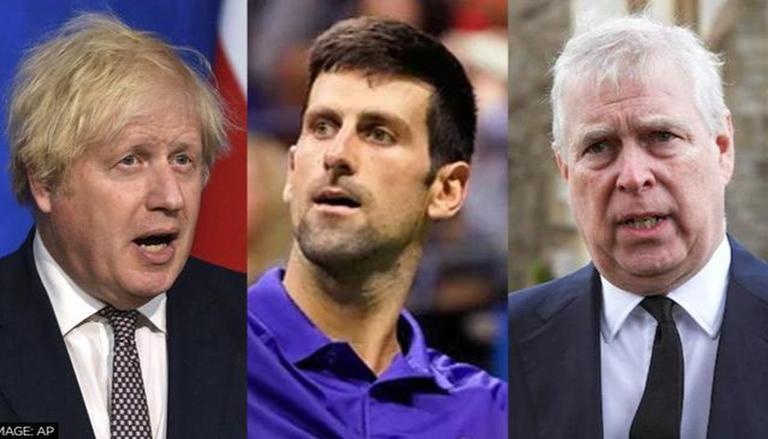
What do Boris Johnson, Prince Andrew and Novak Djokovic all have in common?


They all believed that they were free to do as they wished with little thought of the consequences or how their actions might be felt, perceived, or viewed by others. Sue Barker, the BBC’s tennis commentator and presenter, was spot on when she spoke to Radio 4 about Novak Djokovic being thrown out of the Australian Open because of his lack of vaccination status.

“We wanted the No 1 player in the world. He could have been there by being vaccinated. I know he’s chosen not to and that is his right, but it is also his choice and with that choice come consequences and this is why he is where he is now.”

Novak Djokovic may have felt that he was entitled to play, but his choice not to be vaccinated led others to think otherwise. Boris Johnson may have felt that behind the closed doors of Number 10, there was little difference or distinction between meeting for work or for drinks, but when it became public knowledge against such a stark background of the pandemic and its restrictions, many were aghast that the Prime Minister and his colleagues should think that they were above the rules. Prince Andrew’s story is still unfolding, but with his military titles and patronages already stripped from him, along with the use of his  HRH title, it is clear that the consequences of previous choices and company are profound.

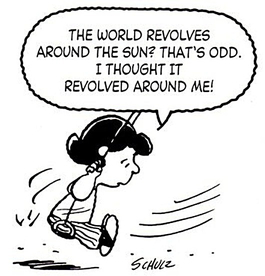
It’s easy for us to point the finger and accuse others of hypocrisy, but in truth how many of us haven’t bent or ignored the rules from time to time to suit our own dreams, desires and convenience?  We all have a natural tendency to put ourselves at the centre of the universe and expect the world to obey us. Sometimes our misdemeanours are frivolous and of no real consequence, but sometimes they become huge, affecting not only ourselves but also others. The Bible calls this waywardness ‘sin’, and perhaps the word sin should be spelt with a capital ‘I’, because so often the causes of sin are the pursuit of ‘me, ‘myself’ and ‘I’. In other words the putting of myself first, spoiling our lives and those of the people around us.

The Christian will be aware that God hates sin, but he loves us and through the loving and selfless actions of Jesus Christ and his death upon the cross, God takes the tremendous pain and consequences of our sin upon himself and offers us, in exchange, the forgiveness of sins, freedom to start again and the hope of a new life – a hope which is eternal.

Let’s be clear, in this life none of us are perfect or ever shall be, but in Christ we are given a new life and a new perspective, one which helps us to be a bit more loving, thoughtful and considerate not only about the people around us but the consequences of our choices and the way we behave.


“And what does the LORD require of you? To act justly and to love mercy and to walk humbly with your God.” Micah 6.8

Christmas – A beacon of light and hope across the years

“None of us can slow the passage of time; and while we often focus on all that has changed in the intervening years, much remains unchanged, including the Gospel of Christ and his teachings.”

With such words, the Queen addressed the inaugural meeting of the Church of England’s General Synod, although due to ill health, her words were spoken by her youngest son Prince Edward. The Queen also acknowledged that for many 2021, had been ‘a time of anxiety, of grief, and of weariness’ as we continue to struggle with the coronavirus and its terrible effects upon individuals and society at large. “Yet the Gospel has brought hope (she declared) as it has done throughout the ages.” The Queen’s words carried a weight not only befitting her status as the Monarch, but of a woman who had also suffered grief during the year and was now contemplating her own mortality, and yet still – the Gospel has brought hope!

There are many occasions in the Gospel story when Jesus also contemplated his own human mortality and spoke to his disciples about it; “I am with you for only a short time” he had said “before I must go and return to the Father” (John 7.33ff), meaning by his forthcoming death upon the cross. But what hope can there be in death? Well, usually not much – but the death of Christ was different, because his very purpose was not just to live but to die for the ‘sins of the world’, bearing within his own body all the terrible consequences of our broken and fallen world caused by our sin and general inability to live as God would wish – that waywardness which not only spoils our relationships between ourselves but with God himself. A waywardness that even knocks the natural order out of balance. However, his death is not so much a sign of God angers towards the human race, but of his great love and compassion for it, for at Christmas, Christians celebrate the fact that God did not remain aloof, distant or uncaring, but in the person of Jesus, stepped into this world of ours as a small baby, that he might live and die for us, so that ultimately we might escape that dreadful ending and be forgiven. Yet the story does not stop there, because his death was not the end; three days later he rose again, and his resurrection (as witnessed by so many of his friends) was the proof that new life was possible for all who put their faith and trust in him, not just in this world but the next, just as he had promised. Therefore – we have hope! A hope that is reflected in the fact that Jesus described himself as being ‘the light of the world’. So, whatever your circumstance, whether it be joyful or sad, hold on to this hope – and light your candles, light up your Christmas trees, and plug in your candle arches as we celebrate our eternal Christmas hope together.

May God bless you all this Christmas and be with you throughout the new year.     


“I am the light of the world. Whoever follows me will never walk in darkness, but will have the light of life.” John 8.12

Remembrance Sunday – Are we in danger of forgetting?

Later this month we will be observing Remembrance Sunday, the annual occasion when we as a nation can come together to mark and remember with gratitude all those who gave their lives serving their country throughout two world wars and other conflicts. This simple act of remembrance is supposed to encourage us to strive for peace as we appreciate the incredible cost of war and the damage that it does to all concerned. Yet it seems as if the world in which we live is more fragile than ever, not only in terms of the environment marked by the COP26 climate conference, but by the volatile nature of world relations. Although we may have got used to the almost routine launching of missiles by North Korea over the seas of South Korea, the world was shocked by the belief that China had launched a hypersonic missile that flew around the world at five times the speed of sound. Senator Lindsey Graham said, “If in fact, the Chinese have developed a hypersonic missile that can deliver a nuclear weapon, it’s a military game-changer when it comes to nuclear forces – God help us all”.  “We have no idea how they did this,” another US intelligence official is quoted as saying. Despite the fact that the Chinese may simply be developing their space technology and that respective nations are still seeking investment and wishing ‘to do business’ with China, the International Institute for Strategic Studies has concluded that its global ambitions are clear, for in terms of tonnage, China has launched more submarines and warships than any other nation, equivalent to the entire Royal Navy every four years.

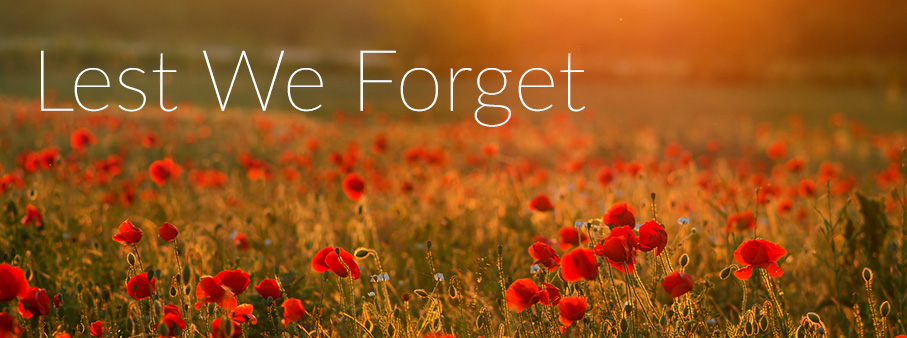
And yet, as recent events in Afghanistan remind us, military take overs by dictatorial regimes do not always lead to greater freedoms, security, prosperity or peace. We seem to be in danger of forgetting ourselves and the terrible cost of war and hostility. Surely, the heart of the problem is the problem of the human heart! – especially when people, countries and nations seek to manipulate, gain control and take advantage of those around them. The Christian will be mindful of the words of Jesus, who reminded the crowds that “out of men’s hearts, come evil thoughts, .. theft, murder, .. greed, .. arrogance and folly” (Mark 9.21-22). The recent death of Sir David Amess was a tragedy, but his family were absolutely right when they called for a change of heart. “Our hearts are shattered,” they said. “We ask people to set aside their differences and show kindness and love to all”. Jesus had said something similar when he had commanded his disciples “to love each other as I have loved you” (John 15.9). Loving like this requires a real change of heart, mind and perspective; one that does not seek to simply better oneself, but puts the other person first so that collectively we might all live better lives of freedom, love, joy and peace. These are the goals, values and ambitions that we should strive for and those that previous generations fought so hard to protect at great cost. So let us all take a moment to come together this Remembrance Sunday – ‘lest we forget’.  


Be careful … that you do not forget the things your eyes have seen or let them slip from your heart as long as you live. Deuteronomy 4.9

Lorry Drivers, Climate Change and Harvest

Later this month the UN climate conference known as COP26 will be held in Glasgow. Its main aim is to bring the leaders of the nations around the same table not simply to discuss climate change and global warming, but to be the forum where governments can set ambitious targets and make binding decisions that will mitigate the effects of global warming and climate change around the world; such as ending the use of coal, preventing deforestation, switching to electric vehicles and investing in renewable energy. It would be nice to think that everyone would be ‘singing from the same hymn sheet’ but no doubt there will be a lot of ‘last minute’ debate and argument (and bartering for compensation) going on between the more developed richer nations and those poorer, less well developed nations ‘playing catch up’. Let’s hope that the conference delegates, politicians and diplomats will be able to set just the right political climate for genuine positive good.

Closer to home, we are concerned not just about the effects of the weather, (hotter days and more floods) but the lack of both economic and agricultural workers to help sustain and feed the nation coming out of the coronavirus pandemic. Most notably, the shortage of lorry-drivers who haven’t been able to keep up with demand resulting in shortage of food and other commodities on our supermarket shelves. Already some politicians and newspapers are voicing their fears for Christmas. This is why harvest is such an important time of the year! It allows us to focus our minds on the good things that we have and enjoy, rather than the things we do not! Compared to so many people in less fortunate parts of the world we are well and truly blessed. When natural disasters caused by climate change, and manmade disasters caused by war and conflict have caused so much devastation in so many other parts of the world, it doesn’t seem right that we should be so stressed about whether we have a turkey for Christmas or not!

However, climate change is important and that is why we should all look at the way we live and consider how we can live more sustainably making the most of scarce resources. That is why at this year’s harvest service at All Saints Necton we are supporting the Send a Cow ‘healthy harvest’ appeal which teaches people in Africa, not only how to grow food in order to support and feed their families, but how they can do so while combating the effects of climate change such as soil erosion and drought.

This harvest let us be grateful for what we have and focus on the needs of others as we do all that we can to encourage one another to live more creatively and yet sustainably.

Then the land will yield its harvest, and God, our God, will bless us. Psalm 76.6

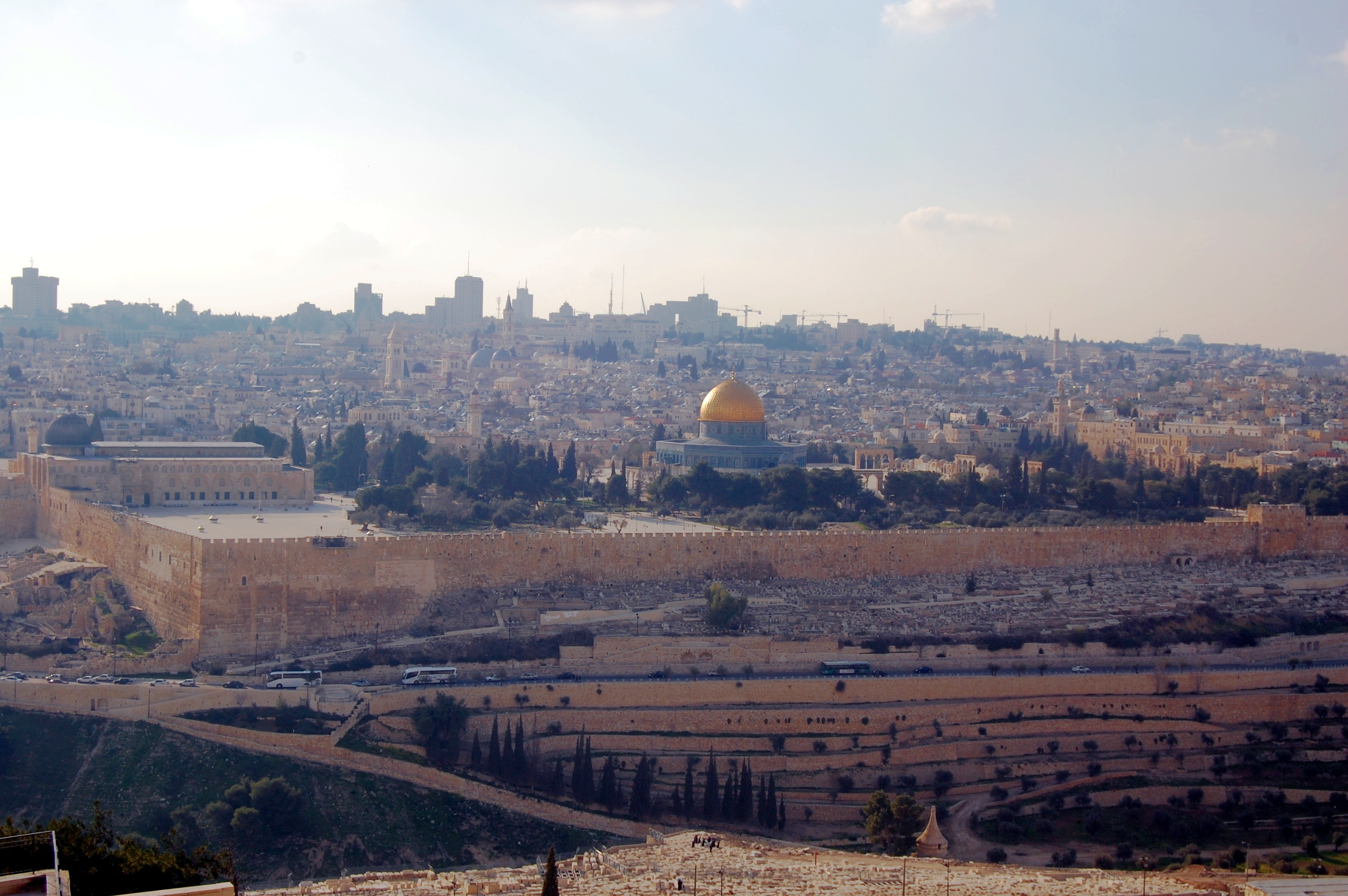
Dare we Pray for the Peace of Jerusalem?


“Pray for the peace of Jerusalem … may there be peace within your walls and security within your citadels”  (Psalm 122.6-7). Yet it is with great sadness that we see anything but peace and security in Jerusalem at the present time as conflict increases – at the time of writing it is believed that 213 Palestinians have been killed in Gaza with 12 on the Israeli side. As Hamas fires more rockets into Israel, and as Israel prepares another night of ‘intensive’ strikes against Hamas’s network of underground tunnels, President Biden joins calls for a ceasefire between Israel and Palestinian militants – and yet this seems like a forlorn hope as most commentators know that Israel will always defend itself whenever it is attacked, whereas Hamas sees the Israelis as an oppressive occupying force and has threatened to continue firing rockets into Israel for months. But assuming peace was possible – what should it look like, and what should we pray for?

For many years, successive American administrations have favoured a two state solution, but this vision has been constantly hampered by the frequent building of Israeli settlements in disputed sectors, and more recently by President Trump’s decision to move the American Embassy to Jerusalem, implicitly recognising Jerusalem to be ‘Israel’s undivided capital’. This has upset Palestinians who want East Jerusalem to be their capital of any future state. This was the backdrop to the current crisis which was sparked off when Israeli forces stormed the Al-Aqsa Mosque to quell Palestinian rioters who were using the sacred site to store rocks and fireworks to throw at Israeli officers.    

This rapid escalation of violence has confirmed for many the view that a two state solution is now impossible, and yet the ‘winner takes all’ mentality of both Muslim and Jew will only lead to even more violence, pain and suffering – so, how should we pray?   

Well, perhaps Christians have something to offer here! Judaism, Christianity and Islam are all Abrahamic faiths, believing that God gave the land to Abraham and his descendants, but if you only look at the land purely through the eyes of the ‘Old Testament’, you might understandably perceive this ‘giving’ to be a ‘right’ (and therefore something to be fought over), but the Christian doesn’t just see this story through an ‘Old Testament’ lens but a ‘New Testament’ one as well. Viewed through this lens, the Christian understands that the giving of the land was not a right nor an end in itself ‘lasting forever’, but a ‘temporary’ gift through which the love of God would ultimately be revealed, as it was – in Jesus! For ‘in Christ’, God’s love for the world was not only revealed to Jews, but also to every nation and tribe in the world. It is therefore no coincidence that Jesus’ statement ‘blessed are those who hunger and thirst for righteousness’ is immediately followed by ‘blessed are the peacemakers’. So incredible as it may sound, and as difficult as it may be, perhaps we should not be working towards a two state solution, but praying for a one state solution, where all those who hunger and thirst for righteousness can also learn to live, love and respect one another. Surely it is only in this way that we can truly pray for the peace of Jerusalem.   


The earth is the Lord’s, and everything in it, the world, and all who live in it. Psalm 24.1

Easter – A New Day Dawning!


There is no doubt that this past year has been a very difficult time for us all, and for those who have sadly lost loved ones it will be a year which they will never forget. Although no one would pretend that the government has got everything right when it comes to the coronavirus pandemic, it’s roll out of the vaccination program with nearly 25 million people receiving their 1st dose of the vaccine as I write this letter, has been well received and applauded. This wonderful progress gives us all a sense of hope, that there is indeed ‘light at the end of tunnel’ and that hopefully one day soon our lives will be more like normal. Which is why the suspension of the AstraZeneca vaccine in at least 13 countries across Europe seems strange. Fears that the vaccine may cause blood clots has prompted the EU to follow ‘the cautious principle’ and restricts its distribution until they are confident that it is safe to do so, despite the fact that both the World Health Organisation and indeed Europe’s own European Medicines Agency has consistently said that there is no evidence that the AstraZenica vaccine is unsafe, and with only 40 suspected cases of blood clotting being reported out of a distribution pool of 17 million, the rate is less than that you might expect to find in the population generally. With many scientists feeling baffled as this development, the general conclusion is that this move is more politically motivated than data driven.

But of course, any delay in vaccine distribution has the potential to sadly cause more suffering and death.  

However, this sense of jumping to a conclusion without due consideration of the evidence is precisely how many people behave when it comes to thinking about Easter. They like the trappings of being with family and friends (in normal times) as we move into Spring and the Easter holidays, complete with chocolate treats and Easter eggs, but they don’t give any more serious thought to the significance of Easter than they do the ‘Easter bunny’!  But this is a shame, because, if they were to really consider the Easter story, and contemplate the significance of the life, death and resurrection of Jesus Christ, They would discover that not only is there a compelling case for Jesus to be the Son of God and the Saviour of the World, where the ‘facts’ speak for themselves, but the debate is much more significant, lively and robust that they would imagine. In fact, it’s life changing and life-giving! For you see, at the heart of the Christian gospel is the ‘Easter story’ which brings light into the darkness, life over death, and hope where there is despair. For many it would seem ludicrous to pass over the hope of a life-giving vaccine simply because one had been failed to give due weight to the evidence or come to it with some form of unfounded prejudice. It’s my hope that you won’t treat the Gospel story with the same distain, but allow a new day to dawn in your heart as you consider the evidence, ask all the right questions and come to it fresh and with an open mind.   

May I take this opportunity to wish you all a Happy Easter.


Finally the other disciple, who had reached the tomb first, also went inside. He saw and believed. John 20.8

Christmas lights, Candle Arches, Comfort and Joy

This year, Christmas is going to look and feel very different to others. Although the vast majority of us will no doubt do our best to enjoy the festivities (especially now that university students will be able to return home), for some it will be a sad and painful experience as they contemplate Christmas without loved ones who have sadly died during the year because of the coronavirus or other associated issues. Which is why the Church of England’s Christmas campaign ‘Comfort and Joy’ is so aptly named, because although the title comes from the traditional Christmas carol ‘God rest ye merry gentlemen’, its essence is to be found in the Bible which speaks of a God who so loved the world that he was prepared to step into it, in the person of Jesus Christ. The baby born at Bethlehem was therefore God’s one true light, ‘the light of the world’ (John 8.12) who shines not only into the darkness of our world, but also our hearts and minds, and brings us life – life in all its fulness (John 10.10). This comes as no real surprise to the believer because as John so wonderfully reminds us in his Gospel, ‘in him was life and that life was the light of men’ (John 1.4). The nativity story therefore reminds us that however dark the world might be, God still loves and cares for us. It is this knowledge that the Bible describes as good news and which provides us with so much ‘comfort, hope and joy’ as we celebrate the fact that in Christ, God is with us.

The ancient Jew also believed that God was with them, for deep within the Temple there was the menorah, a golden lamp with seven branches which burned oil from evening to morning. Although several of the outer branches were allowed to burn out, the central branch was always kept alight as a symbol of God’s presence.

I know that many people like to celebrate Christmas by decorating their houses with Christmas lights and decorations, but in this most particular, peculiar and stressful of years, I would like to encourage as many people as possible to place a ‘candle arch’ in their windows, as a little act of prayer and blessing for their neighbours, families and friends, to remind us all that although this Christmas period may be different – the meaning of Christmas is still the same – that God is with us.

May I take this opportunity on behalf of my family and the parishes I represent, to wish you all a very Happy Christmas (full of comfort and joy) and a peaceful (coronavirus free) New Year.


“Glory to God in the highest, and on earth peace to those on whom his favour rests.” Luke 2.14