
Confronting Systems Of Power: A Message For Easter

Crucifixion-Jesus-55516

The news that a Novichok military grade nerve agent had been used against former Russian citizens Sergei Skripal and his daughter Yulia in Salisbury on 4th March was a shock to all concerned. Since this potential threat to the British public could only be the work of a nation state, the situation was extremely grave. Therefore, once it was determined that Russia was responsible it was understandable that Theresa May as the British Prime Minister would act swiftly in response, ultimately expelling 23 Russian diplomats or “undeclared intelligence officers” with one week’s notice, alongside various other measures. This she said, “would fundamentally degrade Russian intelligence capability in the UK for years to come – and if they seek to rebuild it we will prevent them from doing so”. Naturally, it’s anticipated that Russia will retaliate but at the time of writing this letter it’s not known what their actions will be. For some, not knowing can lead to a real sense of fear and uncertainty – what can ‘little Britain’ do in the face of mighty Russia?
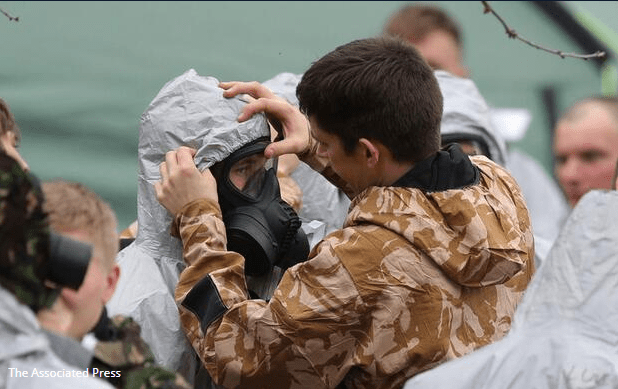
Image 1

Thankfully, many of us will gain comfort and inspiration from the pages of the Bible. The David and Goliath story of the Old Testament reminds us of just what can be achieved when one takes heart, puts one’s faith not only in God but one’s natural God-given ability to sling stones. Standing up to bossy tyrants always requires endeavour and the courage of one’s convictions.

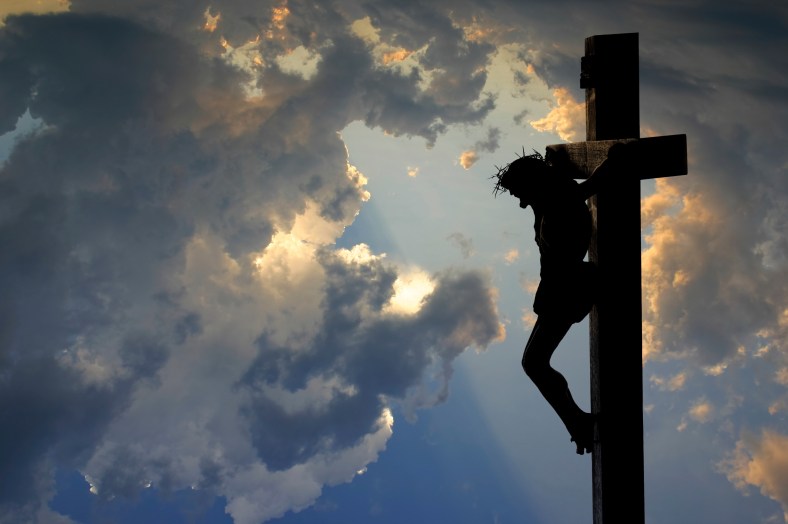
When Jesus stood before the Temple in Jerusalem and said ‘destroy this temple and I will rebuild it in three days’, the people standing next to him misunderstood, saying ‘how are you ever going to do that, it took 46 years to build this temple?’! But Jesus wasn’t referring to the physical temple he was referring to himself. Because he knew that you can’t confront corrupt systems of power without paying for it, and the systems he had in mind were the ‘principalities and powers of this world’ which are motivated by personal greed, power and abuse – in other words,sin’. Dark systems which ultimately only ever really lead to suffering, pain, death and despair. When Jesus says, ‘destroy this temple and I will rebuild it’, he’s talking about something new and unexpected that would happen after his death. He’s talking about resurrection! Yes, Jesus dies for our sin upon the cross, but his resurrection announces that God has not given up on us or this world because this world matters. Therefore, the way that we live our lives really matters, for every act of love, kindness and compassion that we undertake reflects the love of God for us in Christ, and nothing will be forgotten. For as Rob Bell, a Christian preacher and theologian observes, “resurrection affirms this life and the next as a seamless reality, embraced, graced and saved by God”. Therefore, the Christian knows that if you want to stand up to corrupt systems of power you need to be prepared to challenge it and say your ideals are not my ideals. I won’t and don’t recognise what you stand for. I don’t believe in the power of death, I believe in love, life and yes – resurrection!

A very Happy Easter to you all.


“Keep yourselves in God’s love as you wait for the mercy of our Lord Jesus Christ to bring you to eternal life. Jude 1.21


Can Intolerance Be A Virtue?

p05mx3fn

Recently, Newsnights Emily Maitlis discussed a report that had been published by the independent cross-party think-tank Demos as part of their At Home in One’s Past project. The title may sound fancy, but in a nut-shell it was trying to gauge public opinion about how people viewed modern British Society and culture by inviting people to reflect upon a series of typical statements (sometimes provocative) heard in modern society. The focus groups in question contained a diverse mix of citizens by age, socio-economic status and ethnicity. However, the vast majority of participants were white British people over the age of 55 and although the survey covered a wide range of areas those relating to cultural identity were particularly interesting. The common view was that all participants wanted to be treated with decency and fairness and took great pride in the fact that Britain was on the whole a fair and just society. However, participants also reported (and I quote) “feeling that British politics and the media now focus too heavily on the rights and needs of minority groups, and that there is an absence of ‘fair exchange’ of tolerance between minority groups and dominant White British, Christian Culture – which is expected to constantly adapt” (end quote). The report stated that Political Correctness was widely seen as having been overextended to such an extent that it was now not only hindering free speech and open debate but quickly changing British culture to the regret of our older citizens. One of the interviewees on the television programme reminded us quite rightly that we should be careful about the things that we say because our words have consequences, but another argued that the mood had changed to such a degree that people were reluctant to speak their mind because they were afraid of the backlash that their ‘out-of-step’ and perhaps traditional views might create. In other words, the ‘fair exchange of tolerance’ wasn’t working towards those who had suddenly discovered that their traditional values weren’t currently popular or mainstream.

So, what is tolerance and to what extent can it be described as a Christian virtue? The Cambridge Dictionary describes tolerance as ‘the willingness to accept behaviour and beliefs that are different from your own, although you might not agree with or approve of them’, but Don Carson in his book The Intolerance of Tolerance has noted how in recent times there has been a subtle shift from defending the rights of those who hold different beliefs to affirming all beliefs as equally valid and correct in which case it becomes increasingly difficult to say, ‘I disagree with you’.

Many would applaud such Christian values as ‘love your neighbour as yourself’ (Luke 10.27) or ‘do to others as you would have them do to you’ (Luke 6.31) which would seem to support a mutual sense of love and respect for one another, but statements such as these can’t be used to imply that anything goes or that there is no difference between right and wrong. In fact, most people including Christians should be prepared to passionately defend what they believe even if this appears on the surface to be intolerant to those who assume the cultural norm – not just in matters of fairness, social equality and justice but in matters of faith such as ‘salvation is found in no-one else, for there is no other name under heaven given to men by which we must be saved’ (Acts 4.12). People have every right to disagree with this statement but they have no right to suggest that it shouldn’t be viewed or aired for that would be equally intolerant and contrary to free speech, our traditional British values and Christian heritage.


“Preach the Word; be prepared in season and out of season; correct, rebuke and encourage— with great patience and careful instruction.” 2 Timothy 4.2


Who Are You Missing This Christmas?

gods final word_christ_t_nt

There’s a quiet and wonderful hush as Mary and Joseph, holding hands, slowly walk to the front of the school hall, he with a large staff in his right hand and she clutching a small bag to her chest. The music to ‘O little town of Bethlehem’ gently fades into the background as Joseph knocks upon the door standing in front of him – and as the innkeeper appears Joseph calls out in a loud voice ‘please sir, do you have any room where we can stay? For we have travelled a long way and my wife is about to have a baby!’ The innkeeper lets out a loud sigh and sadly shakes his head, but then after a momentary pause his face brightens up with a big grin as he politely and kindly directs them to a stable.

This wonderful and captivating scene has been played out by many generations of school children over the years watched by their proud parents, but it is also a scene that leaves a lot to the imagination and makes a lot of assumptions, for the Bible account never actually mentions the innkeeper, but simply says that after the birth of the baby Jesus ‘she wrapped him in cloths and placed him in a manger, because there was no room for them in the inn’ (Luke 2.7). The kindly innkeeper never actually features, but is strangely absent – missing!

Christmas is often said to be a time for children having fun and families getting together, but perhaps for some this biblical story actually reflects a present reality in their lives – perhaps because someone special, someone significant is missing and Christmas just isn’t the same without them. This could be because circumstances dictate that they can’t be present (such as serving in the armed forces or emigrated or away on business); or it could be because they have started a new chapter in their lives (such as young people leaving home or getting married leaving parents feeling isolated and alone); or it could be because of some sad circumstance (such as a divorce, a broken relationship or the death of a loved one). It’s at times like these when the love and support of family, friends and the community is so crucial, mutually encouraging people to appreciate that they are not alone, but cared for by the people around them – kind words and deeds which can mean so much and mirror the love that God has for us.

But perhaps for some the most significant missing person this Christmas, is Christ himself – which is such a shame because in the person of Jesus we meet with a God who loves and cares for us so deeply that he actually steps into this world of ours, and takes upon himself our humanity when he was born as a baby at Bethlehem. So no-one can say therefore that ‘God does not understand me’ because in Christ he has been there, done it and ‘got the T-shirt’. Our lives aren’t perfect and neither is the world in which we live, but in Christ we meet with someone who not only wants us to feel better but actually makes it possible for us to be better; loved, forgiven and at peace when we put our faith and trust in him. So, don’t miss out this Christmas because in Christ we have a friend who has promised to be with us, not just for today, or for tomorrow, but for always. Christmas just isn’t the same without him!


“The virgin will be with child and will give birth to a son, and they will call him Immanuel”—which means, “God with us.” Matthew 1.23