It’s All A Matter Of Perspective: The Norwich Cathedral Helter Skelter

Helter Skelter

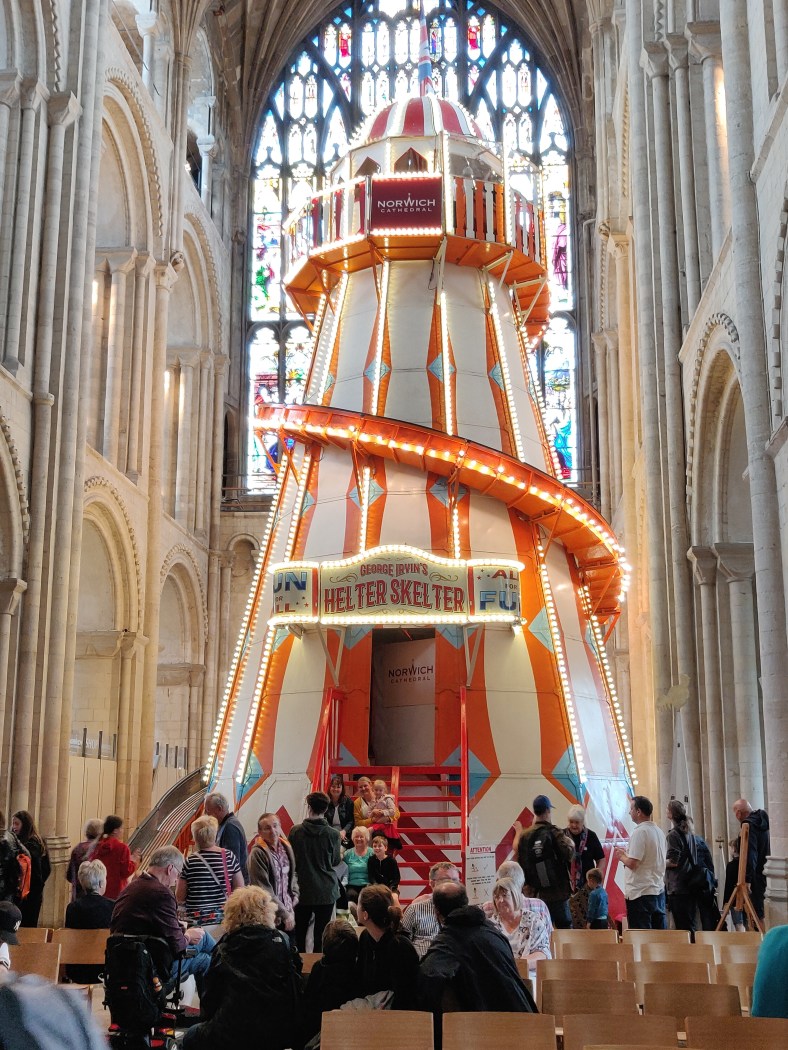
For ten days or so in August, it appeared that Brexit was not the only topic to divide national opinion but whether the decision to install a helter skelter within the Nave of Norwich Cathedral was really a good or a bad idea! Certainly, The Dean, The Very Revd Jane Hedges, appeared to be enjoying herself as she came swishing down the slide accompanied by a number of her Cathedral’s choristers captured on the BBC’s national news, but the wisdom of such a move was soon brought into question by The Right Revd Dr Gavin Ashenden (former chaplain to the Queen), who thought that the whole enterprise ‘smacked of desperation’ as the Cathedral tried to tempt visitors through its doors. He was concerned that the apparent frivolity of the helter skelter detracted from the holiness of the place; the awesome nature of God and the seriously sacrificial nature of the Gospel as demonstrated by Jesus and his death upon the cross. The vast and awesome nature of the Cathedral space with its north and south transepts symbolically representing the cross could and should encourage people to look upwards and prayerfully contemplate the presence of God – if only they weren’t distracted!

Ironically, this inspirational aspect of the building was not lost on the Cathedral staff whose campaign was entitled ‘Seeing it differently’, encouraging people to use their imaginations as they saw the Cathedral from a new perspective engageing with its structure and ‘salvation story’ as they admired its ancient roof bosses which depict the whole Bible story from Genesis to Revelation – all easier to see from the slide’s 40ft high viewing platform.

In response to Gavin Ashenden’s criticism, Diarmaid MacCulloch, Professor of the History of the Church at Oxford University observed that although some would think that the installation of the helter skelter was ‘trendy’ and a somewhat ‘undignified’ attempt to appeal to people in an increasingly secular society, in reality Cathedral attendances are growing and “so this shouldn’t be seen as a desperate attempt to get people in the building”.

So what is it? Well in my view – it is a joyful invitation! It’s a joyful invitation not only to encourage people into the building – but to make them feel welcome and what could be more welcoming than effectively saying ‘here you are – ride this! It’s fun!’ So many people, even Christians, tend to think of God as a great big killjoy and nothing could be further from the truth. God himself knows joy and he wants his people to know joy too. Psalm 104.31 speaks of God as rejoicing in all of his creative works – and what is the pinnacle of his creation? We are! Of course we should naturally respect God and honour his name but we should never, ever forget that God rejoices in us – because in and through Christ he loves us. Of course, being welcomed into the Cathedral is one thing, but if through that one visit, experience or conversation someone finds faith in God and wants to know more about the Cathedral, and it’s worship then how much more glorious and joyful is that! A simple welcome into the Cathedral becomes a joyful invitation into the ‘Kingdom of God’. So, perhaps for a mere ten days the helter skelter in the Nave should be viewed not so much a distraction to heartfelt worship and prayer – but as a warm invitation and proper attraction to it.


May the glory of the Lord endure forever; may he rejoice in all his works. Psalm 104.31
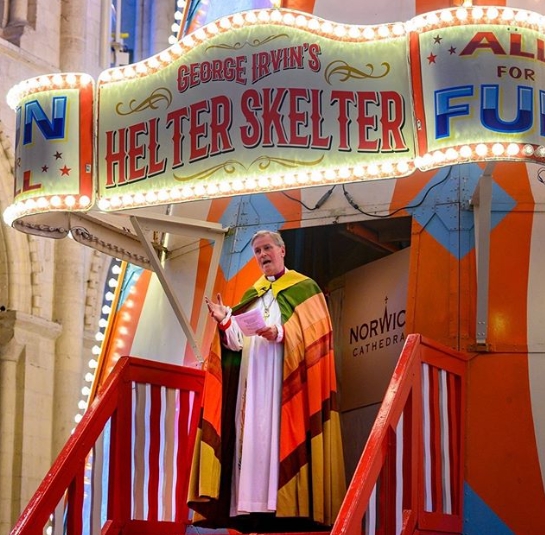

Image 2

Bishop Jonathan Meyrick – 18th August 2019
The Depths Of Love, Despair – And The Marina Trench

08-sub-return-mariana-trench-c2a9reevejolliffe

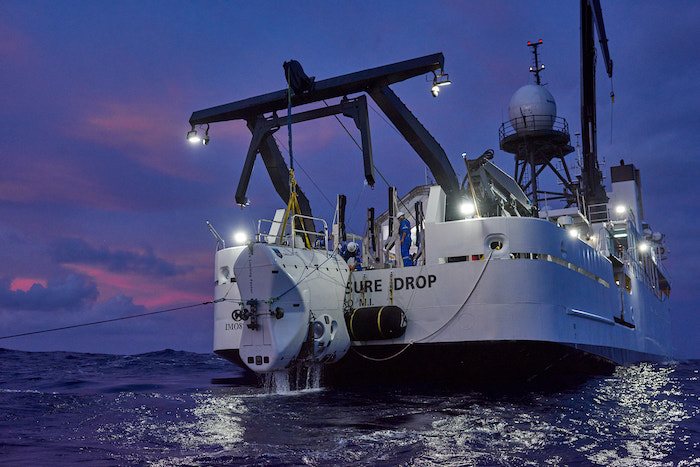
On the 13th May the world woke up to discover that Victor Vescovo, a retired naval officer, had broken the world record for the deepest dive ever made by a human being inside a submarine by descending nearly 6.8 miles (35,853 feet/10,928 meters) in the Pacific Ocean’s Mariana Trench. Naturally Vescovo was very excited and pleased with his achievement, “This submarine and it’s mother ship, along with the extraordinarily talented expedition team, took marine technology to a ridiculously higher new level by diving – rapidly and repeatedly – into the deepest, harshest, area of the ocean.” he says. The extreme pressure at such a depth would be the equivalent of 50 Jumbo Jets standing on top of one another said the BBC. Along with the new technological achievement, Victor Vescovo and his team were delighted to discover previously undiscovered sea life at the bottom of the ocean ranging from shrimp-like anthropods with long legs and antennae to translucent “sea pigs” similar to sea cucumbers. However, one disappointing feature alongside the discovery of new sea creatures was the discovering of plastic and other human contamination at the bottom of the ocean. Finding plastic at such depths highlighted and confirmed the fears of scientists across the world that plastic waste had reached epidemic proportions in the world’s oceans with the United Nations estimating that 100 millions tonnes had been dumped there to date. The consequences and repercussions of such a desperate discovery have heightened calls for greater and more urgent action by the world’s authorities to conserve the environment.

This is a call which will resonate with many people around the world and especially Christians who will recall the fact that theologically speaking when God placed Adam in the ‘Garden of Eden’ he made him responsible for not only working the land but for the taking care of it. In fact, God trusts us to take care of the environment and doing so for the long term and future generations is not only good stewardship but is the epitome of loving God and one’s neighbour as oneself. Yes, it may be true that even at the bottom of the ocean ‘our sins will find us out’ (Numbers 32.22) but it’s not too late to resolve things. If we have the brains, intellect and technological skills to even get to such incredible depths, surely we have the capacity to find the means by which we can clean our oceans and the environment, and transform the way we use and recycle plastics to our common good. We just need to have the will and determination to do so. A children’s chorus describes God’s love as being as ‘high as the highest mountain and as deep as the deepest sea’, let us all reflect this truth with the deepest love and concern that we can muster for the world in which we live and the people we share it with.


And I pray that you, being rooted and established in love, may …. grasp how wide and long and high and deep is the love of Christ. Ephesians 3.17-18


Faith, Hope And The Flames Of Notre-Dame

Image 1

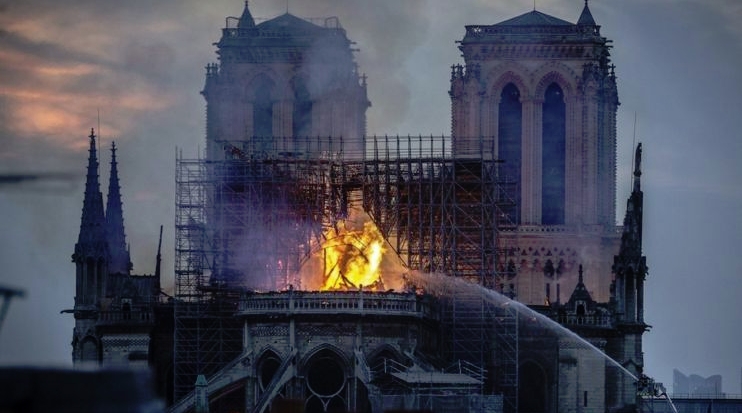
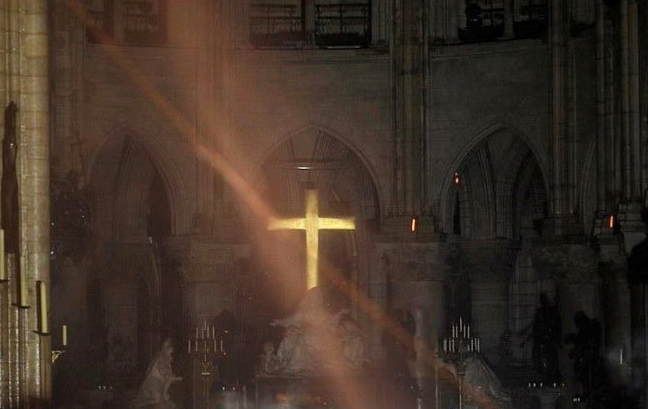
It was with a great deal of sadness that millions watched the iconic Gothic Cathedral of Notre-Dame go up in flames on Monday 15th April 2019 via their televisions, computers and smartphones. It seemed incredible to think that this wonderful cathedral that had taken over 200 years to build was essentially destroyed in a mere 30 minutes. It felt like something out of a movie or a bad dream. Many French citizens were in tears and disbelief as they witnessed this terrible event unfold but huge credit should be paid to the firefighters and others who were trying against the odds to save as many of the priceless art and religious antiquities as they could whilst others were trying to save and preserve the actual building. Yes, France may pride itself on it’s secular education but this tends to hide the fact that over 2/3rds of the population still identify themselves as Christian predominantly Roman Catholic – but equally it has to be said that to the French, the Cathedral of Notre-Dame represents so much more than being simply a place of religious devotion. It represents their nation, their heritage, their architecture, their culture and their wonderful way of life – and so it comes as no surprise that almost immediately President Macron committed himself and the whole of France to rebuilding and restoring the Cathedral.

“So I say this very solemnly to you tonight, we will rebuild this cathedral all together – and it is undoubtedly part of the French destiny …. we will rebuild Notre-Dame.”

Thankfully, in the cold light of day it appeared that despite great damage, the structure was basically sound and donations large and small were coming in from across France and indeed the world for its repair.

D4P_Nv6XsAMGnKb

But what is it that drives the human spirit to want to commit itself to such projects? For even in our own country, we have historically seen the rebuilding of Coventry and York Cathedrals damaged by fire, as well as Windsor Castle. It seems for all sorts of reasons we have an innate, inbuilt desire to rebuild, capture and preserve these majestic and ‘glorious’ buildings because they represent the triumph of victory over adversity and they speak to our heart and soul – and so we naturally wish the French every success in their efforts to overcome the disaster that has befallen them. There is of course a parallel to be found in the Christian faith, for just as President Macron said, ‘we will rebuild this cathedral all together, the Christian will be aware that this is precisely the task given to every believer – to help collectively and together to build a Kingdom, a temple, a church, not with actual bricks and stones (because these are transitory and prone to damage and decay) but with ourselves as human ‘living stones’ (1 Peter 2.5), joyfully working together in hope and celebrating the victory that Christ has won over sin by his death upon the cross. For the Christian appreciates that it is what is built in Christ’s name for the common good which is the most successful, eternally praiseworthy and enduring.


In him the whole building is joined together and rises to become a holy temple in the Lord.
Ephesians 2.21