
Science and theology – mutual companions on the journey to truth!

Many of us will remember the New Atheism that was greatly prevalent in the media twenty years ago, largely promoted by the group known as the ‘Four Horsemen’ being Richard Dawkins, Christopher Hitchens, Sam Harris and Daniel Dennett who sought to promote a strongly secular, scientifically rational worldview which was quite independent of religious faith. Ironically, their strident tone often had qualities of ‘religious zeal’ about it which was off-putting to some and conveniently overlooked the fact that many exemplary scientists were Christians who saw absolutely no conflict between their religious faith and the science they pursued. However, in recent times, it’s become quite clear that life requires more than just science to guide it – as so eloquently and poignantly expressed by the American environmental lawyer, James Gustave Speth who said:

“I used to think the top global environmental problems were biodiversity loss, ecosystem collapse and climate change. I thought that with 30 years of good science we could address these problems. But I was wrong. The top environmental problems are selfishness, greed and apathy, and to deal with these we need a spiritual and cultural transformation, and we scientists don’t know how to do that.” 

— James Gustave Speth, Shared Planet: Religion and Nature, BBC Radio 4 (1 October 2013)

Indeed, just recently our own Bishop of Norwich, The Rt Revd Graham Usher, who is the Archbishop of Canterbury’s lead ‘Bishop for the Environment’, reminded clergy that “science and theology nurture one another- they should not be seen as combatants!” – Norwich Cathedral (8th July 2025). John Polkinghorne, the former Physicist turned Anglican Priest also said that “Science tells us how things work; theology tells us why things matter” – and in a deeply uncertain world we need both; science seeking understanding – while faith offers meaning.

So why do so many of us still struggle to hold these two things together? Is it because past historical moments, such as the New Atheism period, have left us feeling that we can’t express our Christian faith without people doubting our intelligence? Fortunately, the tide is turning, and people are appreciating that many Christians, including scientists, are thoughtful rational people whose faith is deeply enhanced by their logical approach to life. Indeed, one such person is Prof. YoungHoon Kim from South Korea who with a staggeringly high score of 276 is recognised as having the highest recorded IQ in the world, which is higher than other notable minds such as Albert Einstein and Stephen Hawking. Prof. Kim, who studies Quantum Physics, is also a devout Christian and sees theology not as blind faith but as a rigorous discipline and the ‘ultimate field of study’.

But of course, the beautiful thing about the Bible  and the Gospel story of Jesus Christ is that on one level it can be explained so simply that even a little child can understand it, but on another level, it can also be so profound that it satisfies the deepest of intellectual minds. Perhaps the problem with the New Atheists was not that they weren’t brilliant men – but that they underestimated the intelligence and vision of faithful believers.

With best wishes. Stephen Thorp

The fear of the Lord is the beginning of wisdom; all who follow his precepts have good understanding.

Psalm 111.10


This article first appeared in the August edition of Parish Magazines associated with the Necton Benefice – Parish Link; Moonraker; The Pickenhams’

If you would like to support the ministry of the Necton Benefice or make a one-off donation this QR code will take you to the appropriate website – Thank you and God bless

In a world of fake news, propaganda and spin – how do we recognise the truth?  

‘What is truth?’

A day after a massive Russian attack killed 35 people as they headed to church on Palm Sunday, and injured 117 others in Sumy, Ukraine, President Donald Trump, the most powerful man in America, once again blamed President Volodymyr Zelensky for starting the war with Russia. “You don’t start a war against someone 20 times your size and then hope that people give you missiles…. When you start a war, you got to know you can win.”  The historical context is complex but these statements are at odds with the recorded invasion of Ukraine by Russia in February 2022 and the earlier annexation of Crimea by Russia in 2014, in violation of international law.

A similar spinning of reality can be seen with the bombing of the al-Ahli hospital in Gaza City which coincidentally was also on Palm Sunday. This private hospital run by the Anglican Church, was the last functioning hospital in Gaza. The Israeli military said it had hit a ‘command and control centre’ used by Hamas to plan attacks, but so far they haven’t given any evidence to justify their claim.

The problem is that we live in a world of ‘relative truth’ where it has become fashionable to spin the truth to make it suit our own particular position or point of view. Regardless of the rights and wrongs of these situations, it then becomes hard (if not impossible) to tell what really happened when people constantly tell us a story spun to suit their own particular needs and agendas. Absolute truth can be inconvenient when it doesn’t suit us. It is therefore no wonder that we have seen a rise in fact checking organisations such as BBC Verify, in modern day journalism, to try and help us see through the fake news and establish the facts.

The problem is that bias and spin erodes confidence, faith and trust. How do you know who or what to believe?  

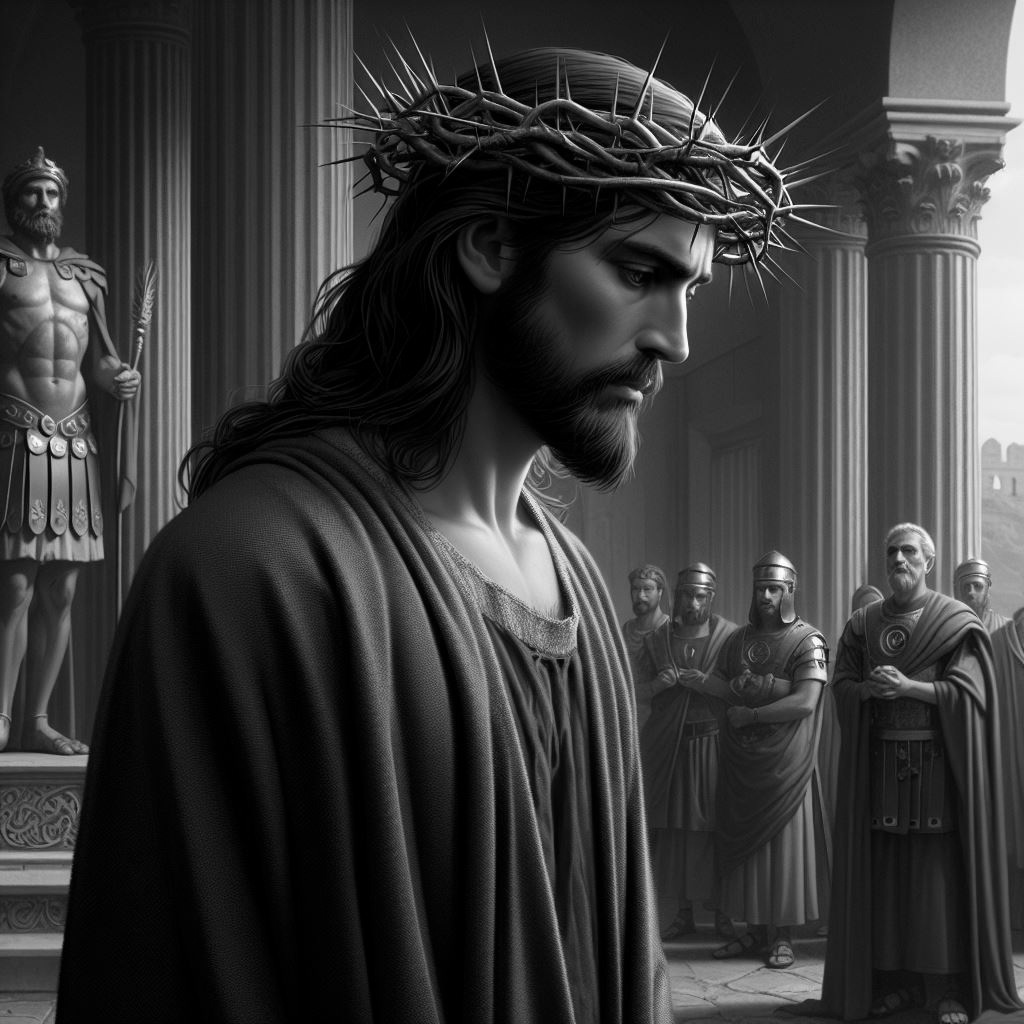
“What is truth?”, Pontius Pilate had replied when Jesus had said, “Everyone on the side of truth listens to me” (John 18.37-38). How was Pontius Pilate to know? How could he glean the facts? Who could he trust? In response to his question to Jesus, “Are you the king of the Jews?”, Jesus had replied, “Is that your own idea … or did others talk to you about me?” and now Pontius Pilate was floundering! Pontius Pilate was a powerful individual, but he was at the mercy of the religious leaders and authorities of his day who had lied and spun him a story to suit their own agendas. He didn’t know the facts and he didn’t know Jesus – all he could do was judge Jesus by his actions and his character. Those who are familiar with the story will know the intricacies of this encounter, but it soon became clear to Pilate that Jesus was not a mad man, nor a revolutionary nor a coward pleading for his life – he was a man with a great sense of special divine purpose. “You would have no power over me if it were not given to you from above”, meaning God (John 19.11), Jesus had said.

Today, like Pontius Pilate, we are so often left floundering as we try to discern the truth, but like him we need to try our best to establish the facts and (prayerfully I suggest) discern motive, character and purpose, asking ourselves who gains what and at what cost? Are they purely self-seeking or genuinely seeking the best for others? Are they trustworthy?

With regard to Jesus, Pontius Pilate actually concluded, “I find no basis for a charge against him” (John 19.6). But the political tide led him on a course that was contrary to his instincts. He was so caught up in the political spin of his day that ultimately, he didn’t have the courage of his convictions – and in that there is surely a lesson for us all!


If you would like to support the ministry of the Necton Benefice or make a one-off donation this QR code will take you to the appropriate website – Thank you and God bless
The difference between optimism and hope is – Easter!

With best wishes for Easter. Stephen Thorp


Mary Magdalene and other women: (Matthew 28.1-10, John 20.11-18). The disciples on the road to Emmaus: (Luke 24.13-35). Simon Peter (Cephas (Luke 24.34, 1 Corinthians 15.5). The apostles (without Thomas): (John 20.19-24). The apostles (including Thomas): (John 20.26-29). Over 500 believers at once: 1 Corinthians 15.6. James, the brother of Jesus: 1 Corinthians 15.7. The disciples at the Sea of Galilee: (John 21). The group at His ascension: (Acts 1.3-9).


Is it sensible to believe in the Resurrection?


What can ‘Mr Bates v The Post Office’ teach us about Lent?


Have you taken down your Christmas decorations too soon?


What are YOU celebrating this Christmas?


Pray for the peace of Jerusalem this Remembrance Season

It has been heartbreaking listening to the BBC news stories coming out of Israel in recent days. Stories like that of twenty-two year old Neta Portal telling the news reporter how, despite being shot in the leg six times, she had survived with her boyfriend the terrible massacre carried out by Hamas on the Israeli kibbutz at Kfar Aza – or seeing Mariam, a young British Palestinian girl, expressing her fears of dying as she clutches her British passport in the hope that the Rafah gate might be opened, granting her safe passage into Egypt. These stories remind us that in times of conflict it is always the innocent who suffer.

Let’s be clear, what Hamas did was barbaric and Israel has every right to defend itself – and yet we pray and hope that they will have a higher regard for civilians than the terrorists. The Israeli / Palestinian conflict is complicated, but the truth is that ever since the 1948 Arab-Israeli War, Israel has made a number of concessions, offers and overtures to its Palestinian neighbours which would create a Palestinian state (even voluntarily giving up its worship upon the Temple Mount) all of which have ultimately been rejected by the Palestinian leadership, leading to the current unsatisfactory situation. And yet relations in the wider Middle East have been improving and things were looking better than they had been for years – all of which has now been blown away by the recent attack by Hamas, sponsored by Iran.

The irony is that the word ‘Jerusalem’ means ‘foundation of peace’ incorporating the Arab word for peace ‘salam’ as in ‘As-salamu alaykum’ meaning ‘peace be upon you’  and this is akin to the Hebrew word ‘shalom’ also meaning ‘peace’, ‘tranquillity’ and ‘wholeness’, but it’s not just a simple sort of peace but a deeply rich sort of peace that belongs to God himself. So, in a city and a part of the world which has such a high regard for peace, it’s incredibly sad that there is so much anger, hostility and hatred.

The Christian will be aware that the prophet Isaiah predicted a time when ‘every warrior’s boot used in battle and every garment rolled in blood would be destined for burning and used as fuel for the fire’ (Isaiah 9.5) because ultimately God’s messiah would arrive and put things right, and he would be called ‘Wonderful Counsellor, Mighty God, Everlasting Father and Prince of Peace (‘sar shalom’)’ (Isaiah 9.6), and that person is of course Jesus who, after his death and resurrection, met his frightened disciples in a locked room and said ‘peace be with you’ (John 20.19).

So as we approach Remembrance Sunday, let us be grateful for the peace that we currently enjoy, made possible by those who sacrificed so much to look after and protect us in past years, but may we also be wise enough to pray for Jerusalem and the peace of the world, trusting that God’s wisdom, and the loving, peaceful spirit of Christ, might touch all our hearts.


Celebrating Harvest – against all the odds!

Many of us will be familiar with the story Jesus told his disciples known as the ‘parable of the sower’ (Matthew 13.1-9,18-23), which demonstrated the spiritual reality that sadly not every heart would be open to the ‘Word of God’ like seed sown on good soil – but rather, like seed that was eaten by birds on a path, scorched by the sun in rocky places or choked by thorns and thistles, would be destroyed and rejected by those whose hearts were influenced, shaped and hardened by the worries, cares and problems of the world,  resulting in what appears to be at first glance, a massive 75% failure rate!

But even if we put the spiritual metaphors to one side for a moment, and take the parable ‘literally’, it still speaks to us, because it chimes with what we understand and see going on around us at the present time. The ongoing war in Ukraine has been a disaster for the world’s food store. Because of damage to fields and farms, 40% fewer crops have been planted in 2023 than the year before. The lack of fertiliser has literally left many crops struggling to grow against thorns, thistles, and weeds. Many farmers have therefore switched to growing easier oil-based crops such as sunflowers, resulting in the fact that this year’s grain harvest is even smaller than before. The ‘rocky ground’ left by an overabundance of military ordinance, such as landmines, has left a deadly legacy so that many fear to gather the crops, and now that Russia has pulled out of its Black Sea crop exporting deal, the worries, cares and pressures of the world are exasperated for many. In other parts of the world, climate change and excessive heat waves literally scorch the seed sown for food. All of this reduces supply, forces up prices, fuels inflation and cements the cost of living crisis, leaving 20% of people on the lowest incomes in the UK with not enough money to feed themselves after two weeks.

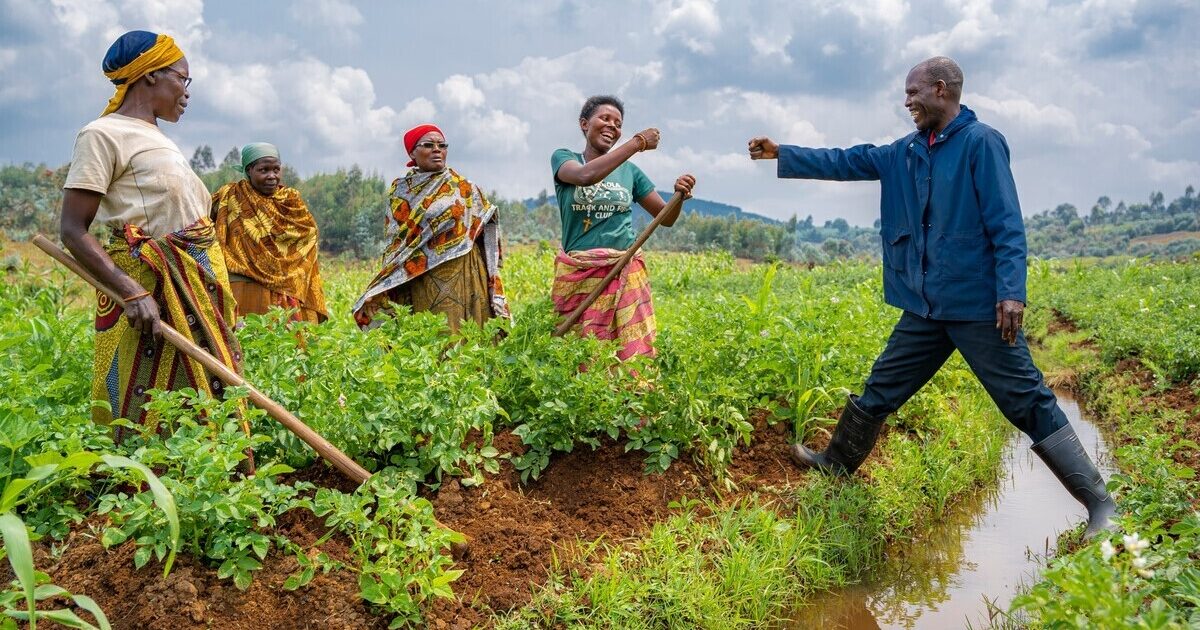
The situation is no doubt even more complicated than this, but it is why we need to celebrate harvest and be grateful for what we have, supporting those who through no fault of their own are less fortunate than ourselves. So as many of our churches begin to look forward towards the harvest season, may I encourage you to join us. This year our harvest charity will be Ripple Effect (formerly known as Send a Cow), helping poorer African nations learn how to farm and feed themselves sustainably, and we will be using our dry provisions and harvest gifts to support our local foodbank. Kindness and generosity are great spiritual values whether you consider yourself to be Christian or not, and just as the ‘Word of God’ teaches us, seed that is sown into good soil ‘can produce a crop a hundred, sixty or thirty times what was sown’ (Matthew 13.8). Wouldn’t it be wonderful if our kind, generous and thankful hearts had a similar effect this harvest season?!      

Well done England’s Lionesses. Let’s go again!


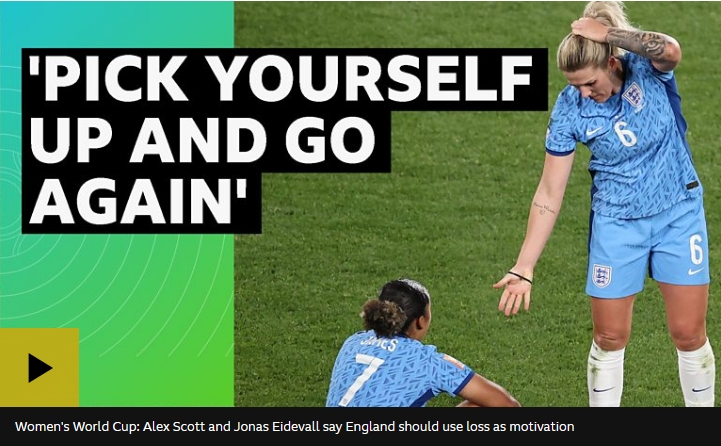
No doubt like me, many of you are disappointed that England’s Lionesses failed to win the Women’s Football World Cup 2023! But what a wonderful tournament it has been, and what excitement! Who can forget Chloe Kelly’s incredible winning penalty strike against Nigeria which at 69 mph was more powerful than any goal scored in the Premier League last season – or young Lauren James announcing herself on the world stage with 2 wonderful goals against China and an incredible strike against Denmark – or finally Mary Earps’ sensational penalty save against Spain in the Final which rightfully won her the ‘golden glove’ award and confirmed her place as one of the world’s top female goalkeepers admired by millions (whatever Nike might say by not producing a copy of her shirt for fans to buy). Not forgetting the rest of the team who all did so very well under the wonderful management of Sarina Wiegman. It’s such a shame that the final proved to be ‘one game too far’, but their skill and dedication has brought us all a lot of joy and entertainment over the last few days and we can as a nation take great pride in what they have accomplished, and they have certainly inspired many other ‘little boys and girls’ to play football and be the ‘lions and lionesses’ of the future.

However, we all know that it is the possibility of winning or losing which makes football and so many other sports, so enthralling. It is embracing the idea and stepping up to the challenge which makes sport such a wonderful metaphor for the stresses and strains and challenges of life. It’s been 57 years since England last won the football world cup and perhaps for many it may seem like we will never win it, but still it’s a challenge which inspires.

The Christian will know that when it comes to earning our place in heaven, we are all doomed to fail, because as frail, fallen, sinful human beings we can never make the grade or live up to God’s standards – we have all fallen short! (Romans 3.23) But fortunately, God’s love for us means that we are not abandoned or left to our own devices; God steps into the world in the person of Jesus Christ, so that he might take upon himself all the terrible consequences of our fallen nature by dying for us upon a cross. His death paid the price of our sins and so now we can enjoy a new forgiven life and a new relationship with God when we put our faith and trust in him. The Apostle Paul sums it up so well, when he says ‘forgetting what is behind and straining towards what is ahead, I press on towards the goal to win the prize for which God has called me heavenwards in Christ Jesus’ (Philippians 3.12-14).

So, let’s be thankful for all that Christ has accomplished, and like England’s lionesses, pick ourselves up and grab that second chance ‘to go again’.      


But thanks be to God! He gives us the victory through our Lord Jesus Christ. 1 Corinthians 15.57

Georgia Stanway, Rachel Daly, Millie Bright, Mary Earps, Alessia Russo, Lucy Bronze, Lauren Hemp, Ella Toone, Jess Carter, Keira Walsh, Alex Greenwood