Cultivating a friendship which inspires

You don’t need to be a fan of Rugby League to appreciate and be inspired by the tremendous friendship between Kevin Sinfield and his former Leeds Rhinos team-mate Rob Burrow. When Rob Burrow was diagnosed with Motor Neurone Disease in late 2019, Kevin stuck by his friend and was inspired to do whatever he could to raise money for MND charities. In 2020 he ran seven marathons in seven days and in 2021 he completed a run of 101 miles in 24 hours. Last year he completed an Ultra 7 in 7 Challenge when he ran seven back to back ultra-marathons (an ultra marathon being a run longer than the standard marathon length). His latest triumph was on Sunday 14th May 2023 when he completed the first inaugural Rob Burrow’s Leeds Marathon when he actually pushed Rob the 26.2 miles in a specially adapted wheelchair, lifting him out of the chair as they finally crossed the finish line together. So far Kevin Sinfield has raised well over £8 million for charity, which is not only a remarkable story about good coming out of adversity, but a wonderful celebration of their friendship.

The Bible has a lot to say about ‘running the race’ and ‘going the extra mile’, just as it does about friendship, with such examples as those of David and Jonathan, and Ruth and Naomi whose love, compassion and loyalty bound them together through ‘thick and thin’ as good friends regardless of what life and dire circumstances had brought them. The Christian will be aware that this was modelled in Jesus’ own life and taught by him when he told his disciples that they and all who put their faith in him could be his friends if they did what he commanded – and what was it that he commanded? It was that they should ‘love one another as I have loved you’ (John 15.12) in other words selflessly, sacrificially and completely, often putting the needs of the other person first, and before themselves. This was ultimately demonstrated by Jesus himself when he died upon the cross.

There is so much sadness and suffering in the world that it often weighs us down and depresses us but let us also lift up our heads and be inspired by the good examples of love and friendship that we see and be inspired to cultivate such qualities and friendships in our own life and the people we meet.  


A friend loves at all times, and a brother is born for adversity. Proverbs 17.17

Easter joy, hope & life everlasting!

I’m sure most of you can understand me, when I say that ‘I love my life and all that goes with it, my wife, my children, my family and friends along with all the other joys that sustain me, making my life comfortable, satisfying and fulfilling. Not forgetting the benefits of our society and the beauty of the countryside. In all these things we are so very fortunate’ – and I’m sure that many of you would agree and say something similar!

But sadly you don’t have to look very hard before you notice that the world in which we live is far from perfect. The terrible war in Ukraine is an obvious example. “You can rebuild Mariupol,” says one BBC headline, “but you can’t bring back the dead”. Sadly, this is true and although we don’t like to talk about it, death is a daily reality for many people around the world, whether it be through the deliberate and wilfully malicious actions of others culminating in war, or by natural means, disaster, sickness and disease, or poverty. Death is awful! This is why so many Christians have for generations, taken comfort from the famous words of the twenty-third psalm:

“Even though I walk through the valley of the shadow of death, I will fear no evil for you are with me; your rod and staff, they comfort me.” (Psalm 23.4).

The ‘rod and staff’ mentioned here remind us of the opening verse which states that, ‘The Lord is my shepherd’. Christians take heart in the fact that not only had Jesus described himself as being ‘the good shepherd’ who cares for them even in the dark places of life, but that he is also their shepherd, the one ‘who lays down his life for the sheep’ (John 10.11). Therefore, Christ can identify with us not only in the joys of life but also in the painful experience of death – AND YET THIS IS NOT THE END – for in him we meet with someone who can lead us through it!

The Bible explains how God ‘so loved the world’ that in the person of Jesus he stepped into it, and having taught his disciples about how God loved the world, he demonstrated it by willingly submitting to death upon the cross, taking upon himself the terrible consequences of all our sin which by rights should separate us from such a holy and loving God for ever. His love for us took him to the cross and his death achieved for us our salvation, atonement and forgiveness. All we need to do is put our faith and trust in him and with grateful hearts say, ‘thank you – I believe’. BUT THIS IS NOT THE END for not only does Christ’s death upon the cross achieve for us our salvation, but it also bestows upon us life everlasting! No, this is not mere fantasy or make believe! It’s based upon the solid evidence of the resurrection and the eye-witness statements of people who were actually there! As Richard Bauckham observes, ‘all of our ordinary hopes are defeated by death, but in the resurrection of Christ, God has defeated death and we have a hope that is everlasting’.   So whenever we are tempted to lose heart as we look at the sadnesses of the world or find ourselves walking through dark valleys, let us find both strength and comfort in the one who is not only with us by his Spirit, but through his life, death and resurrection offers us joy, hope and life everlasting.


Alleluia Christ is risen. He is risen indeed. Alleluia.

No Greater Love Than This …..

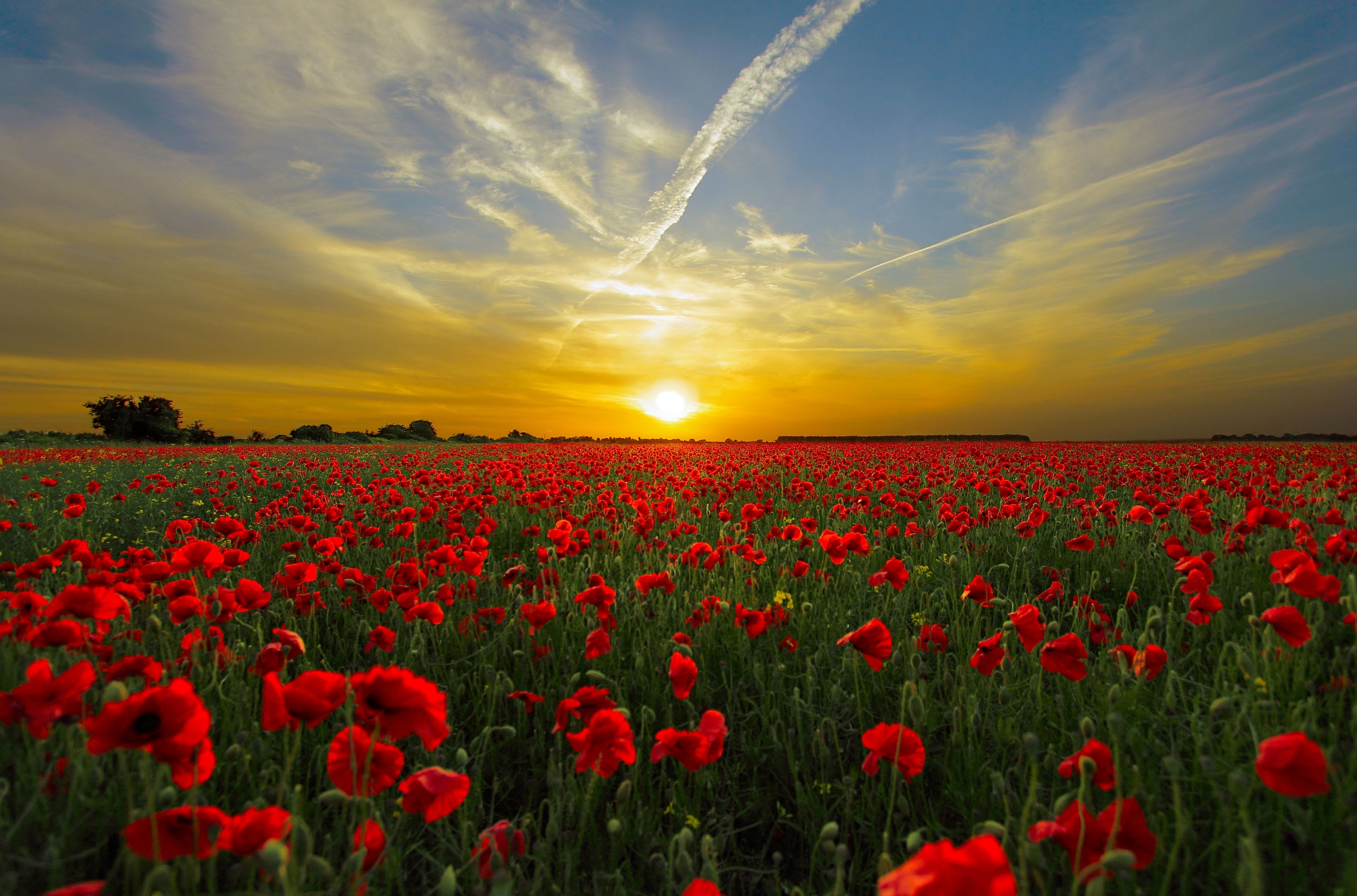
The First World War (1914-18) has often been described as ‘The Great War’ and ‘the war to end all wars.’ It is given such accolades because despite the many brave and heroic actions that took place, it’s also recognised as being one of the most tragically painful episodes of human history with immense suffering, as no-one can be certain how many lives were actually lost on the battlefield. Historians estimate that it may be as many as 10 million people killed with another 20 million people wounded. It was therefore hoped that the world would never see such a conflict again, but sadly within a few short years not only did we have the Second World War but there have been many other conflicts since. It’s no wonder that the Christian poet, Steve Turner, was inspired to write ‘History repeats itself. It has to – no one listens.’

To those of us who have, thankfully, only ever known peace, the current war in Ukraine with all its evidence of mass graves, torture chambers and deportations reminds us of just how dirty, depraved, and brutal war can be, causing much damage to people’s lives, infrastructure and society. We can therefore only hope and pray that the innocent will find peace; the good will prevail; and that the wicked will be brought both to heel and to justice.

In such circumstances, many of us will remember the biblical verse, “Greater love has no-one than this, that he lay down his life for his friends” (John 15.13), often quoted on Remembrance Sunday. It’s true, there is no greater love than making this ultimate sacrifice. But it also needs to be remembered that that particular verse is set within a passage that not only commands us to be loving in death – but in life! This is my command says Jesus, “Love each other as I have loved you” (John 15.12). War sometimes requires us to live and love sacrificially, but that same quality should also be evident in times of peace, as we endeavour to see others the same way that God sees them. Ultimately, it was this same quality of sacrificial love and purpose that drove Jesus to die for us upon the cross, taking upon himself not only the consequences of our fallen nature but offering us the forgiveness of sins when we put our faith and trust in him. The Bible reveals not only how ‘in love’ Jesus lived and died for us, but how as ‘God incarnate’ he rose again. His resurrection therefore (which is promised to all who believe) heralds not only a new way of life, but a new way of living forever as part of God’s new creation which we call heaven, where God will wipe away every tear from our eyes, and where “there will be no more death or mourning or crying or pain” for all that has passed away (Revelation 21.4). How much do we long for that!

Please join us in church this Remembrance Sunday as we commemorate all those who sacrificially gave so much serving our nation in times of war, so that we might be free to live and love in peace.  


“This is how we know what love is: Jesus Christ laid down his life for us.”

1 John 3.16

The Queen Is Dead: God Save The King!

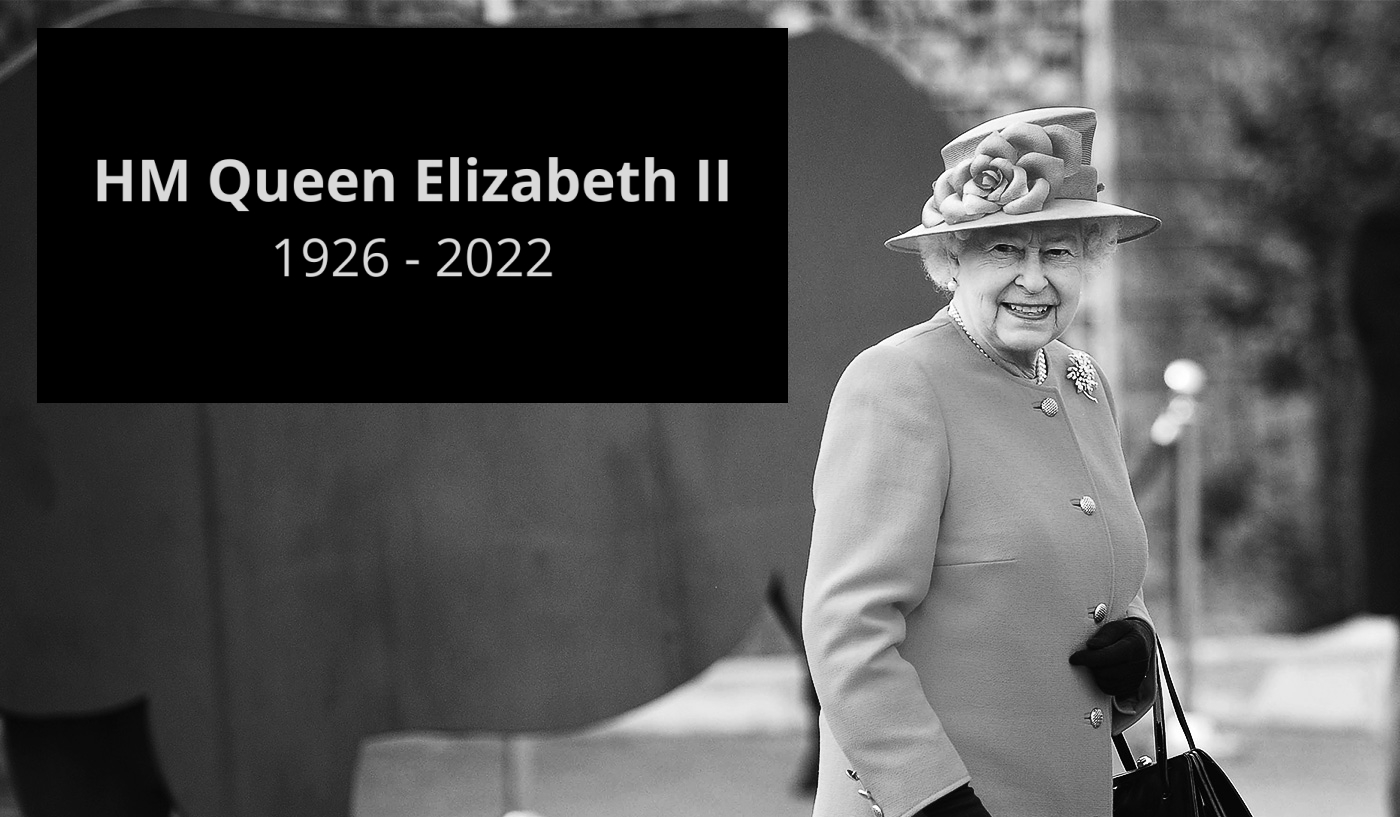
By the time you get to read this letter, the period of mourning for our late Queen, HM Queen Elizabeth II will be over. The parades, The Queue, formal lying-in-State and the funeral will all have come to an end, although our heartfelt praise and gratitude for Her Majesty and her long and glorious reign will last for ever. There will always be a special place for her, both in our history and the heart of the nation – and yet now in this period after the funeral we have an opportunity for quiet thought and reflection.

Perhaps one of the most striking things that struck visiting Presidents, Prime Ministers and other Heads of State, was that despite their constant praise of Queen Elizabeth as being ‘a rock’, and a ‘constant and invaluable presence’ (considering that she had witnessed 15 different Prime Ministers and 14 US Presidents during her reign), was the instant and seamless flow from one Sovereign to another; the Sovereign may have died but the Monarchy lives on; the Queen is dead; God save the King! This is not to show any form of disrespect, but to ensure that the life of the nation is maintained even in periods of great sadness and difficulty. The fact that Prince Charles became King Charles III upon the death of his mother, even before there was any formal proclamation or act of accession feels extraordinary to foreign dignitaries (and a great relief to those of us who have just witnessed the latest Conservative leadership contest). It’s the monarchy which helps bring this sense of constancy so admired by others, and perhaps most poignantly summed up by the Queen’s own words that “I find that one of the sad things is that people don’t take on jobs for life”.

Inevitably the sad death of the Queen will bring a period of uncertainty and change to those who have known nothing else, but the new King’s dedication to follow his late mother’s sense of Christian service and duty has been both comforting and reassuring. It’s also comforting that the Christian and religious nature of much of the past proceedings has brought a comfort and consolation to many, regardless of their own religious faith or lack of it – all are welcome here. Elizabeth was our Queen and now Charles is our King.

However, the Christian will also have a sense of another constancy in their lives, one that is central and a bed-rock to all that they say and do, bringing much comfort, strength and peace, and that is of course in God whose eternal nature was most wonderfully demonstrated through the life, death and resurrection of Jesus Christ, who is both God incarnate, and ‘Sovereign Lord and King’. His majesty and eternal promise gives us strength in times of difficulty, peace in times of uncertainty, hope for the future and comfort even beyond the grave. So as we look to the future of our nation, may we all celebrate our new earthly monarch and put our faith in the one in whose name he serves.     


“And surely I am with you always …” Matthew 28.20

Where is the truth and does it matter?

I think we can all agree that today (15th June) was a bad day for the Prime Minister, for not only did the EU restart its legal proceedings against the government plans to unilaterally scrap parts of the Northern Ireland Protocol, but also a fiercely heated debate took place over ‘who understood what’ at the time of signing the Brexit deal and how it should be practically interpreted – with the European Commission vice-president Maros Sefcovic effectively accusing the British government of lying to the general public. Secondly, Lord Geidt resigned from his position as Boris Johnson’s independent ethics advisor stating that there was a legitimate question as to whether the Prime Minister broke the ministerial rules over Partygate. Once again, the whole issue of ‘who knew what’ and who was lying came to the fore.

The problem is that we live today in a postmodern world where it is fashionable to believe that there is no such thing as absolute truth; all truth is said to be relative, depending upon your own particular point of view, which in the realm of politics (and much of society at large) tends to mean that ‘the truth’ becomes whatever suits me and is the most convenient and practically expedient. In fact, in recent years,  the most expedient thing has often been to deny the truth completely. We saw this in Donald Trump’s use of the term ‘Fake News’ to dismiss anything that he didn’t agree with, and his false accusation that the US Presidential election result was rigged, which in recent days even close family members and political advisors have dismissed as nonsense. Sadly, we have seen the most serious and blatant denial of truth coming from Russia, as President Putin conducts his ‘special military operation’ within Ukraine, which most observers would have no hesitation in calling a war, which has disastrous consequences for us all.

The problem with all this political spin, ‘fake news’ and propaganda is that it erodes trust as people lose faith in their political leaders and become disillusioned and suspicious instead. What can we believe and where can truth be found?

One’s own perspective of the world is greatly determined by one’s values and what one believes, which is why for many, Christianity offers a bedrock of security in a sea of change and relativity, for in the person of Jesus, we see a man who as the ‘Son of God’ not only had a great love and compassion for the world, but also kept his promises, living a life full of integrity and truth, backing up his words with action. Jesus had described himself as ‘the way, the truth and the life’ (John 14.6), offering his disciples not only a way to his Father in heaven but ‘life in all it’s fullness’ (John 10.10) and a ‘truth that will set you free’ (John 8.32). Despite the fact that the people were living in difficult and uncertain times, because he spoke with such authority and lived with such integrity, people were willing to embrace his words ‘do not let your hearts be troubled. Trust in God, trust also in me’ (John 14.1), and many people did trust Jesus because not only were his words trustworthy and true, but also so were his actions, as ultimately demonstrated by his life, death and resurrection.

As much as I would like everyone to enjoy a firm confidence in Christ, I’m also certain that we need to step back from a world where ‘all things are relative’ but have the confidence of one’s own convictions, for paraphrasing a comment made by Jeff Myers, a Christian commentator – ‘If something is true, then it is true whether we admit it, like it or not! May we and all our politicians live in the light of such certainty, and within it foster a high regard and appreciation for the truth.


 31 Jesus said, “If you hold to my teaching, you are really my disciples. 32 Then you will know the truth, and the truth will set you free.” John 8.31-32

God bless The Queen

Queen Elizabeth II leaves after attending the opening ceremony of the sixth session of the Senedd in Cardiff. Picture date: Thursday October 14, 2021.

“I declare before you all that my whole life whether it be long or short shall be devoted to your service… But I shall not have strength to carry out this resolution alone unless you join in it with me, as I now invite you to do: I know that your support will be unfailingly given. God help me to make good my vow, and God bless all of you who are willing to share in it.”

Princess Elizabeth, 21st April 1947

These words spoken four years before King George VI died on 6th February 1952, show how greatly aware the young Princess Elizabeth was of her role and life as the nations’ future Queen. You could say that these words were spoken not only in anticipation of that event, but to prepare the nation that one day it would eventually come (as we are seeing similar signs today), and when it did, the young princess immediately became Queen at the age of 25, although her Coronation wasn’t until 2nd June 1953. Although it hasn’t always been easy, the Queen has remained a faithful servant to the United Kingdom and its citizens, gaining huge respect, here and abroad, and especially so in her role as the head of the Commonwealth. On the 6th February 2022, she became the first British Monarch to reign for 70 years and we will celebrate her Platinum Jubilee at the beginning of June – what a wonderful achievement!

Of course, over the past 70 years our nation has seen immense change, in terms of medical, technological and societal advances, and our economy has sometimes had to take the rough with the smooth, but in all that time the Queen has been a steadfast constant and stabilising influence, comforting many who had lived with her through the war years, and demonstrating how it is possible to embrace the future with a quiet and confident optimism. Her mature and majestic example has been a great source of inspiration and admiration both to world leaders and members of the general public.

No doubt, alongside her late husband Prince Philip, the Queen has been greatly sustained by her Christian faith which she has spoken about more naturally and openly in recent years, most notably through the broadcast of her Christmas messages. Her royal upbringing and personal faith in Jesus Christ as her Lord and Saviour has not only enhanced her sense of duty, but given her a greater understanding of Christian service and a better perspective of what is truly worthwhile and of lasting value.

As we collectively say ‘thank you’ to Her Majesty for 70 years of loyal service, may her life continue to be an example and encouragement to us all. May God bless the Queen!


Lord of our lives and Father of all, let our thanksgiving prove itself in service to you and to our Queen, our country and one another, for your Name’s sake. Amen.

Prayer of Dedication from the Silver Jubilee Year

When war is looming, it’s essential that we act with wisdom, integrity & prayer!

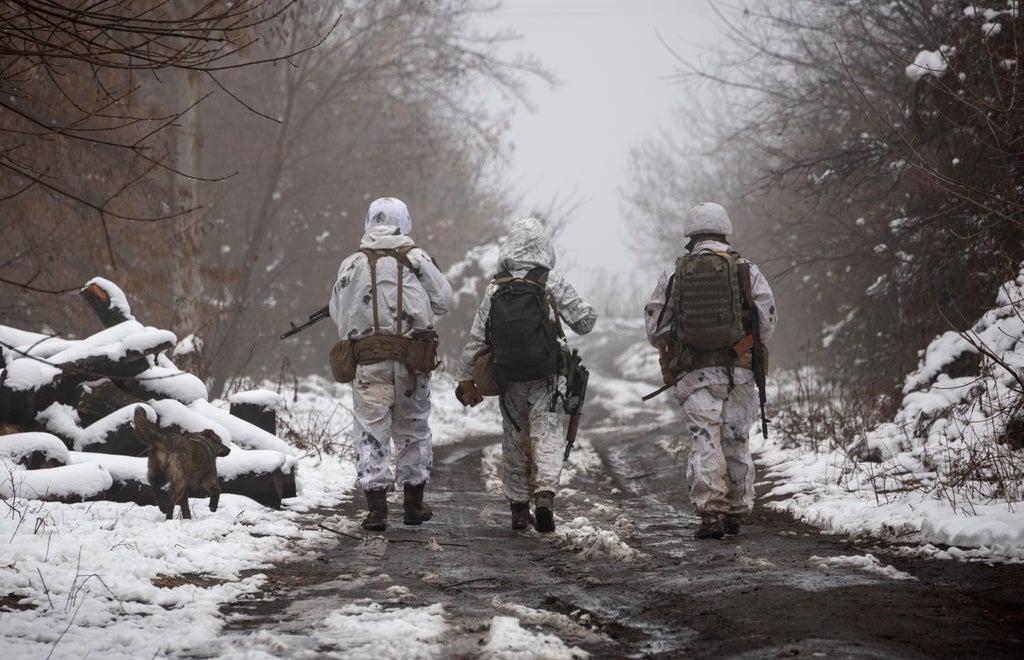
As I write this letter, the West is becoming increasingly alarmed by the number of Russian troops gathering on the borders of Ukraine. President Putin has repeatedly said that Russia has no intention of invading Ukraine, and his government has repeatedly accused the West of ‘histrionics’. In fact, hopes raised by President Putin’s recent statement that the Kremlin has authorised a partial withdrawal of its forces were quickly dashed by NATO’s chief, Jens Stoltenberg who insisted that satellite imagery showed no evidence of such a withdrawal, in fact, strategically, quite the reverse. This was swiftly followed by Liz Truss our own foreign secretary urging the West at a press conference in Kyiv, to ‘wise up’ in its dealings with Russia.

She no doubt has a point – when war is looming, and peoples’ lives are at stake it is beholden upon all of our national leaders to act with prudence, wisdom and caution. Concerns that Russian information might be misleading or that their tacticians might be engineering a so called ‘false flag’ provocation to justify a military invasion of Ukraine are as shocking as they are deceitful. This is why the West must ensure that it acts with wisdom and integrity, powerfully speaking to those who threaten harm, and with care to those who are in harm’s way. Every nation has the right to defend itself, but the engagement of warfare should always be a last resort.

The Christian will be aware that although Jesus commanded his disciples ‘to love your neighbour as yourself’ (Matthew 19.19), he also commanded them to ‘love your enemies and pray for those who persecute you’ (Matthew 5.44). This is not a soppy, sentimental, ‘wishy-washy’ sort of love, but a love that allows the individual to keep a clear head and a clear perspective, not allowing oneself to descend into a mindless anger or hatred. Let’s pray that our national leaders will continue to act with as much tact and diplomacy as they can muster to encourage peace and deter the minds of those who might be tempted to go to war out of greed and evil self-interest.    

    “Do not repay anyone evil for evil. Be careful to do what is right in the eyes of everybody. If it is possible, as far as it depends on you, live at peace with everyone.” Romans 12.17-21


———-

Since writing this initial post, Russia has invaded Ukraine, we therefore continue to pray for the people of Ukraine, and trust that they will not only be able to endure this ordeal with integrity and courage, but that the Western nations will do all that they can to ease their suffering, confront aggression and promote peace.


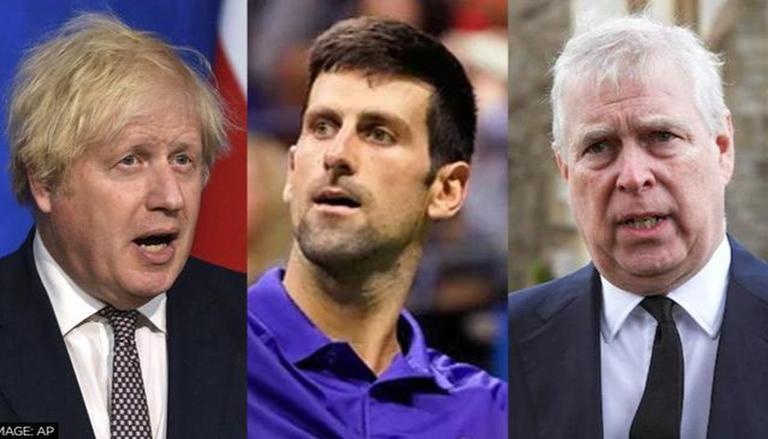
What do Boris Johnson, Prince Andrew and Novak Djokovic all have in common?


They all believed that they were free to do as they wished with little thought of the consequences or how their actions might be felt, perceived, or viewed by others. Sue Barker, the BBC’s tennis commentator and presenter, was spot on when she spoke to Radio 4 about Novak Djokovic being thrown out of the Australian Open because of his lack of vaccination status.

“We wanted the No 1 player in the world. He could have been there by being vaccinated. I know he’s chosen not to and that is his right, but it is also his choice and with that choice come consequences and this is why he is where he is now.”

Novak Djokovic may have felt that he was entitled to play, but his choice not to be vaccinated led others to think otherwise. Boris Johnson may have felt that behind the closed doors of Number 10, there was little difference or distinction between meeting for work or for drinks, but when it became public knowledge against such a stark background of the pandemic and its restrictions, many were aghast that the Prime Minister and his colleagues should think that they were above the rules. Prince Andrew’s story is still unfolding, but with his military titles and patronages already stripped from him, along with the use of his  HRH title, it is clear that the consequences of previous choices and company are profound.

It’s easy for us to point the finger and accuse others of hypocrisy, but in truth how many of us haven’t bent or ignored the rules from time to time to suit our own dreams, desires and convenience?  We all have a natural tendency to put ourselves at the centre of the universe and expect the world to obey us. Sometimes our misdemeanours are frivolous and of no real consequence, but sometimes they become huge, affecting not only ourselves but also others. The Bible calls this waywardness ‘sin’, and perhaps the word sin should be spelt with a capital ‘I’, because so often the causes of sin are the pursuit of ‘me, ‘myself’ and ‘I’. In other words the putting of myself first, spoiling our lives and those of the people around us.

The Christian will be aware that God hates sin, but he loves us and through the loving and selfless actions of Jesus Christ and his death upon the cross, God takes the tremendous pain and consequences of our sin upon himself and offers us, in exchange, the forgiveness of sins, freedom to start again and the hope of a new life – a hope which is eternal.

Let’s be clear, in this life none of us are perfect or ever shall be, but in Christ we are given a new life and a new perspective, one which helps us to be a bit more loving, thoughtful and considerate not only about the people around us but the consequences of our choices and the way we behave.


“And what does the LORD require of you? To act justly and to love mercy and to walk humbly with your God.” Micah 6.8

Christmas – A beacon of light and hope across the years

“None of us can slow the passage of time; and while we often focus on all that has changed in the intervening years, much remains unchanged, including the Gospel of Christ and his teachings.”

With such words, the Queen addressed the inaugural meeting of the Church of England’s General Synod, although due to ill health, her words were spoken by her youngest son Prince Edward. The Queen also acknowledged that for many 2021, had been ‘a time of anxiety, of grief, and of weariness’ as we continue to struggle with the coronavirus and its terrible effects upon individuals and society at large. “Yet the Gospel has brought hope (she declared) as it has done throughout the ages.” The Queen’s words carried a weight not only befitting her status as the Monarch, but of a woman who had also suffered grief during the year and was now contemplating her own mortality, and yet still – the Gospel has brought hope!

There are many occasions in the Gospel story when Jesus also contemplated his own human mortality and spoke to his disciples about it; “I am with you for only a short time” he had said “before I must go and return to the Father” (John 7.33ff), meaning by his forthcoming death upon the cross. But what hope can there be in death? Well, usually not much – but the death of Christ was different, because his very purpose was not just to live but to die for the ‘sins of the world’, bearing within his own body all the terrible consequences of our broken and fallen world caused by our sin and general inability to live as God would wish – that waywardness which not only spoils our relationships between ourselves but with God himself. A waywardness that even knocks the natural order out of balance. However, his death is not so much a sign of God angers towards the human race, but of his great love and compassion for it, for at Christmas, Christians celebrate the fact that God did not remain aloof, distant or uncaring, but in the person of Jesus, stepped into this world of ours as a small baby, that he might live and die for us, so that ultimately we might escape that dreadful ending and be forgiven. Yet the story does not stop there, because his death was not the end; three days later he rose again, and his resurrection (as witnessed by so many of his friends) was the proof that new life was possible for all who put their faith and trust in him, not just in this world but the next, just as he had promised. Therefore – we have hope! A hope that is reflected in the fact that Jesus described himself as being ‘the light of the world’. So, whatever your circumstance, whether it be joyful or sad, hold on to this hope – and light your candles, light up your Christmas trees, and plug in your candle arches as we celebrate our eternal Christmas hope together.

May God bless you all this Christmas and be with you throughout the new year.     


“I am the light of the world. Whoever follows me will never walk in darkness, but will have the light of life.” John 8.12

Remembrance Sunday – Are we in danger of forgetting?

Later this month we will be observing Remembrance Sunday, the annual occasion when we as a nation can come together to mark and remember with gratitude all those who gave their lives serving their country throughout two world wars and other conflicts. This simple act of remembrance is supposed to encourage us to strive for peace as we appreciate the incredible cost of war and the damage that it does to all concerned. Yet it seems as if the world in which we live is more fragile than ever, not only in terms of the environment marked by the COP26 climate conference, but by the volatile nature of world relations. Although we may have got used to the almost routine launching of missiles by North Korea over the seas of South Korea, the world was shocked by the belief that China had launched a hypersonic missile that flew around the world at five times the speed of sound. Senator Lindsey Graham said, “If in fact, the Chinese have developed a hypersonic missile that can deliver a nuclear weapon, it’s a military game-changer when it comes to nuclear forces – God help us all”.  “We have no idea how they did this,” another US intelligence official is quoted as saying. Despite the fact that the Chinese may simply be developing their space technology and that respective nations are still seeking investment and wishing ‘to do business’ with China, the International Institute for Strategic Studies has concluded that its global ambitions are clear, for in terms of tonnage, China has launched more submarines and warships than any other nation, equivalent to the entire Royal Navy every four years.

And yet, as recent events in Afghanistan remind us, military take overs by dictatorial regimes do not always lead to greater freedoms, security, prosperity or peace. We seem to be in danger of forgetting ourselves and the terrible cost of war and hostility. Surely, the heart of the problem is the problem of the human heart! – especially when people, countries and nations seek to manipulate, gain control and take advantage of those around them. The Christian will be mindful of the words of Jesus, who reminded the crowds that “out of men’s hearts, come evil thoughts, .. theft, murder, .. greed, .. arrogance and folly” (Mark 9.21-22). The recent death of Sir David Amess was a tragedy, but his family were absolutely right when they called for a change of heart. “Our hearts are shattered,” they said. “We ask people to set aside their differences and show kindness and love to all”. Jesus had said something similar when he had commanded his disciples “to love each other as I have loved you” (John 15.9). Loving like this requires a real change of heart, mind and perspective; one that does not seek to simply better oneself, but puts the other person first so that collectively we might all live better lives of freedom, love, joy and peace. These are the goals, values and ambitions that we should strive for and those that previous generations fought so hard to protect at great cost. So let us all take a moment to come together this Remembrance Sunday – ‘lest we forget’.  


Be careful … that you do not forget the things your eyes have seen or let them slip from your heart as long as you live. Deuteronomy 4.9