Christmas – Are We In Danger Of Missing The Point?

nativity

There’s nothing quite like a traditional British Christmas! The hustle and bustle of Christmas shopping; the writing of cards and the exchange of presents; the decoration of houses both inside and out, and the turning on of lights on the Christmas tree. Christmas is a time for rest and relaxation, family get-togethers and stories of childhood. A time for mulled wine, cake and mince pies besides a real open fire. It’s a time to fondly remember those who are no longer with us and make plans for all we shall see in the new year. It’s a time to ‘eat, drink and be merry’, ‘peace and good will to all men’ and dream of snow, Rudolf, robins and Father Christmas. And – O yes – there’s church for those who want it!

Of course, there is nothing wrong with any of the things listed above – but if Christmas really is, just about rest and relaxation and time spent with families – then are we as individuals (and indeed as a nation), in danger of missing the point? It would certainly seem so if the Archbishop of Canterbury’s recent conversations are anything to go by. The Telegraph has printed a story where Justin Welby notes that there is a fundamental lack of ‘religious literacy’ in Government circles about those who are religious. They want the church to back them when it comes to promoting basic “British Values” but fail to appreciate that many of these values stem from our Christian religious heritage. In their efforts to understand religious extremism (mainly Islamic) they fail to understand that Christians are also motivated ‘first and foremost’ by their Christian faith and are desperately playing ‘catch up’ when it comes to appreciating the differences between these two religions and others.

So like government, have we all tended to take our ‘Christian Heritage’ for granted, so much so, that like music in a shopping mall it just becomes background noise and largely filtered out? So, in a world which is desperately crying out for peace, have we largely forgotten the ‘Prince of Peace’? Have we forgotten the real meaning of Christmas? I hope not! Christmas is about a loving God, who so loved the world that despite its shortcomings he literally steps into it. Christmas is about a young man who was both at one with his humanity but also his divinity. Christmas is not just about a baby that was born in Bethlehem but the man who died in Jerusalem and rose again. Christmas is all about the one who died for our sins so that we might be forgiven of them. Christmas is all about the start of a process where a loving God puts things right through the power of the resurrection – including us. Christmas is therefore fundamentally a celebration for all about a God who loves us.

So on Christmas Day, we could be left with a lot of empty parcels, that we may or may not, appreciate on Boxing Day, but the significance of Christmas for Christians is that in Jesus Christ every day is Christmas Day and worth celebrating. That’s the point of Christmas!

So may I wish you all a very happy Christmas and warmly invite you to celebrate it with us. God bless you all.


The angel said, “Do not be afraid. I bring you good news of great joy that will be for all the people. Today in the town of David a Saviour has been born… he is Christ the Lord”.’ Luke 2.10-11
No Greater Love Than This …..

dsc_0986

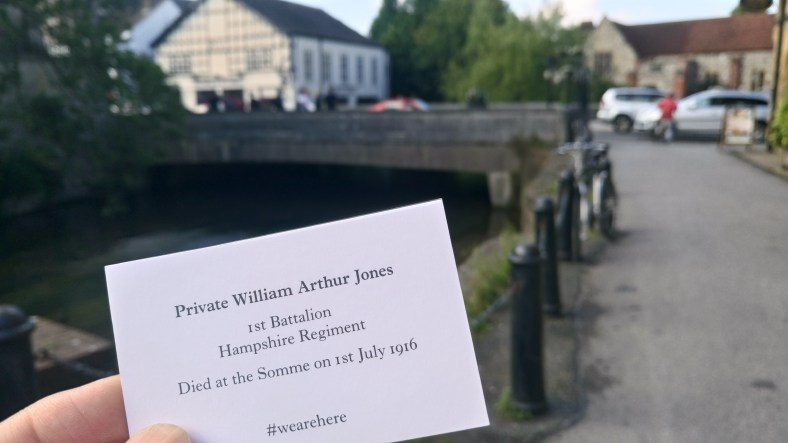
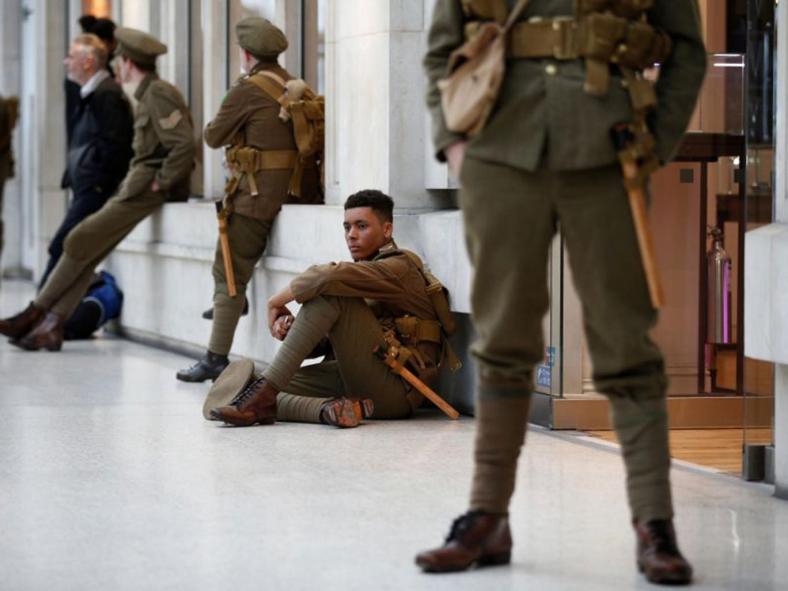
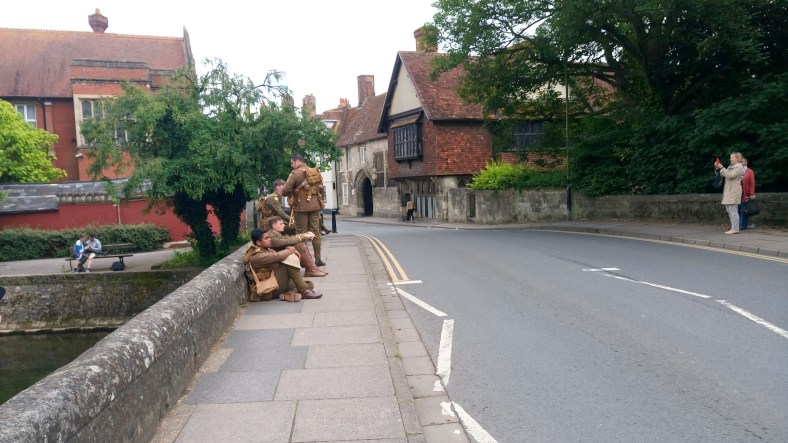
“Some of us remembered that sunny last evening in June, when we had assembled with such high hopes in the trenches, the day before the Somme offensive began. How we had jested and joked, even collecting pieces of chalk wherewith to label as our trophies the guns we were so sure of taking! Some of us too, remembered the next night, when, with every officer but one a casualty, and our dead hanging thick on the German wire, we had been withdrawn, sweating and shaking and shattered. It took us three months to recover from that blow.” November 1916

These words are taken from Twelve Days on the Somme by Sidney Rogerson, and although they make uncomfortable reading, I think it’s right, upon this 100th anniversary, that we should be reminded of what life was actually like for those soldiers who endured that particular conflict.

The first war, was of course described as ‘The Great War’, the war to end all wars and with 20, 000 British troops dying on the first day of that particular battle, we can see why many thought that they had already paid a sufficiently high price to ensure the nation’s peace and trusted that surely, the world wouldn’t fall into such a sad and terrible situation again – and yet as we all know barely 30 years later the Second World war was upon us, and there have been various other conflicts since.

soldiers-wearehere-somme-reuters

We are mindful of the fact that Jesus said Greater love has no one, than he lay down his life for his friends” (John 15.13) and its significance for those who have died in conflict defending their country and way of life is obvious. Yet we need to remember that the context of this verse is not war, death or pain – but love, for it immediately follows the command to love one another as I have loved you’ (John 15.12). Military people know the importance of following commands and this is an important one for us all, for we must never allow anger, hatred or pain to define us as human beings. For if we do, then we have allowed these sentiments to rob us of a precious part of our humanity. ‘Loving God and our neighbours as ourselves’ doesn’t mean that we shouldn’t fight for what we know to be right or make sacrifices, but we do so precisely because we wish to preserve all that is right, decent and honourable. This sometimes means that we have to lift ourselves above a basic ‘tit-for-tat’ mentality (which may be no more than a basic desire for revenge) and strive to reach those higher standards and ideals that we cherish and wish all people to live by. The men who died upon the Somme and other such conflicts, ultimately did so because although they hated war, they were striving to preserve our way of life, freedom and peace. They were fighting for something greater than themselves. To this extent, their selfless act echoes the one made by Jesus when he died upon the cross, the one dying for the many, but achieving in his case for each one of us, the forgiveness of sins and salvation. It certainly wasn’t anger, fear or hatred which drove him to the cross but love, which is why we remember him and all those who have died in a similar selfless fashion with the greatest of respect, praise and gratitude. ‘The Great War’ may not have been the war to end all wars, but we value and respect all those whose efforts tried to make it so. Please join us this Remembrance Sunday as together we commemorate all those who have laid down their lives for us.


Greater love has no-one than this, that he lay down his life for his friends.” John 15.13


dsc_0990


The Paralympics, ‘The Last Leg’ And The Freedom To Be Ourselves

003-2016-09-18-bethany-firth

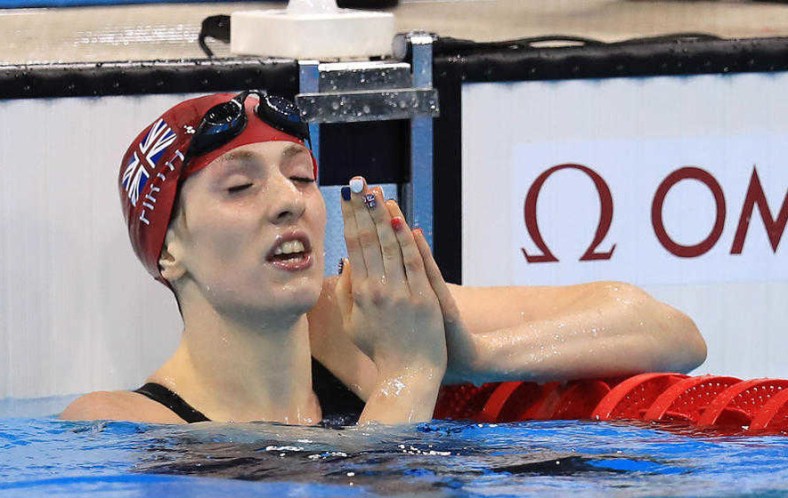
Bethany Firth – Celebrates having won three gold medals and a silver in the S14 classification at Rio 2016

What a joy the Paralympics have been! The Olympics were glorious, but the Paralympics have been truly stunning and inspirational. Athletes that many of us only first heard about at London 2012 have now become household names – Hannah Cockcroft, Jonnie Peacock, Ellie Simmonds, Dame Sarah Storey and Richard Whitehead have all lived up to their billing at Rio 2016 and deserve the much heralded superlative of ‘superhumans’. At the time of writing the medal tally for Team GB in Rio has surpassed that of London 2012 and a whole new bunch of athletes have been introduced to the world.  The high-lights programme with Claire Balding combined with the comedy and sense of fun that comes withThe Last Legteam (Adam Hills, Josh Widecombe and Alex Brooker) have helped us all, without being patronizing or sentimental, to look beyond the disability and see the athletes for the people they really are. This doesn’t trivialise the tragedy and trauma that some people experience but celebrates their strength of character, the human spirit and their various accomplishments in the light of it.

However, it was the theme tune of The Last Leg permeating the sport which really caught my attention. This rap song called ‘Harder than You Think’ performed by the hip hop group Public Enemy contains the phrase ‘thank you for letting us be ourselves’ and it got me thinking. Every parent tries to encourage their child to be independent, to learn to think for themselves, stand up for themselves and be creative rather than to simply ‘go with the flow’ or be negatively influenced by others. We hate it when people try to coerce us into being something that we are not, either by steering us down a certain path or restricting our choice or freedom of expression. We resent being ‘put in a box’ and told that we can’t do something when we think we can. Essentially what we hate is any attempt to manipulate us or restrict our freedom to be ourselves. Although parents can (and should) offer advice and guidance, the willingness to let your child be free, to find their own way and lead their own lives is really an act of love – but it’s risky, because with freedom of choice comes the possibility of making mistakes.

Sadly, the world in which we live isn’t perfect, because alongside the many joys of life are sadness and sorrow as people behave badly and make mistakes. The Christian perspective is one that says that although God initially made the world perfect, he also graciously and kindly gave us human beings the freedom of thought, expression and choice; he gave us the freedom to be ourselves because that was the loving thing to do. God no doubt saw the future and understood the risks but he willingly gave us the freedom to be ourselves precisely because he isn’t a dictator and neither are we his mindless slaves or robots. The incredible thing is that despite our many failings and mistakes, God still loves us and right from the start had a plan to put things right, and that plan – was Jesus! God so loved the world that he gave his one and only Son to death upon the cross, so that by that terrible process, we might be forgiven of our sins and spared the consequences of our actions. This shows just how deeply God loves us and the true extent to which he is willing to go in order that we might have the freedom to be ourselves. So whatever challenges in life we personally face, let us like our inspirational Paralympians, be ourselves to the best of our ability.


“For God so loved the world that he gave his one and only Son, that whoever believes in him shall not perish but have eternal life. John 3.16


The Olympic Story Behind Christ The Redeemer!

Christ the Redeemer 002

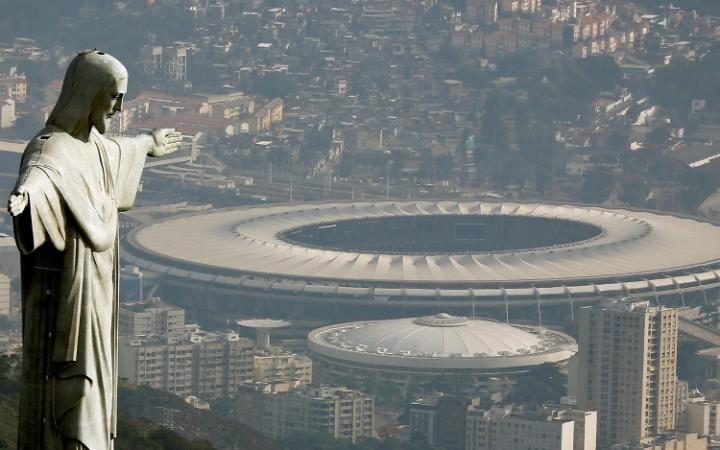
What a wonderful Olympics it has been! After months of worry and uncertainly about the Stadium, the Zika virus and political unrest, Rio 2016 has been a great success. Certainly from a British point of view there has been a lot to cheer about – not only have the women’s eight matched the men with gold medals in the rowing for the first time ever, but Max Whitlock has become Team GB’s first ever gymnastics champion (twice!); Justin Rose became the first man to win the golf at the Olympics since it was last played in 1904 and Andy Murray put us all through the mill as he successfully defended his tennis title first won at London 2012. At this time of writing, the athletics is well underway and Team GB find themselves, somewhat surprisingly second on the medal table in front of China – but will it last? But of course, the tales of inspirational human endeavour aren’t simply tied to those who’ve come away with a medal but to all those who have done their best to be ‘the best they can be’ despite the odds (who can forget the efforts made by the Refugees Team, competing under the Olympic flag) and all such athletes should be proud. However, the sporting arena is not the only source of wonder and appreciation – the Brazilians have been commended for their warm welcome, hospitality and sense of fun, along with their beautiful country, ranging from the beautiful Copacabana beach at Rio to the magnificent statue of ‘Christ the Redeemer’ looking down upon the city from the Corcovado Mountain.

Although the statute isn’t the largest statue of Jesus to be found in the world it is considered to be an ‘art-deco’ masterpiece and is hugely iconic of Rio de Janeiro and symbolic of Brazil’s Catholic Christian heritage. The statue is 98 feet tall (not including it’s 26-foot-tall pedestal) and weighs 635 tonnes. There were several designs initially proposed but the familiar statue we recognise today with its open arms (measuring 92 feet wide) was specifically chosen to represent the love of Christ for the world who will warmly welcome and embrace all who come to him. The statue was originally built in 1922 and took 9 years to complete, and was officially declared one of the ‘New Seven Wonders of the World’ on 7th July 2007.

This wonderful statue of Jesus is of course called ‘Christ the Redeemer’ but why and what is so special about redemption? Well, redemption literally means ‘buying back’ and was often used in the ancient world of slaves buying their freedom or having it bought for them. One of the greatest acts of redemption in the Bible (and which has coloured the way this word is used ever since) was when God bought his people out of slavery in Egypt to give them freedom in the promised land. The problem was, that over the years the people found themselves repeatedly bound as slaves by successive regimes and therefore in need of a ‘new redemption’. The early Christians understood this in the most radical of ways, they saw it as pointing to the poverty of their own human condition, they were constantly ‘in slavery to death and sin’. What they needed was a redeemer! Someone who would be able to pay the price for their sin and lead them to freedom and new life. That person was Jesus! His self-giving, sacrificial death upon the cross was truly Olympic in its magnitude, the most dramatic, inspiring and generous gift of God’s love the world had ever seen. His death was the price paid for our ‘redemption’, the innocent dying for the guilty, but of course the Gospel story doesn’t conclude with Christ’s death but his resurrection! His rising from the grave was the first sign, evidence and promise of future hope and life everlasting. A precious gift warmly and freely given to anyone who wishes to receive it and puts their faith and trust in Jesus as their personal Lord, Saviour and Redeemer. The Olympics may be glorious; the games have been thankfully largely harmonious, and the athletic achievements truly inspirational – but the story behind the Christ the Redeemer statue is even more so and gives us all the chance of reaching our full potential and ‘being better than we can be despite the odds’.


We are justified freely by his grace through the redemption that came by Christ Jesus. Romans 3.24


Politics, Leadership And Authority – What A Responsibility!

Tony Blair

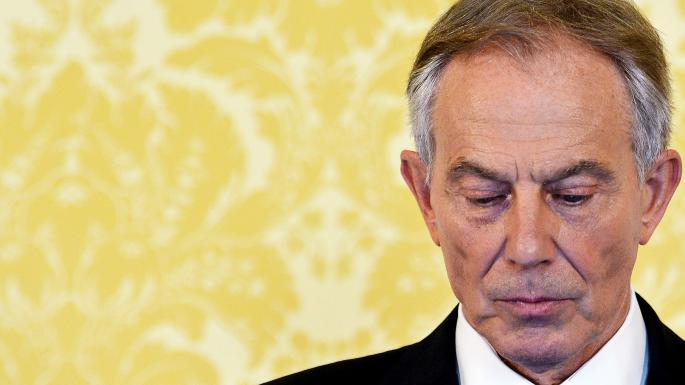
They say ‘a week is a long time in politics’, but it’s taken seven long years for the Chilcot Report to be published. The Inquiry into the Iraq war may have been announced by Prime Minister Gordon Brown on 15th June 2009 but the final report published on the 6th July 2016 with its ‘damming conclusions’ about the ‘decision to go to war’ and upon what basis the nation did so, immediately shone a light, once again, upon his predecessor, Tony Blair. The media were waiting with eager anticipation as to what he would say – and whether he would apologise for the deaths of 179 British Servicemen and many others killed during the conflict.

The pros and cons of such a debate are far too long and complex for me to consider here, but they do raise some interesting questions about power, leadership and authority, and raise the conundrum of what do we do when the people that we vote into government (often with large popular majorities), do things that we rather wish they didn’t? Frequently the cry is for firm leadership – but what happens when our leaders firmly direct us in the wrong direction? Understandably many people will have a view on Tony Blair, and hindsight as they say is a wonderful (and occasionally cruel) thing, but perhaps it should be noted that despite his many failings Chilcot does not say that Tony Blair wilfully deceived Parliament, rather that he honestly believed the flawed intelligence that had been given to him, and despite many people marching in protest against the war, polls showed that at the time, public opinion was overwhelmingly in support of military action. All of which goes to show how easy it is for us a nation to be led up the garden path, unless we ensure that all the appropriate checks and balances are in place. This is all salient, because once again we find ourselves as a nation at a crossroads, and once again ‘firm leadership’ is called for as the Conservative Party elects a new leader and Prime Minister. In homage to Margaret Thatcher, Teresa May and Andrea Leadsom are already being touted as the new ‘iron maidens’ for our generation but they will need to be careful that in their desire to provide firm and positive leadership in the light of the nation’s decision to leave the EU, that they do so collegiately and with the full support of their cabinet, colleagues and party members or else they too in future years could find the swathe of public opinion against them. Firm leadership is not always about getting one’s own way, but taking sound advice and acting in the best interest of others.

It’s interesting that there is a sober lesson to be the learnt from the pages of the Bible, because at one point the people of Israel were so unhappy with their current system of leadership, that instead of the historic train of prophets ruling over them, they demanded a king so that they might be like all the “other nations” having a king to govern them and go out before them and fight their battles (1 Samuel 8). The prophet Samuel saw this as a rejection of God’s voice and authority administered via the prophets and warned them about all the disadvantages of having a king and the possible corruption that came with it, but the people wouldn’t listen. So Samuel prayed to God about it who graciously let the people have their way. The lesson is that sometimes God grants us the very thing that we wish for, but then not only do we have to take responsibility for our actions but we sometimes also have to live with the consequences.


And what does the LORD require of you? To act justly and to love mercy and walk humbly with your God. Micah 6.8


EU Referendum – Should I Stay Or Should I Go?

eu referendum shutterstock_392967421

In the light of the EU referendum on the 23rd June, “The Clash’s” 1982 song Should I Stay or Should I Go (complete with backing vocals in Spanish) seems to sum up the mood of the moment as people struggle to decide which way they will vote ( ‘this indecision’s bugging me’ – esta indecision me molesta ). How do we decide? The problem is, of course, that a good case can be made either way. Most people would consider the ‘Common Market’ to be a good thing and initially thought that this was what they were joining, but over the years the EU has changed beyond recognition, becoming a vast bureaucratic machine (some would say empire) that has power and influence over most aspects of common life, from weights and measures, to rights of employees, to the environment. Over time, the size of the EU has also changed from the original six nations in 1957, to nine in 1973 when the United Kingdom joined, to the current twenty-eight, with other nations such as Turkey wanting to join at some point in the future. Many of the benefits have been considerable; cheaper products; greater choice and opportunity; stronger ties with European partners leading to a greater sense of mutual understanding, co-operation, stability, security and peace. The economic, corporate and personal opportunities have also been immense with the free movement of individuals across the continent seeking work and a better way of life.

Equally, as ‘the club’ grows bigger the disadvantages have become more apparent (and some would say irritating). Britain’s influence isn’t what it once was as it tries to negotiate with 27 other partners. The ‘one size fits all’ approach of Brussels doesn’t always seem to make allowance for exceptional or national circumstances, resulting in a perceived lack of sovereignty and a reduced ability to determine one’s own future (or even manage one’s own borders).

So, what IS the answer? Well, in some ways it’s hard to see ‘the wood for the trees’ as nobody really knows what life would be like if Brexit occurred. There are naturally a lot of fear stories and some things said which simply don’t appear to be logical. Why, for instance should our security arrangements be changed, because we decide to make the political and commercial decision to withdraw from EU? Collaborative working in this area seems only natural and no one is seriously suggesting otherwise.

David Cameron and Boris Johnson might be clashing with one another but in reality it seems to me that we have two choices! We either stick with the tried and trusted with all its imperfections and try to reform things for the better from within the EU, recognising the value of international co-operation – or we say that the EU is impossible to reform and has become simply too big for its own good, weighed down with its own bureaucracy hindering the creative talent, and well-being of individual nations such as ours. It’s a big decision and a difficult choice but it’s still our choice, and so I would like to urge you to do your best and think around the issues, be bold, courageous and use your democratic freedom to the best effect and vote. Vote not just for yourself or for what will benefit you in the short term, but vote for your children, grandchildren and their children, vote for future generations – what will give them the best chance of living in peace and prosperity? Vote for the nation!


“For I know the plans I have for you,” declares the Lord, “plans to prosper you and not to harm you, plans to give you hope and a future. Jeremiah 29.11


What Can We Learn From The Archbishop’s Identity Crisis?

The leaking of the Panama Papers from one of the world’s most secretive companies, a law firm called Mossack Fonseca last month caused a great deal of pandemonium in the press and society as it was revealed how the rich and powerful used so called tax havens to hide their wealth and reduce the amount owed in tax to their respective countries and governments. Shocking revelations were made worse in the UK by the fact that our Prime Minister, David Cameron was shown to have directly benefited from such arrangements made by his late father, in the form of an offshore investment fund called Blairmore Holdings. Despite the fact that no law had been broken and some taxes had been paid, the public perception was a damaging one, that somehow the Prime Minister had unfairly benefitted from some ‘dodgy’ tax arrangement which wouldn’t have been available to the vast majority of ordinary people living on more modest incomes and without power and influence. A rather frantic and clumsy ‘damage limitation’ exercise ensued with the Prime Minister ultimately encouraged to publish his tax return in the name of ‘open transparency’, forcing other political leaders to do the same.

2016. 05

All this was in stark contrast to another astonishing story to hit the headlines, namely the fact that the Archbishop of Canterbury, Justin Welby’s father was not the man he thought he was (Gavin Welby) but the late Sir Anthony Montague Browne, the last private secretary to Sir Winston Churchill. What made this revelation all the more astonishing and poignant was that it came as a complete surprise not only to Justin Welby, but to Lady Jane Williams, his mother (although she instantly acknowledged that a brief liaison with Anthony Browne had taken place). At first glance the story seemed incredible, but upon closer inspection it became readily understandable. In fact, it was a human story that no doubt many different people and families could relate to, for as the Archbishop himself acknowledged “My own experience is typical of many people. To find that one’s father is other than imagined is not unusual. To be the child of families with great difficulties in relationships, with substance abuse or other matters, is far too normal.” The amazing openness and transparency of the Archbishop and his family appeared to be in great contrast to the other events of the week, but did nothing to lessen the impact and turmoil that this particular revelation must have had upon him and his family, who still have to come to terms with and be reconciled to it and all its implications. However, the extreme openness, honesty and candour of the Archbishop demonstrated that this man can be trusted – and trust in any walk of life is a precious commodity.

Jesus of course once described himself as being ‘the way, the truth and the life’ (John 14.6), and it’s an appreciation of this truth which gives the Archbishop such confidence, not just about who he is ‘in Christ’ but about the way that he should lead his life. This confidence springs from an understanding that he is greatly loved, not just by his family and friends but by God himself as his loving heavenly father – a love demonstrated through the actions of Jesus and his death upon the cross cultivating trust. One might expect that the recent revelation might make the Archbishop question his identity, but not a bit of it, for as he himself put it:

At the very outset of my inauguration service three years ago, Evangeline Kanagasooriam, a young member of the Canterbury Cathedral congregation, said: “We greet you in the name of Christ. Who are you, and why do you request entry?” To which I responded: “I am Justin, a servant of Jesus Christ, and I come as one seeking the grace of God to travel with you in His service together.” What has changed? Nothing!

Perhaps we should all from time to time, take stock of ourselves and think about who we are – what makes me, me? What is my identity, am I trustworthy and in whom do I place my trust?


Jesus said “Do not let your hearts be troubled. Trust in God; trust also in me.” John 14.1


If Seeing Is Believing – Why Don’t We?

On February 11th 2016, scientists around the world jumped for joy as they announced that they had detected ‘Gravitational Waves’ produced by the spinning and collision of two black holes more than a billion light-years from the Earth! The news was greeted with euphoria as it finally confirmed the prediction made by Albert Einstein 100 years ago in his Theory of General Relativity and supported by Professor Stephen Hawking’s work relating to black holes. The discovery was hailed as a landmark because it will revolutionise the way that we think about the creation of the universe and our continued understanding of it. The discovery is remarkable because Einstein himself had thought that gravitational waves would be too weak for anyone to detect – and yet the scientists have done it, and the evidence is there for all to see. Seeing is believing!

7a90021fd62863e078f75f1b1f10ca05

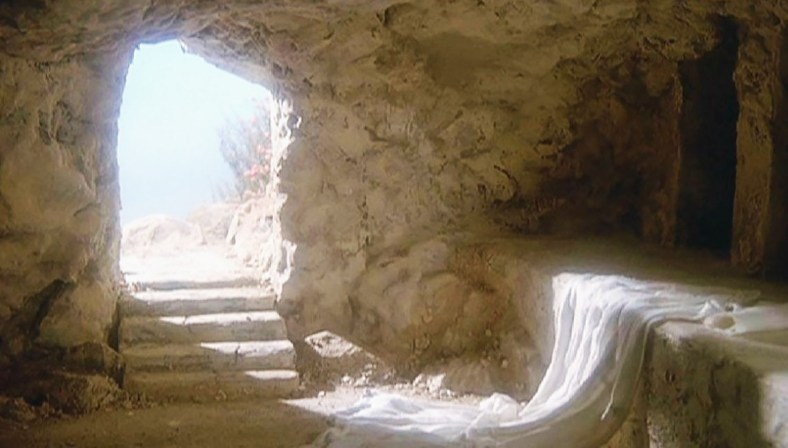
Yet, however great the discovery of gravitational waves might be, it surely pales into insignificance compared to the discovery that was made by some women two thousand years ago, when they found that the tomb used to place the dead, crucified body of Jesus was empty, and that Jesus was indeed alive. It sounds completely astonishing, astounding and fanciful, and just the sort of thing that might be the product of the over active imaginations of some rather hysterical, grief stricken women! In fact, it’s a story that could be easily dismissed if it wasn’t for the fact that their story was corroborated by others – many others, and neatly summarised by the Apostle Paul in his first letter to the Christians at Corinth (I Corinthians 15.3-8). There were of course the women, but then there were the disciples, and Peter; a crowd of 500, James (the brother of Christ and later leader of the church in Jerusalem), the two disciples on the road to Emmaus and finally Paul himself, but perhaps the most telling, poignant and significant encounter was with Thomas. Thomas had been absent when the risen Christ had first met with his disciples, and upon hearing their exhilarating news, he refused to believe it, saying, “Unless I see the nail marks in his hands and put my fingers where the nails were, and put my hand in his side (the dead body of Jesus had been speared to prove death), I will not believe it.” (John 20.25). Like many others, I am so glad that this account has been recorded for us, because it shows a man who would not allow his heart to rule his head but wanted tangible proof of a story that would have seemed just as incredible in his day as it does in ours. Strikingly, when the Lord eventually appeared to Thomas, and he was invited to physically examine Christ’s wounds, we are not told that he did so, instead he immediately knelt before Jesus, proclaiming him to be “My Lord and my God”. Seeing was believing and seeing Christ before him was more than enough! Every doubt, worry and anxiety was blown away by this incredible and unique experience.

at-his-resurrection

The problem for us is, that we weren’t there, and many therefore refuse to believe. We will believe in the existence of gravitational waves simply because we are told by scientists that we have empirical proof, but what could be more substantial than the testimony of those who saw the risen Christ with their own eyes, embraced him, ate with him and were able to share in other forms of fellowship with him? These people were witnesses and many were prepared to die themselves on the basis of their experience and what they had seen with their own eyes. But we may protest, and therefore shout all the more loudly that rising from death is just impossible for human beings, to which my answer (along with that of so many others) is – precisely. This man, this ‘Jesus of Nazareth’, although fully human, was more than that – he was also divine. He was as the Bible puts it, ‘the Son of God’. So, unless we are prepared to ignore all the evidence to the contrary, we have to accept that this event too was of cosmic significance and totally revolutionises the way we look at the universe and our place within it.
May I take this opportunity to wish you all a very happy and meaningful Easter.


“Put your finger here; see my hands. Reach out your hand and put it into my side. Stop doubting and believe” John 20.27


Let’s Celebrate The Prince Of Peace This Christmas

prince of peace_t_nv

In the light of recent atrocities carried out around the world and especially those in November carried out in Paris in the name of the so called ‘Islamic State’, it’s easy to see why some people take the view that it’s religion which is the cause of all evil, suffering and division. It’s especially easy to adopt this perspective if you have no religious faith of your own and yet wish to find some sort of convenient explanation as to why there should be so much sadness, suffering, anger and hate in the world, whilst at the same time distancing oneself from it. Unfortunately this view is rather too simplistic and doesn’t actually tell the whole story. For instance, it doesn’t adequately explain why so many of the victims of ‘Islamic State’ have actually been Muslim, or why some of the recent Islamic extremists weren’t particularly religious until they became radicalised. Neither does it recognise the vast amount of good that is done by people of faith and particularly by Christians up and down the land. The truth is that although none of us are perfect, there are some truly horrible people in the world, who at the slightest insult will do all that they can to ‘get even’, or take advantage, using whatever means, power or influence they have to gain control and satisfy their own wicked ends, regardless of the cost to others or the number of people they hurt. When sufficient individuals gather together in such a way, they have the means to become an expression of pure evil.

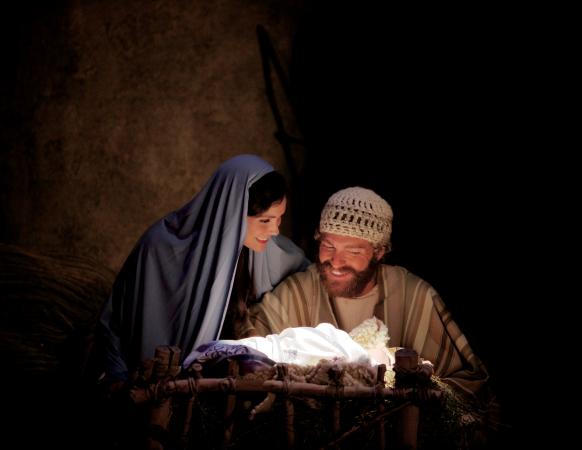
However, CHRISTMAS IS A REMINDER THAT THE WORLD DOES NOT HAVE TO BE LIKE THIS! At Christmas, the Christian celebrates the wonderful truth that ‘Almighty God’, the Creator of the universe, steps into his creation. He literally stepped into this forlorn and broken world in the person of Jesus, arriving not as a conquering king, tyrant or dictator, but as a tiny, fragile, vulnerable little baby; not as a superman immune to our trials and tribulations, but as a human being, walking, talking and experiencing the joys and pains of life just like each and every one of us. His ambition therefore was not to control the world or coerce its inhabitants in any way, but to transform it, starting with its people – by giving each and every man, woman and child the possibility of a new start and a new life ‘in Christ’. This is done by a simple act of repentance, a true and genuine act of contrition for every bad thing that we have ever said or done which spoils our lives and those of the people around us. It is not simply a case of saying sorry (as important as that is) or trying to be good (for who can be good enough?). It is done by putting one’s faith in the person of Jesus, acknowledging him to be our Lord and Saviour who dies for us upon the cross wiping out our sin, and indeed the sin of the world, and offering us forgiveness in its place. This is an act of pure and unadulterated love on the part of God, who ‘loved the world so much that he gave his one and only son that whoever believes in him should not perish but have eternal life’ (John 3.16). This is not simply an act of atonement but of peace, for how can we hate ourselves or the people around us if we know that God has expressed his love for us in the person of Jesus and dies for them, offering the same promise of hope, joy and peace to us all? This is truly GOOD NEWS and can make a world of difference to the world in which we live. No wonder Jesus is called the ‘Prince of Peace’!


For unto us a child is born…. Wonderful Counsellor, Mighty God, Everlasting Father, Prince of Peace’. Isaiah 9.6


Fury, Faith, Fortitude And Forgiveness – Reflections On Remembrance Sunday

Edith Cavell

Edith Cavell

As our nation turns once again towards Remembrance Sunday, we can note that 2015 has certainly been a year of commemoration, celebration and quiet reflection, marking as it did both the 70th anniversaries of VE Day (Victory in Europe Day, 8th May 1945) and VJ Day (Victory over Japan Day, 15th August 1945) along with the 75th anniversary of the Battle of Britain. The latter was marked by the magnificent sight and sound of 40 Spitfires and Hurricanes, and a single Blenheim, patrolling our coastlines once more back in September. No doubt there are many more significant occasions, notable events and distinguished acts of service that we as a nation should do our best to remember and take pride in. Not that we glorify war, because war is always a terrible thing and the cost of it purely in terms of human suffering is always immense, and yet despite its fury, we pay tribute to all those whose stoicism, faith and fortitude preserved our freedom, values and British way of life, remembering especially those who died in the process – and to this end I would like to invite and encourage you to join us at one of our Remembrance Day Services across the Benefice as we remember those who gave their lives in service of the nation, and give thanks to God for the freedom we enjoy.

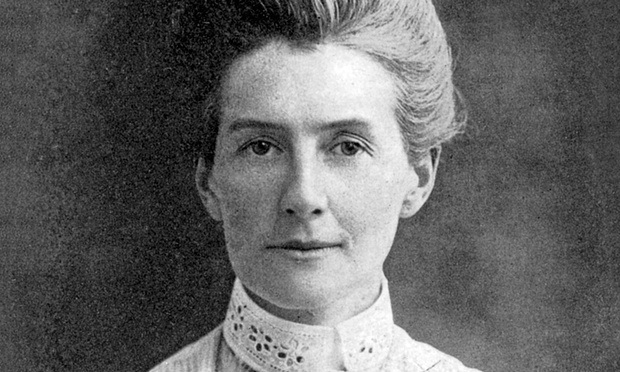
Sadly our world is far from perfect, and when evil raises its ugly head we are constantly challenged as to what our response should be. It is Edmund Burke who is credited with the famous saying that “the only thing necessary for the triumph of evil is for good men to do nothing” and although it’s hard to pin down a definitive version of that phrase or even its attribution to Burke, we all know what it means. Ultimately, we all need to be prepared to ‘stand up and be counted’, for when it comes to challenging evil we appreciate that we can’t always pass that particular responsibility on to others. One such person was Edith Cavell, the World War 1 British nurse who is celebrated for saving the lives of soldiers in Brussels from all sides without distinction. As a nurse she refused to ignore the suffering of the wounded soldiers she came across regardless of their nationality, treating them all equally as human beings. However, her medical impartiality didn’t mean that she was neutral as far as the war effort was concerned, for with the help of Belgian and French colleagues she helped over 200 Allied soldiers escape from German-occupied Belgium. Eventually she was arrested and found guilty by a German military court of ‘assisting men to the enemy’, culminating with her execution by firing squad on the 12 October 1915. The railway carriage or ‘Cavell Van’ which brought her body back to England has recently been on display outside The Forum’ in Norwich to mark the centenary of her death. However, on the evening before she died, Edith Cavell wrote in her diary some very moving words. She wrote Standing as I do in view of God and eternity, I realise that patriotism is not enough. I must have no hatred or bitterness towards anyone.”

Edith Cavell was a Christian woman who was magnanimous in death, even forgiving her executioners. Her actions were no doubt influenced by the example of Jesus, who had in life exalted his disciples not only ‘to love God and your neighbour as yourself’ but their enemies too, and forgave his executioners even as they put him to death upon the cross. As previously mentioned, war is a terrible thing and sadly sometimes can’t be avoided, but it shouldn’t be the war or acts of violence which define us. It should be our attitude to life and the way we choose to live it which should be our lasting epitaph.


Do to others as you would have them do to you. Luke 6.31