Russia and the United Kingdom – a tale of two elections!


Is it sensible to believe in the Resurrection?


What can ‘Mr Bates v The Post Office’ teach us about Lent?


Have you taken down your Christmas decorations too soon?


What are YOU celebrating this Christmas?


Earthquakes, floods and famine – “There but for the grace of God go I”

The recent tragedies in Morocco and Libya have been truly heartbreaking. With 3000 people dying as a result of the Moroccan earthquake, and the possibility of 20,000 people dying in the Libyan floods, the amount of human suffering is hard to imagine or comprehend. It’s no wonder that many traumatised victims, trying to make sense of things and come to terms with their grief, have been recorded by journalists as simply saying ‘It’s the will of God’ or ‘Allah wills it’, which leaves the rest of us safely looking on from the comfort of our homes thinking, ‘well, thank God I wasn’t caught up in that’ or ‘there but for the grace of God go I’. But now, of course, the difficult questions arise! Why aren’t buildings built to be more earthquake resilient, and why aren’t dams which are known to be faulty immediately repaired? Surely a lot more lives could have been saved if only they had been. Perhaps part of the problem is a fatalistic mindset, which encourages people to believe that certain tragedies are an ‘act of God’ and ‘what will be will be’. If this is your attitude, then why should you bother learning from your mistakes or from tragedy, because effectively all responsibility is taken out of your hands and left in the hands of the divine. But this isn’t a biblical perspective, because despite the fact that the world is imperfect (as so clearly demonstrated by recent events) God cares! “The Lord is good to all; he has compassion on all that he has made” (Psalm 145.9). So, instead of thinking that God is aloof, uncaring or absent, we should think of him as being deeply concerned and hands on, working through the kind and compassionate words and deeds of those who act in his name and struggle to bring assistance and relief to the needy. In a sense, this mirrors the Gospel itself, for God has always sought to step into the world rather than step out of or away from it. This is most ably demonstrated in the person of Jesus, who taught his disciples to love God and their neighbour as themselves and who by his death, demonstrated a selfless love for the world so that it might be renewed, restored and forgiven of sin. Although we might tend to think ‘there but for the grace of God go I’ when it comes to earthly tragedies, in the light of sin the Gospel message might be summed up in the words ‘there but for the grace of God, goes God’ achieving for us something that we couldn’t possibly achieve for ourselves.

So, in the face of calamity, whether it be at home or abroad, let us hold on to the fact that God’s love and compassion is with us, and echo and demonstrate it in our own thoughts, words and deeds.

Cultivating a friendship which inspires

You don’t need to be a fan of Rugby League to appreciate and be inspired by the tremendous friendship between Kevin Sinfield and his former Leeds Rhinos team-mate Rob Burrow. When Rob Burrow was diagnosed with Motor Neurone Disease in late 2019, Kevin stuck by his friend and was inspired to do whatever he could to raise money for MND charities. In 2020 he ran seven marathons in seven days and in 2021 he completed a run of 101 miles in 24 hours. Last year he completed an Ultra 7 in 7 Challenge when he ran seven back to back ultra-marathons (an ultra marathon being a run longer than the standard marathon length). His latest triumph was on Sunday 14th May 2023 when he completed the first inaugural Rob Burrow’s Leeds Marathon when he actually pushed Rob the 26.2 miles in a specially adapted wheelchair, lifting him out of the chair as they finally crossed the finish line together. So far Kevin Sinfield has raised well over £8 million for charity, which is not only a remarkable story about good coming out of adversity, but a wonderful celebration of their friendship.

The Bible has a lot to say about ‘running the race’ and ‘going the extra mile’, just as it does about friendship, with such examples as those of David and Jonathan, and Ruth and Naomi whose love, compassion and loyalty bound them together through ‘thick and thin’ as good friends regardless of what life and dire circumstances had brought them. The Christian will be aware that this was modelled in Jesus’ own life and taught by him when he told his disciples that they and all who put their faith in him could be his friends if they did what he commanded – and what was it that he commanded? It was that they should ‘love one another as I have loved you’ (John 15.12) in other words selflessly, sacrificially and completely, often putting the needs of the other person first, and before themselves. This was ultimately demonstrated by Jesus himself when he died upon the cross.

There is so much sadness and suffering in the world that it often weighs us down and depresses us but let us also lift up our heads and be inspired by the good examples of love and friendship that we see and be inspired to cultivate such qualities and friendships in our own life and the people we meet.  


A friend loves at all times, and a brother is born for adversity. Proverbs 17.17

‘God save the King’ – A prayer for the Monarch & the Nation

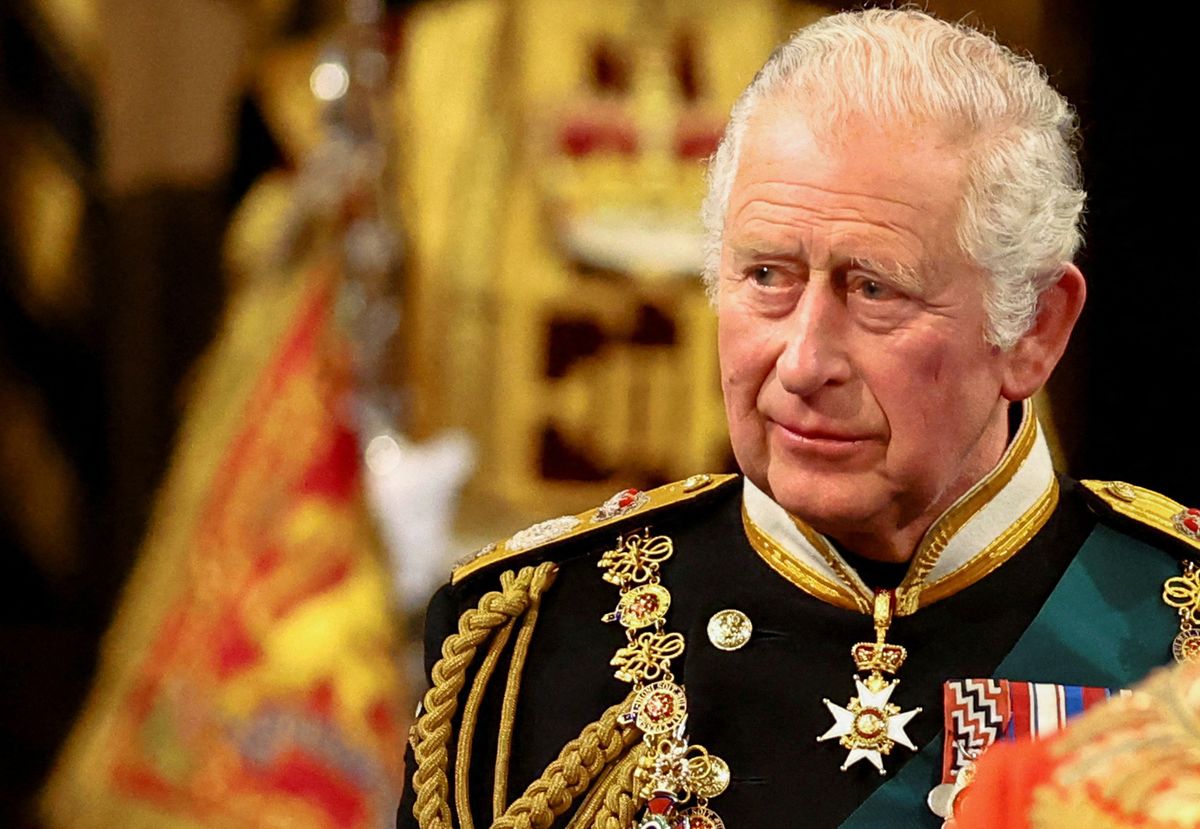
In just a few days’ time the nation will be rejoicing as we collectively watch, witness & celebrate the coronation of HRH King Charles III at Westminster Abbey. It will no doubt be a grand occasion full of ‘pomp and circumstance’ which is such a feature of British Royal occasions (and broadcast around the world). The mixture of pageantry and religious symbolism will bring the service to life and mark the King as both the head of state and church in one incredibly significant, self-defining moment. Alongside the presentation of the King, the swearing of oaths and anointing, the moment of enthronement will culminate not only in the singing of the choir but by the public cry of ‘God save the King!’ with the congregation joining in a rendition of The National Anthem. However, although most will recognise The National Anthem to be a prayer said on behalf of our King, not many will appreciate that it’s also a prayer for ourselves and the nation we are part of, for although the antiquated language of the second verse may make many of us feel uneasy about the ‘scattering of enemies’ and the ‘frustration of their knavish tricks’, it has to be said that these words uttered in the light of the current war in Ukraine has a European poignancy which we haven’t seen or felt for some time. But it is of course, the third verse with its exhortation that the King might ‘defend our laws and ever give us cause, to sing with heart and voice, God save the King’ which strikes at the heart of our national life. Although we recognise King Charles to be our Sovereign, we also recognise that it is Parliament which guides and directs our daily living and of which the monarch is its figurehead – and yet the King’s soft power both at home and abroad is tremendous.

It’s a common misconception that religion and politics shouldn’t mix, but the coronation demonstrates how both are deeply ingrained in our society, shaping and making us the nation state that we are – and even with the UK becoming an increasingly pluralistic, multicultural society, the truth of this statement will only become more profound, not less.

The Christian will be aware that Jesus told his disciples that the greatest commandment was to “ ‘Love the Lord your God with all your heart and with all your soul and with all your strength and with all your mind’ and to ‘Love your neighbour as yourself’ ” (Luke 10.27) because loving the first helps to achieve the love of  the second. This motivating truth should be reflected in all aspects of our society, whether it be personal or political, whether we be ‘prince’ or ‘pauper’, for as the Bible also reminds us “ ‘what does the Lord require of you? To act justly and love mercy and to walk humbly with your God’ ” (Micah 6.8) and this is especially true, I would suggest, if you happen to be King!

So as we come to celebrate the coronation of King Charles III, let us pray not only for him but for our nation and ourselves as we sing The National Anthem.

God save the King!


Kings detest wrongdoing, for a throne is established through righteousness. Proverbs 16.12

What can Lent teach modern people like us?

The Archbishop of Canterbury, The Most Revd Justin Welby, has just recently attended a meeting of Bishops and Primates abroad (The Anglican Consultative Council, Accra, Ghana) where he has described how the secularisation of western society has dramatically changed the morality of financially rich, independent Europeans over the last 30 years. Indeed, with 75% of people under 30 in the UK claiming to have ‘no religious affiliation’, the Archbishop saw this as further evidence that we live in a post-Christian world and society.

The Archbishop also noted that along with financial independence, people have sought other personal and individual freedoms, longing to be free from the traditional norms and external constraining authorities and influences. Such as ‘how we live’, ‘who we love’, ‘how we change and manipulate our bodies’, ‘produce our children’ and even ‘how we die’. He then went on to describe how this modern post-Christian morality, was not only a morality for the wealthy, powerful and intellectually well educated – but also a morality that does not believe in human sinfulness and failure. Nor does it believe in forgiveness or hope – and this is where the church struggles.

However, Lent is a time when we are all invited to pause, take stock and reflect upon the way that we live, both as individuals and as part of a broader society. And sometimes this reflection isn’t easy, because although we appreciate that much of what we do is positive and good – much of it is not!  ‘To err’ they say ‘is to be human’, but sometimes our errors and mistakes have unintended consequences, inflicting damage not only upon our own lives but also those of the people around us. The ripples of our ‘sin’ (as the Bible puts it) often spread further than we can possibly imagine, having a negative impact not only upon those we love and come into contact with, but also within our communities, our society and the world – and even the God who loves it.

Lent is therefore a time when we can reflect once again upon the glorious story of a God who so loved the world that, despite its sin, he stepped into it. Whose love led him to take upon himself the terrible consequences of our sin ‘in the person of Jesus’ by dying for us upon a cross, so that we might not only be forgiven but also have hope for the future. All we need to do is the one thing that modern people find so hard to do, which is to say sorry, sincerely repent (turn away from our sin) and recognise that in Christ we have a Saviour who loves us.

We may not be able to change the misfortunes or moralities of the entire world but we can make it better where we are – and as always, it always starts with us! 

“Repent and believe the good news!” Mark 1.15

Can we ‘Spare’ a thought for Royal Reconciliation?

There can be little doubt that with 400,000 copies being sold on its first day of publication, Prince Harry’s autobiography Spare has caught the public imagination, with many people proclaiming how excited they are to read it. The sales of the publication were no doubt primed by the recent Netflix television series and fuelled by a number of sensational interviews to promote it, all reported upon in the newspapers, which is slightly ironic considering Prince Harry’s well-known loathing for the British press.

But whatever your opinion about Prince Harry and the Royal Family, there can be little doubt that the steady stream of salacious material and juicy titbits are all very sad for the individuals concerned and bad for the Monarchy in general. In fact, the sheer volume of information and level of detail has taken everyone by surprise, with the previously understood policy of the Royal family to ‘never complain, never explain’ being well and truly blasted out of the water. At first glance some of the information about sibling rivalry between Princes William and Harry (and their spouses) seems quite petty, but it’s easy to see how a number of these small petty grievances and cultural misunderstandings can easily ‘blow up’ into larger issues breeding anger and resentment – with accusations of one side leaking information to the press for gain over the other, and charges of overt racism being very serious indeed. There is no doubt that Prince Harry feels compelled to protect and defend his wife from the unconscious bias/racism of his prestigious family (and press), but this, combined with his own sense of past hurt has culminated in his fierce resentment of his perceived treatment as the second son as starkly depicted in his book’s title Spare. But the problem is that no one is perfect and no one comes out of this situation very well – so can the family be reconciled?

Of course, the folly of ‘airing one’s dirty linen in public’ is the difficulty of climbing down and ‘losing face’, especially when you are a member of a Royal family in the full glare of the British press and the world’s media, but despite their grievances, Prince Harry has described his love for his father and brother – and his wish that for his children’s sake, they might be reconciled. Equally King Charles has spoken of his love for his sons, including Prince Harry, which may pave the ground at some point for civilised conversation; an honest, mutual meeting of minds resulting not only in the letting go of past hurts, but also an apology for those caused today. This needs to stem from real repentance, love and forgiveness. But if there is to be any chance of a private reconciliation, then the public argument and media circus has to stop.

The Christian will be aware that the Bible often speaks about ‘not letting the sun go down on your anger’ (Romans 4.26-27) which might give the devil a foothold and ‘the renewing of one’s mind’ (Romans 12.2) which means a change of heart, mind and attitude after the fashion of Christ. Now, no one is saying that this is easy, but genuine love can overcome most obstacles. So together, let’s spare a thought for Prince Harry and pray that he and all the members of the Royal family will overcome their differences and be reconciled.


31 Get rid of all bitterness, rage and anger, brawling and slander, along with every form of malice. 32 Be kind and compassionate to one another, forgiving each other, just as in Christ God forgave you.

Ephesians 4.31–32