Can Evangelical Christians No Longer Be In Politics?

tim farron

Naturally, our hearts go out to all the people that were caught up so tragically in the fire that destroyed the Grenfell Tower in North Kensington. We pay tribute to the fire and other emergency services and we applaud the amazing generosity, love and charity demonstrated by the people of the local community. We pray for all affected and hope that lessons will be learned to prevent such tragedies in the future.

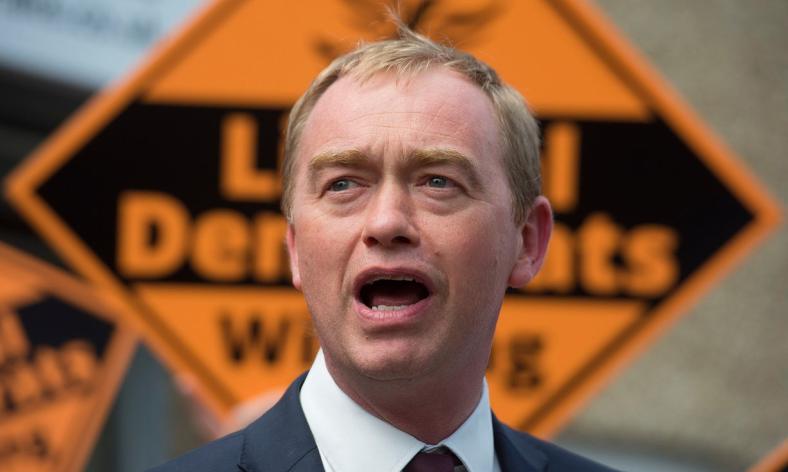
However, on the same day another interesting story took place when Tim Farron announced that he would be standing down as leader of the Liberal Democrats citing the pressures that had been placed upon him by the media due to his Christian convictions particularly over the matter of ‘Gay Sex’. “A better, wiser person may have been able to deal with this more successfully, to remain faithful to Christ while leading a political party in the current environment. To be a leader, particularly of a progressive liberal party in 2017 and to live as a committed Christian and to hold faithful to the Bible’s teaching has felt impossible for me,” he said.

The irony of all this was that Tim Farron’s voting record had been exemplary in the support of gay rights and as a politician he had publicly and passionately supported peoples’ rights to live in whatever way they chose, regardless of his own personal thoughts or opinion. Knowing that biblically and theologically speaking, the bible does regard gay sex as a sin (it’s hard to come to any other conclusion if you read the Bible honestly) the media saw this as a stick to beat him with and wouldn’t let it drop, despite the fact that Tim Farron had represented all of his constituents with integrity to the best of his ability (even though the Office for National Statistics itself believes that the gay community only represents 1.5% of the population). It’s interesting to note that the media didn’t bully Muslim MPs in the same way, even though the whole matter of gay sex is just as contentious in the Qur’an and Islam as it is in the Bible, which once again is an example of systematic media bias and spin.

The problem with our society is one of an extremely bad and intolerant ‘political correctness’ which doesn’t only wish to restrict any form of language which might offend, marginalise or disadvantage people on grounds of race, sex or religion (which is good) but actually stifles debate in the process (which is bad) and is intolerant of anyone who doesn’t hold the commonly held party view, regardless of its failings.

Over the years many Christians have faithfully and passionately sought to serve their communities with ‘love and devotion’, seeing it as part of their Christian and political vocation to make the world a better place. We have a proud Christian heritage which has shaped many of our laws and influenced the way we govern ourselves and look after one another, based on mutual understanding and the traditional Christian values of love, justice, equality and the intrinsic worth of the individual made ‘in the image of God’. It would therefore be such a shame and a real detriment to our communities if Christians were discouraged from entering politics or thought that their contributions to society were of little value or worth.


“Love the Lord your God with all your heart … and love your neighbour as yourself.” Luke 10.27


If My System Is Compromised – How Do I Pay The Ransom?

ransomware wannacry

Over the last few days we have seen an unprecedented cyber-attack which has hit more than 200,000 victims worldwide across 150 different countries. In the UK, the National Health Service was hit hard with 48 health trusts sufficiently compromised that they had to turn patients away, close down their IT systems and resort to ‘pen and paper’. The culprit was the WannaCry malware virus (or worm) which had the innate ability to encrypt people’s files and lock them out of their computers. People may not have literally felt like crying but it was extremely annoying, disruptive and potentially had the capacity to put lives at risk. Although the majority of PCs were safe, older systems without the appropriate software patches and up-to-date antivirus solutions left their users with the dilemma of either having to rebuild their systems from backups or possibly pay ‘the ransom’ demanded by compromised machines. Despite the scale of the attack, the evidence suggests that very few people actually paid the ransom (usually $300 (£230 per machine) in a virtual currency known as Bitcoin). This was probably because; firstly, purchasing Bitcoin is a very difficult process and secondly, ‘a lucky break’ by a software engineer found a way to stop the ransomware, and ‘kill the virus’ containing the spread of its contagion. Well done that man!

This whole episode demonstrated just how ‘interconnected’ we are in modern society and how dependant we are upon the good services of others. When one person or area is attacked, the implications for the wider community can be vast (rather like an earthquake, or the ripples generated by a stone dropped into a pond). Our ability to function is severely impeded, our relationships are broken, sometimes resulting in a lack of confidence, hope and trust. Sometimes, people prefer to either ignore the problem and hope it will go away or pay any cost to simply get on with their lives again.

It’s not difficult for the Christian to see immediate parallels with the theological concept of ‘sin’ as described in the Bible. Sin is that innate part of the human psyche which seeks to put itself first before anything else and often at the expense of others. It’s the selfish ‘I’ which lurks deep within and doesn’t usually care if something is right or wrong as long as it satisfies the self. Sin is often selfish, greedy and manipulative and is usually the very opposite of genuine, generous giving and sacrificial love. Like a virus, sin has the capacity to spread out and ‘take down systems’ and its consequences can be disastrous; it’s often the root cause of a lot of anger, hurt and mistrust. It spoils our relationships with one another, our communities and even with God himself. The difficulty is that without genuine regret, remorse and repentance it’s usually difficult to find a way to move on, to be positive or find forgiveness. Sin enslaves the individual and makes them less than they were ideally meant to be. They are ‘bound’ by it and effectively held to ransom!

This is why the Christian story is such ‘good news’ and so wonderfully positive, because despite our sin, we are told that God still loves us, and literally steps into this sinful world of ours in the person of Jesus, and through his death upon the cross, Christ absorbs within his own body the terrible pain and consequences of all our sin. He bears the hurt that our sin has caused, freely, lovingly and generously so that we can be spared its consequences and find forgiveness. The Bible says that by his death upon the cross Jesus paid a ‘ransom’ for our sins setting us free when we put our faith and trust in him. This is wonderful news and doesn’t simply change who we are before God, but our hearts and our perspective. We are set free and given a brand new, fresh start! So how do we pay the ransom? We can’t and we don’t have to – because it’s already been paid. All we need to do is embrace it and say thank you.


“The Son of Man did not come to be served but to serve, and to give his life as a ransom for many” Matthew 20.28


Why Should I Be Bothered About Easter?

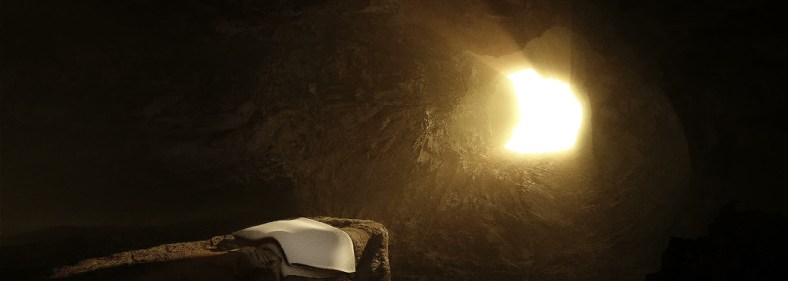
empty-tomb

Many people will be looking forward to the long bank holiday weekend as a welcome break from work, a time to see family and friends and perhaps treat one another to chocolates and Easter eggs – not really understanding what Easter is all about or why it could be significant to them.

In order to really understand Easter, we need to take a ‘deep breath’, open our Bibles and contemplate the first few chapters of the book of Genesis. Now many people will immediately dismiss the Bible as religious ‘mumbo-jumbo’, saying hasn’t science dismissed all this as rubbish – and don’t we now accept human-beings came into being through a process of evolution? To which I would want to say, well you can ask those sort of questions if you would like, but that’s not really what the Bible is about! Many scientists are quite happy Christians because they accept that the Bible doesn’t really speak in terms of science at all but in terms of theology. It’s more concerned with ‘why’ the world is as it is, rather than ‘how’ it came to be. Theologically speaking, the opening chapters of Genesis explain how God initially created a perfect world, but it was spoilt by the foolish, self-centred decisions of human beings (namely Adam and Eve) who thought that they knew better and wanted ‘to be like God’. This wilful disobedience (which the Bible calls sin) led to the world becoming less than perfect, knocked off balance and ‘out of kilter’ by arrogance, wickedness and greed – qualities which spoil not only our human relationships but our relationship with God himself. In other words, the world is not as God originally intended. It is as Christians describe it – fallen – and if you doubt it, then all one has to do is look at the news on our television screens. Genesis therefore speaks to our humanity, and most people having read it, if they are honest with themselves, can identify with it saying – that’s me!’

The rest of the Bible is really a ‘love story’, describing how God goes to great pains to rescue us from this world of sin and put things right, and its hero is Jesus. For in the Old Testament, we see how God is constantly trying (initially through the people of Israel) to call people back to himself and to a ‘righteous’ way of living, but time and time again the people fail because the strangle hold of sin is simply too strong. Although we often learn from our mistakes, we can’t put things right by ourselves. The Bible may tell us that ‘if our hand causes us to sin, we should cut it off, or if our eye causes us to sin we should pluck it out’ (Mark 9.42f) but as Jesus makes clear, the heart of the problem is the problem of the human heart – and we can’t cut out our heart! So, Jesus steps in, showing us not only how to live a better life, but how we can positively change our hearts when we put our faith and trust in him, demonstrating just how extraordinary God’s love for each and every one of us is by his own death upon the cross. He takes upon himself the punishment that our sin deserves – sparing us from it, for as the old hymn makes clear ‘there was no other good enough to pay the price of sin; only he could unlock the gate of heaven, and let us in’.  All we need to do, to be forgiven, is to trust that Jesus died for my personal sin – and say thank you.

But that’s not the end of the story, because three days later Jesus rose from the grave – a tremendous and astounding event witnessed by so many of his friends and disciples, demonstrating once and for all that he was indeed the ‘Son of God’ who died to save the world – and that’s the message of Easter. Now, of course it doesn’t take a moment for us to appreciate that the world is still sinful and still needs to change, which is precisely why the Gospel message is still so needed and so relevant for our modern world today, still speaking of a future hope when all will be ultimately put right when Christ returns – but in the meantime, the world as we know it changes ‘one heart at a time’. Please let one of them be yours!


I want to know Christ and the power of his resurrection” Philippians 3.10


Good Morning, Mr President!

donald-trump-e1484933490944

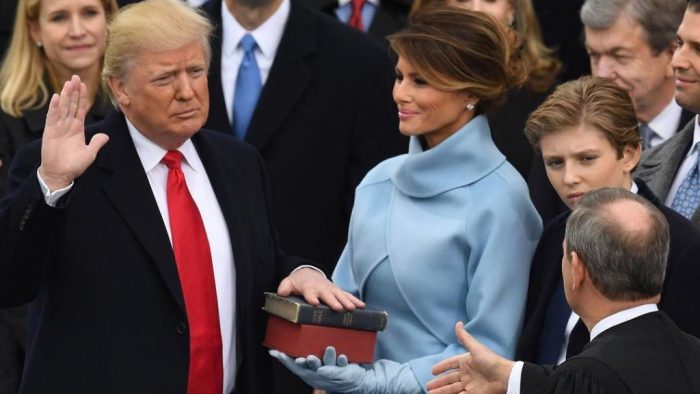
By the time, you get to read this letter, Donald J Trump will have been sworn in as the 45th President of the United States of America, and life, it seems will never be the same again. Adopting Ronald Reagan’s campaign slogan, Donald Trump will set about ‘making America great again’, but not without some controversy. Will Donald J Trump build a wall between the United States and Mexico? Will he impose import taxes on US companies that create product intended for the US market whilst using foreign workers in foreign plants? Will he continue to stir up controversy with China whilst seeking to improve relations with Russia? Will he continue to denounce the workings of the American Intelligence agencies, and with regard to Russia – is he politically compromised? The list of controversial questions seems to be added to each day with a flurry of response being sent on Twitter.

But can President Trump ‘make America great again’ and is he really that powerful? Well, in a sense the answer is both yes and no! As President, he certainly commands a lot of power, but in theory even he is subject to the higher authority of the American Constitution. It is this document which is so sacred to Americans which is considered to be the ultimate resort. Congress may make laws, but it is the American courts which interpret them according to the Constitution and determine how they should ultimately be applied – a system designed, it is said, to prevent any one person having too much power or being subject to corruption. However, this means that ultimate power can be said to reside with the unelected members of the Supreme Court. To counter their influence American Presidents are able to appoint a number of ‘Justices’ to the Supreme Court according to their political persuasion; Republicans tend to appoint conservatives or ‘originalist’ judges and justices who will always try to interpret the law according to the Constitution as it was originally understood by the ‘founding fathers’. Democrats will say that the Constitution is a ‘living document’ which needs to be interpreted according to the issues of the day and so will appoint Liberal or ‘activist’ judges and justices, and try to promote their own particular agenda on modern day issues of concern (e.g. abortion). This is one of the main reasons why Presidential campaigns become so messy as everyone wants to get their candidate elected so that they might be able to shape and influence society and politics not just within Congress but through the courts. The problem with Donald Trump it seems, is that because of his outlandish statements and apparent policy making ‘on the hoof’ he’s been quite capable of upsetting both Republicans and Democrats and so his candidacy as President hasn’t always been easy for either side to settle with or predict.

So where does this leave us? Well, the Christian response has always been to pray for those in authority that they will govern wisely and well for the benefit of all people, and do all that they can to support and encourage them in that task. Equally, in a period of so much change and uncertainty, we are encouraged to think about what do we consider to be our ultimate guide and authority? For many Christians that guide would be the Bible, which has been the foundation and backbone of so many of our laws and legal frameworks within British Society for countless generations, but the constant task is of course, not only to understand the context in which the Bible was originally written, but how we can also best apply it to today’s modern society. We may call ourselves Great Britain, but in my own humble opinion, our national status would be greatly enhanced if we were to spend a little more time quietly, prayerfully, and intelligently reflecting upon some of the biblical and Christian principles which have served us so well in the past.


 “Pray for all people … kings and all those in authority, that we may live a tranquil and peaceful life in all godliness and dignity” 1 Timothy 2.2


No Greater Love Than This …..

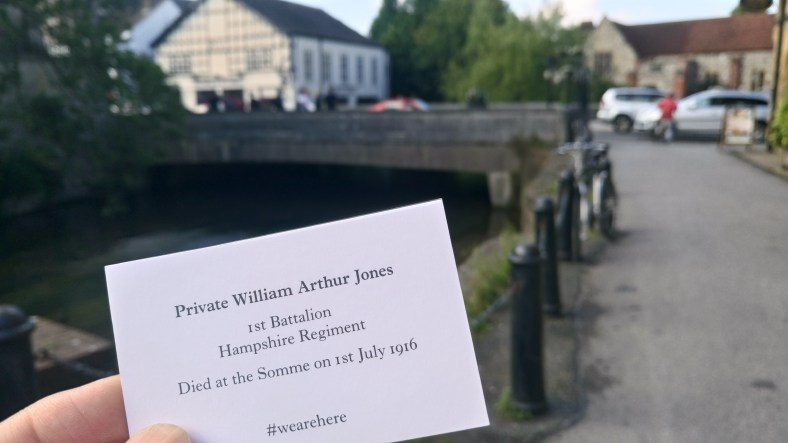
dsc_0986

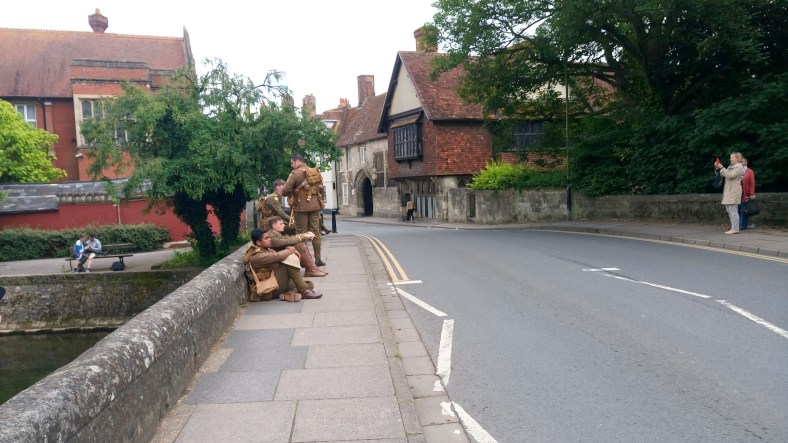
“Some of us remembered that sunny last evening in June, when we had assembled with such high hopes in the trenches, the day before the Somme offensive began. How we had jested and joked, even collecting pieces of chalk wherewith to label as our trophies the guns we were so sure of taking! Some of us too, remembered the next night, when, with every officer but one a casualty, and our dead hanging thick on the German wire, we had been withdrawn, sweating and shaking and shattered. It took us three months to recover from that blow.” November 1916

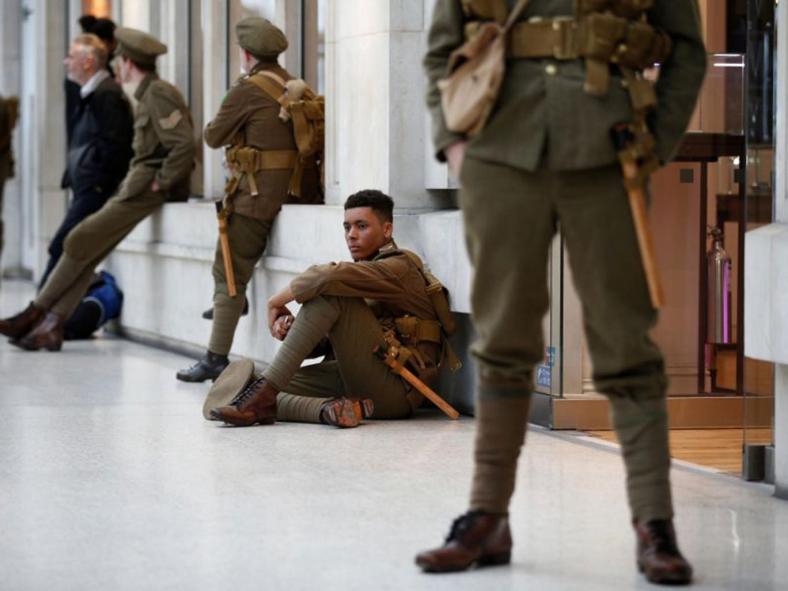
These words are taken from Twelve Days on the Somme by Sidney Rogerson, and although they make uncomfortable reading, I think it’s right, upon this 100th anniversary, that we should be reminded of what life was actually like for those soldiers who endured that particular conflict.

The first war, was of course described as ‘The Great War’, the war to end all wars and with 20, 000 British troops dying on the first day of that particular battle, we can see why many thought that they had already paid a sufficiently high price to ensure the nation’s peace and trusted that surely, the world wouldn’t fall into such a sad and terrible situation again – and yet as we all know barely 30 years later the Second World war was upon us, and there have been various other conflicts since.

soldiers-wearehere-somme-reuters

We are mindful of the fact that Jesus said Greater love has no one, than he lay down his life for his friends” (John 15.13) and its significance for those who have died in conflict defending their country and way of life is obvious. Yet we need to remember that the context of this verse is not war, death or pain – but love, for it immediately follows the command to love one another as I have loved you’ (John 15.12). Military people know the importance of following commands and this is an important one for us all, for we must never allow anger, hatred or pain to define us as human beings. For if we do, then we have allowed these sentiments to rob us of a precious part of our humanity. ‘Loving God and our neighbours as ourselves’ doesn’t mean that we shouldn’t fight for what we know to be right or make sacrifices, but we do so precisely because we wish to preserve all that is right, decent and honourable. This sometimes means that we have to lift ourselves above a basic ‘tit-for-tat’ mentality (which may be no more than a basic desire for revenge) and strive to reach those higher standards and ideals that we cherish and wish all people to live by. The men who died upon the Somme and other such conflicts, ultimately did so because although they hated war, they were striving to preserve our way of life, freedom and peace. They were fighting for something greater than themselves. To this extent, their selfless act echoes the one made by Jesus when he died upon the cross, the one dying for the many, but achieving in his case for each one of us, the forgiveness of sins and salvation. It certainly wasn’t anger, fear or hatred which drove him to the cross but love, which is why we remember him and all those who have died in a similar selfless fashion with the greatest of respect, praise and gratitude. ‘The Great War’ may not have been the war to end all wars, but we value and respect all those whose efforts tried to make it so. Please join us this Remembrance Sunday as together we commemorate all those who have laid down their lives for us.


Greater love has no-one than this, that he lay down his life for his friends.” John 15.13


dsc_0990


The Paralympics, ‘The Last Leg’ And The Freedom To Be Ourselves

003-2016-09-18-bethany-firth

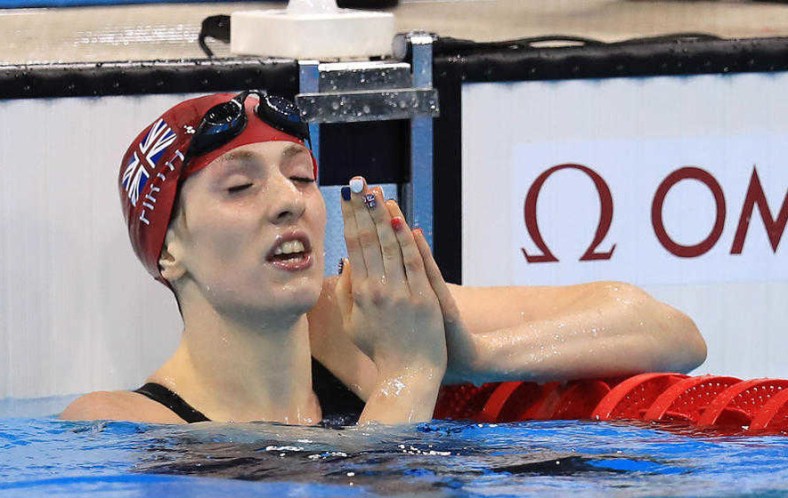
Bethany Firth – Celebrates having won three gold medals and a silver in the S14 classification at Rio 2016

What a joy the Paralympics have been! The Olympics were glorious, but the Paralympics have been truly stunning and inspirational. Athletes that many of us only first heard about at London 2012 have now become household names – Hannah Cockcroft, Jonnie Peacock, Ellie Simmonds, Dame Sarah Storey and Richard Whitehead have all lived up to their billing at Rio 2016 and deserve the much heralded superlative of ‘superhumans’. At the time of writing the medal tally for Team GB in Rio has surpassed that of London 2012 and a whole new bunch of athletes have been introduced to the world.  The high-lights programme with Claire Balding combined with the comedy and sense of fun that comes withThe Last Legteam (Adam Hills, Josh Widecombe and Alex Brooker) have helped us all, without being patronizing or sentimental, to look beyond the disability and see the athletes for the people they really are. This doesn’t trivialise the tragedy and trauma that some people experience but celebrates their strength of character, the human spirit and their various accomplishments in the light of it.

However, it was the theme tune of The Last Leg permeating the sport which really caught my attention. This rap song called ‘Harder than You Think’ performed by the hip hop group Public Enemy contains the phrase ‘thank you for letting us be ourselves’ and it got me thinking. Every parent tries to encourage their child to be independent, to learn to think for themselves, stand up for themselves and be creative rather than to simply ‘go with the flow’ or be negatively influenced by others. We hate it when people try to coerce us into being something that we are not, either by steering us down a certain path or restricting our choice or freedom of expression. We resent being ‘put in a box’ and told that we can’t do something when we think we can. Essentially what we hate is any attempt to manipulate us or restrict our freedom to be ourselves. Although parents can (and should) offer advice and guidance, the willingness to let your child be free, to find their own way and lead their own lives is really an act of love – but it’s risky, because with freedom of choice comes the possibility of making mistakes.

Sadly, the world in which we live isn’t perfect, because alongside the many joys of life are sadness and sorrow as people behave badly and make mistakes. The Christian perspective is one that says that although God initially made the world perfect, he also graciously and kindly gave us human beings the freedom of thought, expression and choice; he gave us the freedom to be ourselves because that was the loving thing to do. God no doubt saw the future and understood the risks but he willingly gave us the freedom to be ourselves precisely because he isn’t a dictator and neither are we his mindless slaves or robots. The incredible thing is that despite our many failings and mistakes, God still loves us and right from the start had a plan to put things right, and that plan – was Jesus! God so loved the world that he gave his one and only Son to death upon the cross, so that by that terrible process, we might be forgiven of our sins and spared the consequences of our actions. This shows just how deeply God loves us and the true extent to which he is willing to go in order that we might have the freedom to be ourselves. So whatever challenges in life we personally face, let us like our inspirational Paralympians, be ourselves to the best of our ability.


“For God so loved the world that he gave his one and only Son, that whoever believes in him shall not perish but have eternal life. John 3.16


The Olympic Story Behind Christ The Redeemer!

Christ the Redeemer 002

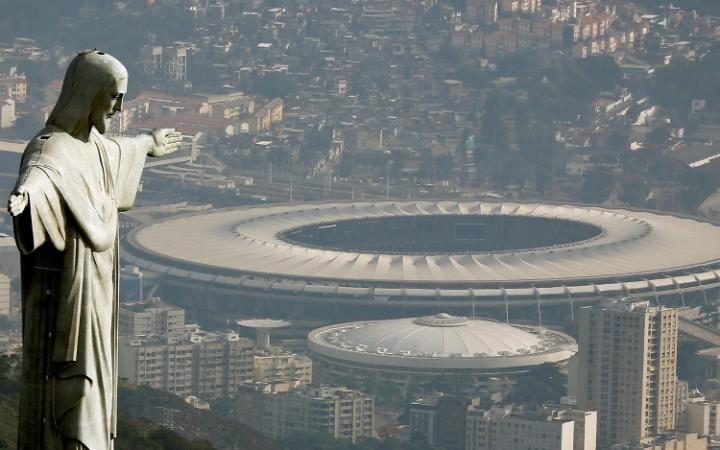
What a wonderful Olympics it has been! After months of worry and uncertainly about the Stadium, the Zika virus and political unrest, Rio 2016 has been a great success. Certainly from a British point of view there has been a lot to cheer about – not only have the women’s eight matched the men with gold medals in the rowing for the first time ever, but Max Whitlock has become Team GB’s first ever gymnastics champion (twice!); Justin Rose became the first man to win the golf at the Olympics since it was last played in 1904 and Andy Murray put us all through the mill as he successfully defended his tennis title first won at London 2012. At this time of writing, the athletics is well underway and Team GB find themselves, somewhat surprisingly second on the medal table in front of China – but will it last? But of course, the tales of inspirational human endeavour aren’t simply tied to those who’ve come away with a medal but to all those who have done their best to be ‘the best they can be’ despite the odds (who can forget the efforts made by the Refugees Team, competing under the Olympic flag) and all such athletes should be proud. However, the sporting arena is not the only source of wonder and appreciation – the Brazilians have been commended for their warm welcome, hospitality and sense of fun, along with their beautiful country, ranging from the beautiful Copacabana beach at Rio to the magnificent statue of ‘Christ the Redeemer’ looking down upon the city from the Corcovado Mountain.

Although the statute isn’t the largest statue of Jesus to be found in the world it is considered to be an ‘art-deco’ masterpiece and is hugely iconic of Rio de Janeiro and symbolic of Brazil’s Catholic Christian heritage. The statue is 98 feet tall (not including it’s 26-foot-tall pedestal) and weighs 635 tonnes. There were several designs initially proposed but the familiar statue we recognise today with its open arms (measuring 92 feet wide) was specifically chosen to represent the love of Christ for the world who will warmly welcome and embrace all who come to him. The statue was originally built in 1922 and took 9 years to complete, and was officially declared one of the ‘New Seven Wonders of the World’ on 7th July 2007.

This wonderful statue of Jesus is of course called ‘Christ the Redeemer’ but why and what is so special about redemption? Well, redemption literally means ‘buying back’ and was often used in the ancient world of slaves buying their freedom or having it bought for them. One of the greatest acts of redemption in the Bible (and which has coloured the way this word is used ever since) was when God bought his people out of slavery in Egypt to give them freedom in the promised land. The problem was, that over the years the people found themselves repeatedly bound as slaves by successive regimes and therefore in need of a ‘new redemption’. The early Christians understood this in the most radical of ways, they saw it as pointing to the poverty of their own human condition, they were constantly ‘in slavery to death and sin’. What they needed was a redeemer! Someone who would be able to pay the price for their sin and lead them to freedom and new life. That person was Jesus! His self-giving, sacrificial death upon the cross was truly Olympic in its magnitude, the most dramatic, inspiring and generous gift of God’s love the world had ever seen. His death was the price paid for our ‘redemption’, the innocent dying for the guilty, but of course the Gospel story doesn’t conclude with Christ’s death but his resurrection! His rising from the grave was the first sign, evidence and promise of future hope and life everlasting. A precious gift warmly and freely given to anyone who wishes to receive it and puts their faith and trust in Jesus as their personal Lord, Saviour and Redeemer. The Olympics may be glorious; the games have been thankfully largely harmonious, and the athletic achievements truly inspirational – but the story behind the Christ the Redeemer statue is even more so and gives us all the chance of reaching our full potential and ‘being better than we can be despite the odds’.


We are justified freely by his grace through the redemption that came by Christ Jesus. Romans 3.24


Politics, Leadership And Authority – What A Responsibility!

Tony Blair

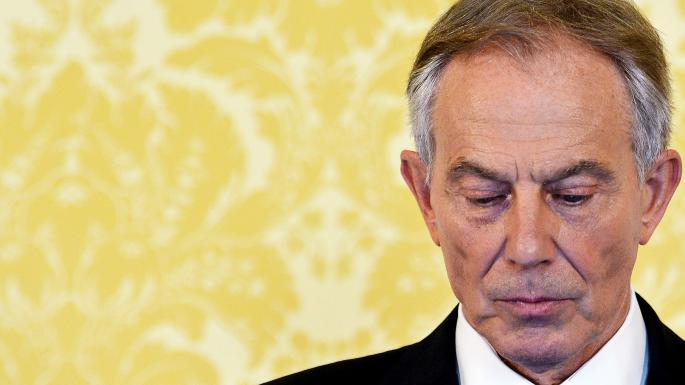
They say ‘a week is a long time in politics’, but it’s taken seven long years for the Chilcot Report to be published. The Inquiry into the Iraq war may have been announced by Prime Minister Gordon Brown on 15th June 2009 but the final report published on the 6th July 2016 with its ‘damming conclusions’ about the ‘decision to go to war’ and upon what basis the nation did so, immediately shone a light, once again, upon his predecessor, Tony Blair. The media were waiting with eager anticipation as to what he would say – and whether he would apologise for the deaths of 179 British Servicemen and many others killed during the conflict.

The pros and cons of such a debate are far too long and complex for me to consider here, but they do raise some interesting questions about power, leadership and authority, and raise the conundrum of what do we do when the people that we vote into government (often with large popular majorities), do things that we rather wish they didn’t? Frequently the cry is for firm leadership – but what happens when our leaders firmly direct us in the wrong direction? Understandably many people will have a view on Tony Blair, and hindsight as they say is a wonderful (and occasionally cruel) thing, but perhaps it should be noted that despite his many failings Chilcot does not say that Tony Blair wilfully deceived Parliament, rather that he honestly believed the flawed intelligence that had been given to him, and despite many people marching in protest against the war, polls showed that at the time, public opinion was overwhelmingly in support of military action. All of which goes to show how easy it is for us a nation to be led up the garden path, unless we ensure that all the appropriate checks and balances are in place. This is all salient, because once again we find ourselves as a nation at a crossroads, and once again ‘firm leadership’ is called for as the Conservative Party elects a new leader and Prime Minister. In homage to Margaret Thatcher, Teresa May and Andrea Leadsom are already being touted as the new ‘iron maidens’ for our generation but they will need to be careful that in their desire to provide firm and positive leadership in the light of the nation’s decision to leave the EU, that they do so collegiately and with the full support of their cabinet, colleagues and party members or else they too in future years could find the swathe of public opinion against them. Firm leadership is not always about getting one’s own way, but taking sound advice and acting in the best interest of others.

It’s interesting that there is a sober lesson to be the learnt from the pages of the Bible, because at one point the people of Israel were so unhappy with their current system of leadership, that instead of the historic train of prophets ruling over them, they demanded a king so that they might be like all the “other nations” having a king to govern them and go out before them and fight their battles (1 Samuel 8). The prophet Samuel saw this as a rejection of God’s voice and authority administered via the prophets and warned them about all the disadvantages of having a king and the possible corruption that came with it, but the people wouldn’t listen. So Samuel prayed to God about it who graciously let the people have their way. The lesson is that sometimes God grants us the very thing that we wish for, but then not only do we have to take responsibility for our actions but we sometimes also have to live with the consequences.


And what does the LORD require of you? To act justly and to love mercy and walk humbly with your God. Micah 6.8


EU Referendum – Should I Stay Or Should I Go?

eu referendum shutterstock_392967421

In the light of the EU referendum on the 23rd June, “The Clash’s” 1982 song Should I Stay or Should I Go (complete with backing vocals in Spanish) seems to sum up the mood of the moment as people struggle to decide which way they will vote ( ‘this indecision’s bugging me’ – esta indecision me molesta ). How do we decide? The problem is, of course, that a good case can be made either way. Most people would consider the ‘Common Market’ to be a good thing and initially thought that this was what they were joining, but over the years the EU has changed beyond recognition, becoming a vast bureaucratic machine (some would say empire) that has power and influence over most aspects of common life, from weights and measures, to rights of employees, to the environment. Over time, the size of the EU has also changed from the original six nations in 1957, to nine in 1973 when the United Kingdom joined, to the current twenty-eight, with other nations such as Turkey wanting to join at some point in the future. Many of the benefits have been considerable; cheaper products; greater choice and opportunity; stronger ties with European partners leading to a greater sense of mutual understanding, co-operation, stability, security and peace. The economic, corporate and personal opportunities have also been immense with the free movement of individuals across the continent seeking work and a better way of life.

Equally, as ‘the club’ grows bigger the disadvantages have become more apparent (and some would say irritating). Britain’s influence isn’t what it once was as it tries to negotiate with 27 other partners. The ‘one size fits all’ approach of Brussels doesn’t always seem to make allowance for exceptional or national circumstances, resulting in a perceived lack of sovereignty and a reduced ability to determine one’s own future (or even manage one’s own borders).

So, what IS the answer? Well, in some ways it’s hard to see ‘the wood for the trees’ as nobody really knows what life would be like if Brexit occurred. There are naturally a lot of fear stories and some things said which simply don’t appear to be logical. Why, for instance should our security arrangements be changed, because we decide to make the political and commercial decision to withdraw from EU? Collaborative working in this area seems only natural and no one is seriously suggesting otherwise.

David Cameron and Boris Johnson might be clashing with one another but in reality it seems to me that we have two choices! We either stick with the tried and trusted with all its imperfections and try to reform things for the better from within the EU, recognising the value of international co-operation – or we say that the EU is impossible to reform and has become simply too big for its own good, weighed down with its own bureaucracy hindering the creative talent, and well-being of individual nations such as ours. It’s a big decision and a difficult choice but it’s still our choice, and so I would like to urge you to do your best and think around the issues, be bold, courageous and use your democratic freedom to the best effect and vote. Vote not just for yourself or for what will benefit you in the short term, but vote for your children, grandchildren and their children, vote for future generations – what will give them the best chance of living in peace and prosperity? Vote for the nation!


“For I know the plans I have for you,” declares the Lord, “plans to prosper you and not to harm you, plans to give you hope and a future. Jeremiah 29.11